
Japan Earthquake Today: Strong Tremors Lead to Tsunami Threat
Latest News Today: Japan was hit by a strong earthquake earlier today, which caused shockwaves throughout the various regions and a tsunami warning was given out. The quake that was so powerful that it was felt as a high magnitude on the seismic scale was experienced in both big cities and remote towns along the coast. Swaying buildings, temporarily stopped transport services and people scampered to safety as the alerts of the emergency resounded throughout the country.

 Share
Share
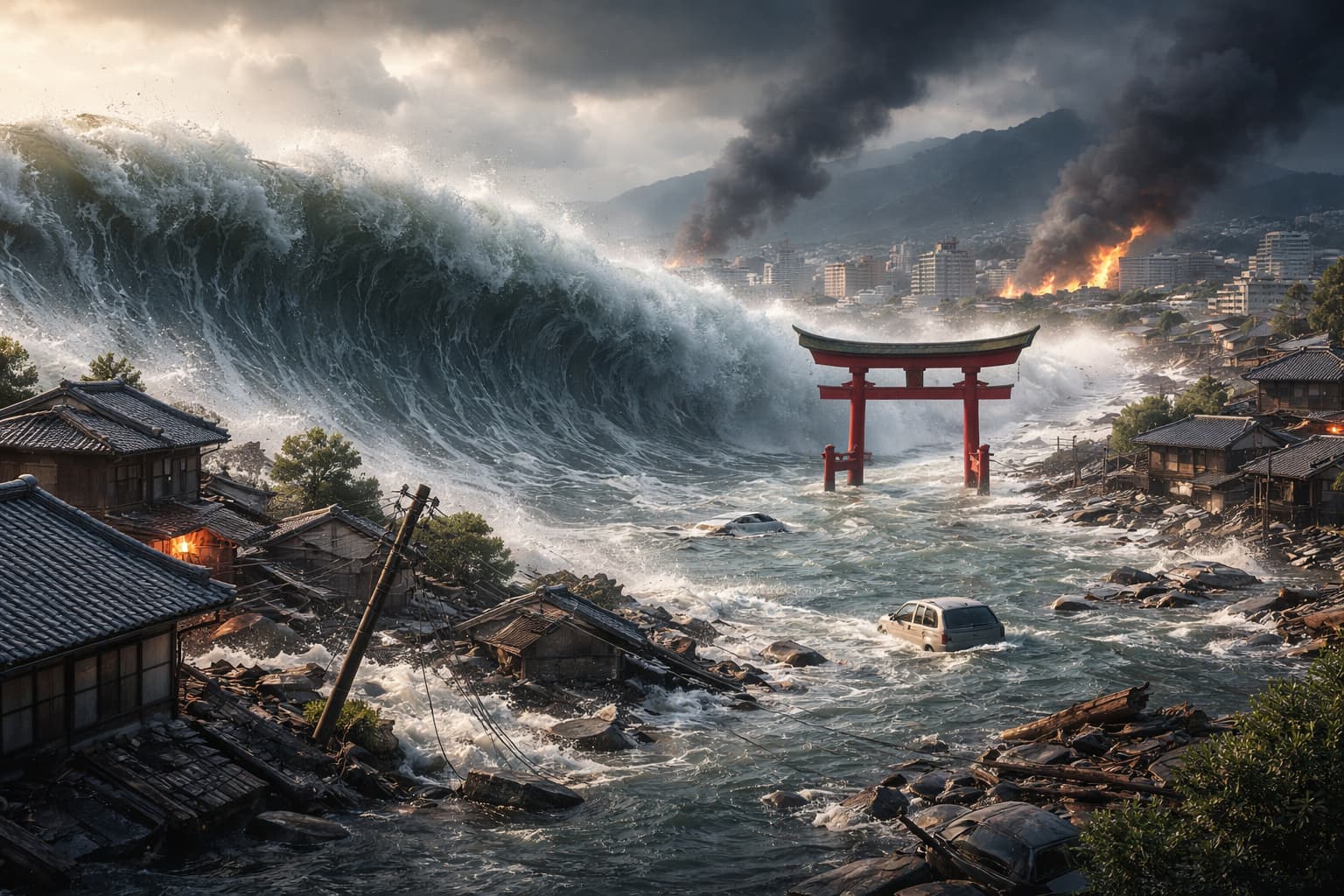
Japan, which has developed a high earthquake preparedness, was quick to mobilise its disaster response measures. The early warning systems enabled people to experience less confusion as they received a few seconds to find safety through sheltering or evacuation. The earthquake caused extensive damage in some areas which resulted in broken roads and power lines and small structural collapses.
Coastal Evacuations and Tsunami Warning
The earthquake was followed by a tsunami warning issued by authorities which advised residents who lived along the coast to evacuate to high ground as soon as they could. Emergency sirens were turned on, evacuation orders were announced in the television, radio and mobile alerts.
The local disaster management teams were deployed rapidly to help with evacuation operations while they protected the safety of local residents. Authorities maintained continuous surveillance of coastal areas to monitor both sea-level changes and wave conditions.
Major Safety Initiatives undertaken:
- Emergency evacuation of the coastal areas.
- Cancellation of train and metro services in the impacted areas.
- Assigning emergency response teams and rescue units.
- Ports and fishing were temporarily closed.
- An aftershock and sea wave monitoring.
These are indicators of robust disaster management infrastructure in Japan that has been developed over decades owing to high frequency of seismic activity.
Effects on Infrastructure and Life
The earthquake caused a lot of disturbance to normal life especially in urban centers. As a precaution measure, the public transportation systems, such as the bullet trains, were shut down temporarily. Airports were being reported to experience delays and the highways were facing traffic jams as people were suddenly evacuating.
Power cuts were reported in various locations, but it was quickly restored. There were temporary communication network breakdowns due to overuse, and emergency lines were still functioning. To guarantee safety of employees, schools and offices were evacuated and many businesses shut down that day.
Emergency services and hospitals were put on high alert with minor injuries being treated and preparations being made in case of escalations. Thus, there are only a few casualties reported so far, and the country was ready and responded quickly.
Aftershocks and Risk Continuous Evaluation
Seismologists have warned about possible aftershocks that may follow after the main shock. The aftershocks sometimes become strong enough to cause more damage or lead to landslides in areas prone to such dangers. The government has appealed to the citizens to remain vigilant and keep themselves informed through official sources.
The depth and epicenter of the earthquake are also being evaluated by experts to comprehend the long-term effects of the earthquake. Japan is in a very active seismic region and thus, it is likely to experience frequent earthquakes because of the movements of the tectonic plates.
Essentials of Global Preparedness and Attention
The event has drawn worldwide attention because multiple countries are currently monitoring the situation. Japanese officials display their disaster response capabilities because they show how disaster management depends on proper planning and early warning systems and public knowledge.
Planning and infrastructure can play a great role in mitigating dangers although natural disasters cannot be prevented. The resilience of Japan to such occurrences remains to be an example to the rest of the countries that are susceptible to earthquakes and tsunamis.
Conclusion
The major earthquake in Japan is a strong indication that nature cannot be predicted at any time. In the latest news, the tsunami alerts have not been withdrawn, and there are also expected aftershocks. The residents should adhere to the official advice and not move into affected regions unnecessarily.
With the rescue and assessment efforts still ongoing, the priority is on the safety, restoration of normalcy and the reduction of further risks.
Also Read: Parliament Special Session Live: Modi on Women’s Bill
Related News

CJP Issues Defiant 7-Day Ultimatum Over National Education Crisis
Latest News Today: The political scenario in New Delhi has gone through an unprecedented change, ...
Manipur Village Attack: 3 Dead in Early Morning Firing Incident
Latest News Today: The latest horrific incident in Manipur where three were killed and others pa...

Delhi Hotel Fire Tragedy: 21 Dead in Devastating Single-Exit Trap
Latest News Today: A vicious fire broke out in the popular bed and breakfasts at a multi-story bu...