
China’s Silent Gains: Is Beijing Winning the U.S.-Iran Conflict?
Latest World News: This is the first paradigm shift to ever take place and it will do so in 2026. It’s silent though, more methodical, coming from Beijing, and this is the one the US/Iran headline that has been dominating this news.That is no longer the question that geopolitical observers are facing now – it is how much China already has won in a conflict that has left both its main competitor and its regional ally depleted and overextended.

 Share
Share
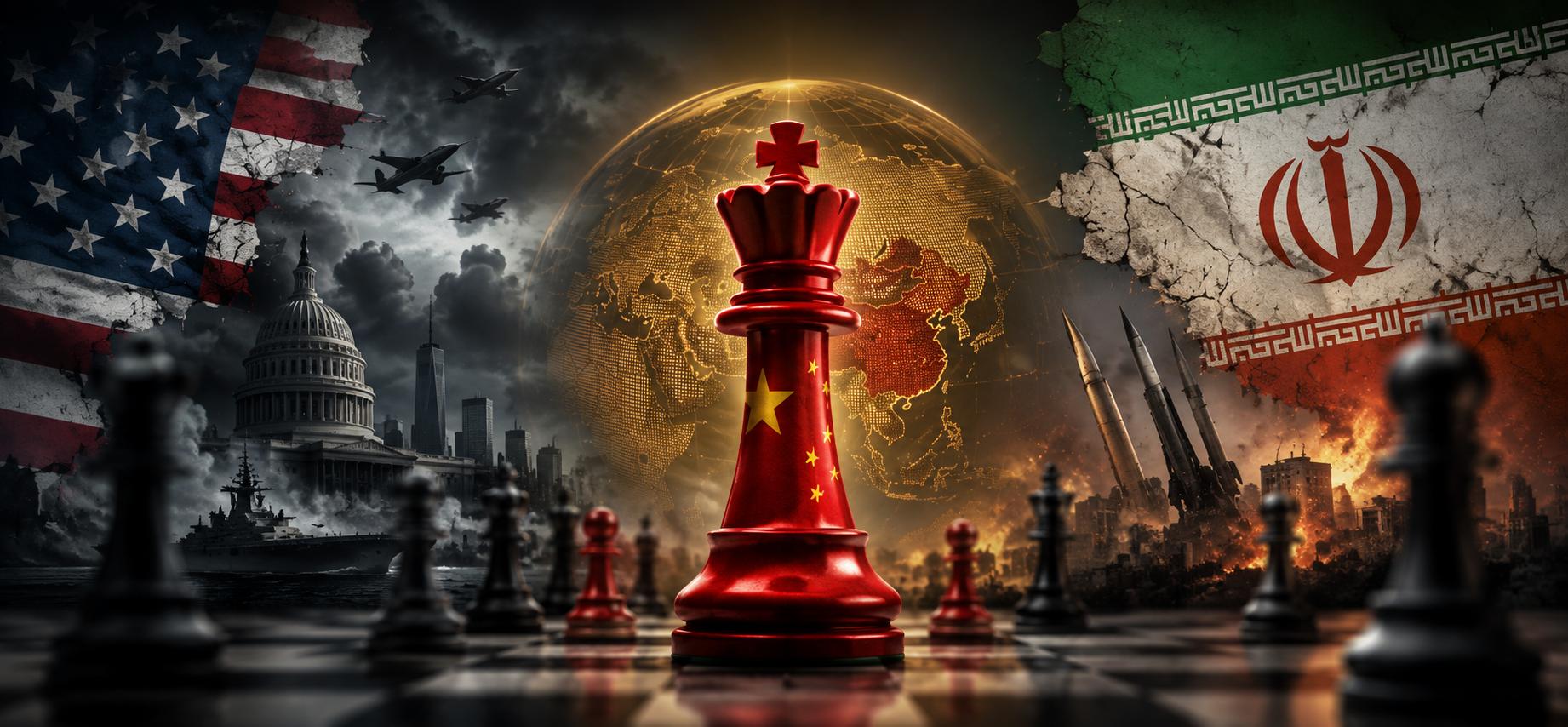
A Masterclass in Diplomatic Ambiguity
Now, China has handled the conflict with strategic patience that has left westerners bewildered since the war broke out on February 28, 2026. Beijing has played a savvy game in making itself the only major power with a voice to all parties by refusing to take any clear stance. This is not just a passive approach; it’s a strategy of leveraging as much. As the U.S. worries about the massive expense of a blockade and protecting shipping lanes, China is building its diplomatic presence.
It is reflected by President Xi Jinping’s recent interactions with the leaders of the Gulf countries. In a bid to align its interests with those of Saudi Arabia and the UAE, China has made a call for “normal passage” in the essential gate for world energy, the Strait of Hormuz. These countries are becoming more cautious of being targeted in the U.S.-Iran conflict and are seeking an alternative security partner in the East that is more stable and less interventionist. This change is not only in words, but in a reorientation of the regional order itself.
Economic Resilience and Strategic Benefits
China is a winner, stronger than many expect, despite the perceived threat of higher energy costs. The high price of oil, which has now reached more than $100 per barrel, has undoubtedly brought pressure to bear at home, but it has certainly helped to speed the progress of the Communist Party’s long-term strategy.
Key Factors Driving China’s Emerging Strength:
- Energy Diversification: China’s bold drive for energy self-sufficiency is proving to be a stroke of genius in the wake of the Middle East crude shock. Russia’s domestic production and shift to Russian oil pipelines such as the Power of Siberia 2 have given them a much-needed buffer.
- Green Tech Dominance: As demand for oil becomes increasingly volatile globally, China’s domination over the solar panel and lithium-ion battery markets (at 90% globally) is a significant strategic advantage. As governments seek to ‘de-risk’ themselves away from the Middle East, their reliance on China’s green tech becomes ever greater.
- The “Teapot” Advantage: China’s private “teapot” refineries still continue to refine Iranian at a lower price using covert networks, while the state-owned refineries are still acting with caution, to assure a steady supply of energy that are not under the control of Western sanctions or SWIFT payment system.
- Weaponry and Defense: A few of the Gulf states have reportedly stepped up their purchases of Chinese drones and missile defense systems due to the perceived inadequacy of U.S. protection without the political constraints of American arms sales.
The Cost of American Distraction
The war has definitely cost the U.S. both money and political capital. A recent confidential intelligence assessment prepared for the Joint Chiefs of Staff said that China is the main geopolitical winner of the war. Meanwhile, the U.S. Navy has been busy closing down the Strait of Hormuz and protecting U.S. bases in the region, and Beijing has had a free hand to expand its presence and influence in the Indo-Pacific and beyond.
The costs and benefits are becoming more apparent. At the recent Trump-Xi summit in Beijing, Chinese leaders made it clear that any assistance in bringing peace to the Middle East will be high-priced – concessions on Taiwan and tariff measures on trade. China is using the crisis to make a massive energy crisis an international card to play.
Conclusion: The Long Game
China’s rise to a stronger power is not a result of one dominant decision but is rather the result of the exhaustion of its rival and the resilience of China itself. The Iran-U.S. war has been a catalyst in making the shift toward a multi polar world where Beijing is now a central player, rather than a peripheral one, in maintaining stability. The Middle East is a dangerous region in which the situation can still deteriorate, but the gains in terms of energy security, defense exports and diplomatic standing are significant enough that China is playing a much longer game: a game where it is only the last player standing with its resources and strategic priorities intact.
Also Read: Viking Age Treasure Found in Denmark Features High-Purity Gold Arm Rings
Related News
Ancient Ruins Revealed: The 1967 Search for a Haunting Bronze Age City
Latest World News: In 1967, a truly groundbreaking find emerged that revolutionized our knowledge...

Nepal Border Shock: PM Balen Shah’s Controversial Claim Rocks Ties
Latest World News: A major political storm has broken over Kathmandu, the capital of the Himalaya...
Netanyahu vs Trump: The Explosive Lebanon Clash That Changed the War
Latest World News: A serious diplomatic rift has now opened up between Washington and Jerusalem f...