
Putin’s Bold 25th China Visit: Xi Summit Triggers Global Shift
Latest World News: On Tuesday, Russian President Vladimir Putin, who has visited China 25 times, made it to Beijing for a two-day high-stakes official visit. The summit reflects the wide-ranging cooperation between the two nuclear powers, with the explicit invitation of Chinese President Xi Jinping, whom Putin often describes as his “old friend. The timing of the visit is also significant as it comes four days after US President Donald Trump’s own high-level trip to Beijing, putting China firmly at the heart of global geopolitics.

 Share
Share
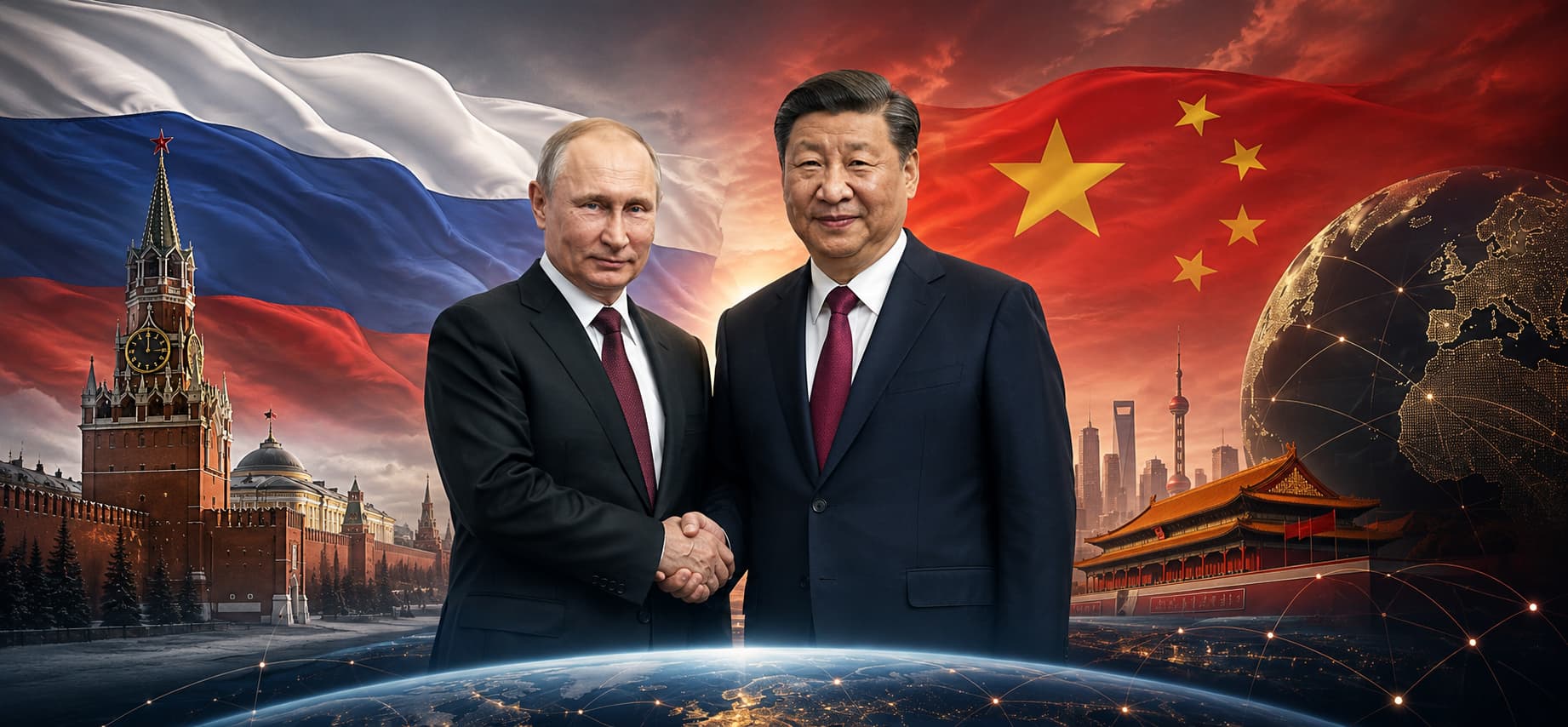
The official program, approved by the Kremlin and China’s Foreign Ministry, is May 19 to 20. The visit is specially arranged to mark the 25th anniversary of the signing of the historic Treaty of Good-Neighbourliness, Friendship and Cooperation, which has been the cornerstone of contemporary China-Russia relations. Western sanctions have come down on top of Moscow, and the Kremlin headed by Vladimir Putin is seeking to shore up its key economic and strategic line, playing an important role in Beijing’s carefully crafted foreign policy strategy to keep Russia in its good graces.
The ties between Beijing and Moscow have become far more complex and entangled in the economic arena, but there is also an inherent imbalance, according to analysts. The bilateral trade volume has increased more than doubled since 2022. In times of heavy sanctions, the Russian Federation, led by President Vladimir Putin, is increasingly relying on Chinese products, technology and cars to boost its domestic market. Oppositely, China has been Russia’s biggest consumer of fossil fuels – more than 70% of Russian imports to China are mineral fuels and crude oil.
China’s state news agency welcomed the back-to-back visits of the US and Russian presidents, while Western officials expressed concern over Beijing’s economic support for Moscow. The closely timed diplomatic meetings are seen as evidence of China’s growing role in global geopolitics and its ability to maintain relations with rival powers simultaneously. Following closed-door talks, Xi and Putin are expected to sign a joint statement along with several intergovernmental and bilateral cooperation agreements. Ahead of the visit, Vladimir Putin said he hopes both countries will further expand cooperation and contribute to long-term global stability and security.
Inside the High-Stakes Agenda: Energy, Trade, and Multi-Polar Alliances
Both leaders will discuss a wide range of issues to further strengthen their comprehensive partnership and strategic dialogue. China’s economic influence has been growing, and so have bilateral trade volumes, which are currently unprecedentedly high, and Russia’s natural resource production will be a decisive factor in the main negotiation. The leaders are focused on charting a clear course forward which not only secures their economic sovereignty, but also builds a shared aura of power.
Key Focus Areas of the Xi-Putin Summit
- Energy Infrastructure Expansion: Top officials will move towards up-scaling the construction of the Power of Siberia 2 gas pipeline, which is one of the key infrastructure projects aimed at carrying Russian gas supplies to the energy-intensive industrial heartland of mainland China.
- Bilateral Trade and Financial Settlements: During a separate scheduled session, Putin will discuss with Chinese Premier Li Qiang how to further develop non-dollar financial transactions, establish trade corridors, and deal with the continuing threat by Western countries to cut off international banking channels.
- Geopolitical Coordination on Flashpoints: The leaders will closely coordinate on key regional matters such as the continuing conflict in Ukraine and the escalating tensions in Taiwan Strait. Beijing keeps vetoing unilateral Western sanctions against Moscow, and argues that it can play the role of a neutral party.
- Multilateral Bloc Coordination: The debate will focus on strengthening cooperation via non-Western mechanisms like BRICS and the Shanghai Cooperation Organisation (SCO) with a view to change the international order from the Washington axis to others.
- Cultural and Educational Exchange: The heads of state will formally declare the “Russia-China years of education” (2026-2027), the purpose of which will be to strengthen the social and academic cooperation of the young people of both countries.
A Growing Symmetry of Long-Term Geopolitical Objectives
Putin’s 25th meeting underscores a shared ambition to build a multi polar world, which threatens U.S. domination. Beyond the actual trade, observers emphasize that the real reason for the meeting is a long-term security strategy that is shared. In the future, Beijing ensures a stable energy supply chain and cross-border infrastructure and makes it immune from possible maritime blockades or pressure from Western countries. In the interim, Moscow secures the financial strength it needs to weather long periods of isolation from European markets and strengthens a de facto “back-to-back” partnership in which both countries can confidently lean on one another’s geographical and economic depth.
Also Read: China’s Silent Gains: Is Beijing Winning the U.S.-Iran Conflict?
Related News

Ancient Ruins Revealed: The 1967 Search for a Haunting Bronze Age City
Latest World News: In 1967, a truly groundbreaking find emerged that revolutionized our knowledge...

Nepal Border Shock: PM Balen Shah’s Controversial Claim Rocks Ties
Latest World News: A major political storm has broken over Kathmandu, the capital of the Himalaya...

Netanyahu vs Trump: The Explosive Lebanon Clash That Changed the War
Latest World News: A serious diplomatic rift has now opened up between Washington and Jerusalem f...