
Nepal Border Shock: PM Balen Shah’s Controversial Claim Rocks Ties
Latest World News: A major political storm has broken over Kathmandu, the capital of the Himalayan nation over the comments by the country’s Prime Minister, Balendra “Balen” Shah, on the lingering territorial disputes between his country and India. The 36-year-old leader went against the usual diplomatic line that only blames India for encroaching upon Nepal’s land. The unprecedented admission has left the political establishment reeling, and the government is now dealing with a growing internal crisis and trying to keep the peace in the region.

 Share
Share
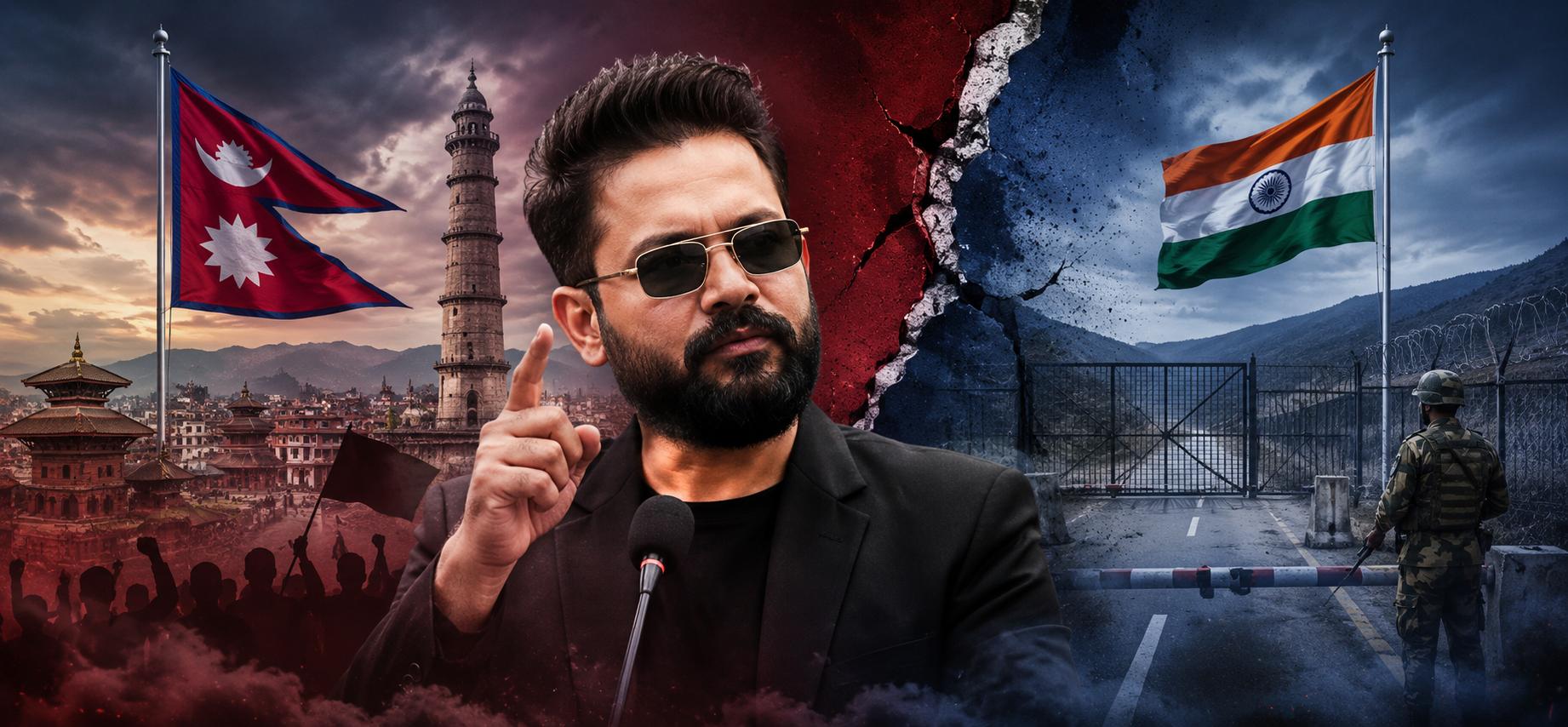
The discussion about this incident has been likened to high-stakes international conflicts, where the public statements by leaders often have more impact than intended. Like in the volatile Netanyahu vs Trump situation, where every diplomatic statement is analysed for its ramifications on alliances, Shah’s comments were analysed by both analysts and opposition leaders immediately. The Prime Minister’s assertion that his own country’s territorial claims are at risk due to its actions have unwittingly emboldened his critics.
Understanding the Roots of the Nepal Border Conflict
The border dispute has been a longstanding issue and the reasons are the Treaty of Sugauli (1816) which fixed the Kali river as the western boundary. The administration holds the view that the river starts from Limpiyadhura, while others maintain that the river is from the Lipulekh Pass. This dispute over the trijunction region has been a recurring trouble spot in bilateral relations, making trade, pilgrimage and security cooperation between the two neighbours difficult. For many, it is a matter of national pride and if they show any criticism about Nepal, it has brought out a lot of reaction from the people.
Points of Contention and Historical Context in Nepal
The Ministry of Foreign Affairs took steps to clarify the stance of the Prime Minister and to avoid further damage to its diplomatic efforts. The main themes of the government’s position are:
- Technical Mismatches: The government explained that the ‘encroachment’ is occupied places on the Dasgaja strip across the border.
- Localized Land Usage: Residents from one side growing land on the other was perceived as a practical boundary problem and not as an “actual” attempt at state led expansion.
- Commitment to Dialogue: Kathmandu stated that joint technical teams are responsible to keep the boundary pillars where the localized disputes could be reduced.
- Historical Review: The government reiterated its commitment to organize an objective resolution of the territorial deadlock by calling to historians, surveyors and experts.
All these attempts to give context are not enough to appease the political opposition. Parliamentarians of different political parties have asked the Prime Minister to give tangible evidence to support his assertions or formally remove his statements from the records. They say that such rhetoric has a negative impact on Nepal’s official stance in the future talks, which may give more leverage to India in the talks on the disputed Himalayan territories.
The Opposition’s Reaction and National Sentiment
The repercussions in the home political environment have been immediate and harsh. Opposition leaders are characterizing the Prime Minister’s comments as “dangerous” and “off base”. Meanwhile, while the National Assembly is in debate, the government is running a race against time to regain public trust, before the discussion becomes a total deadlock, impeding the ability of the legislature to have a productive session. The border is more than just a line – it’s a symbol of Nepal’s independence and it’s being challenged from the inside.
A Diplomatic Challenge for Modern Nepal
However, some analysts believe the Prime Minister’s new tone was designed to help clear the way for a new start in bilateral talks. But Trump’s Trump’s Chilling Warning about the uncertainty of international relations is a cautionary tale for any leader trying to redefine a nationalist conflict so starkly through this type of informal parliamentary talk. The international community, including observers from beyond this country, is closely monitoring to see if this incident will generate a constructive, evidence-based dialogue.
What lies ahead for the government of Nepal is huge. It is required to be both transparent and evidence-based in its diplomacy and to not be caught off balance by the shifting expectations of a patriotic public. The frailty of the relationship with India has been a major issue in the political discourse of Nepal as the Prime Minister tries to maneuver around this minefield. With no common front, the plans of Nepal to settle these border problems will continue to be short-sighted politics, observers say. In conclusion, the future of the border areas is an uncertain one, and for Nepal, strategic patience coupled with solid and steadfast communication with its neighbors is the key to the path forward.
Also Read: White House Launches Alien-Themed Website to Highlight Immigration Enforcement
Related News
Ancient Ruins Revealed: The 1967 Search for a Haunting Bronze Age City
Latest World News: In 1967, a truly groundbreaking find emerged that revolutionized our knowledge...

Netanyahu vs Trump: The Explosive Lebanon Clash That Changed the War
Latest World News: A serious diplomatic rift has now opened up between Washington and Jerusalem f...

White House Launches Alien-Themed Website to Highlight Immigration Enforcement
Latest World News: A White House video about immigration enforcement and border security efforts ...