
How Ancestral Rituals Help Solve Modern Trauma
Latest Lifestyle News: For centuries, humanity has grappled with the invisible weight of the past. Recent scientific inquiries and archaeological findings are beginning to confirm what many indigenous cultures have long maintained: the trauma experienced by our ancestors does not simply vanish with time. Instead, it leaves a biological and psychological imprint that can persist across generations. However, new research also suggests that the very rituals developed by ancient societies may hold the key to breaking these cycles of inherited distress.

 Share
Share
The Biological Blueprint of History
The concept of intergenerational trauma has moved from the realm of theory into hard science. Studies in epigenetics—the study of how behaviors and environment can cause changes that affect the way genes work—indicate that severe stress can alter gene expression. Researchers have documented these shifts in the descendants of Holocaust survivors, victims of famine, and survivors of systemic violence.
These biological “tags” do not change the DNA sequence itself, but they act like a dimmer switch, potentially making subsequent generations more susceptible to anxiety, depression, or hyper-vigilance. While these adaptations were originally designed to help descendants survive in a hostile environment, in the modern world, they often manifest as unexplained emotional burdens.
Ritual as a Tool for Release
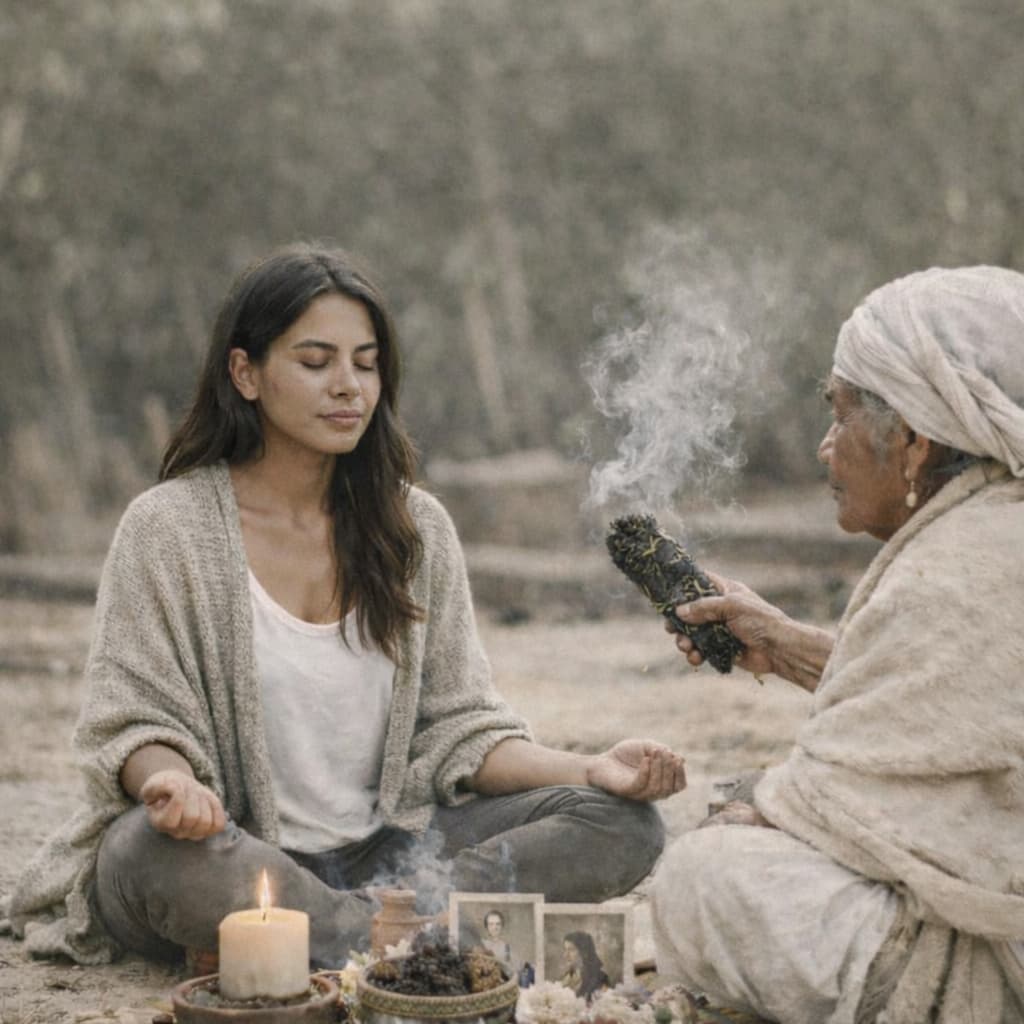
Ancient societies did not have access to modern psychotherapy, yet they developed sophisticated systems for processing collective and individual grief. Anthropologists note that these rituals were rarely private affairs. Instead, they were communal, sensory-rich experiences involving music, dance, and specific symbolic actions.
Dr. Dimitris Xygalatas, an anthropologist at the University of Connecticut, has spent years studying the impact of high-arousal rituals. His research suggests that communal ceremonies—often involving synchronous movement or chanting—can significantly lower cortisol levels and foster a sense of social cohesion. For our ancestors, these acts were not merely decorative; they were functional tools used to reset the nervous system after a period of intense survival pressure.
Restoring the Narrative
One of the most damaging aspects of trauma is the way it fragments memory and identity. Traumatic events often feel “unspeakable,” leaving a void in a family’s history. Ancient rituals served as a bridge, allowing communities to weave these painful experiences into a larger cultural narrative.
In many traditions, “spirit release” ceremonies or ancestral honoring practices provided a structured way for people to acknowledge the pain of the past without becoming trapped by it. By naming the trauma through myth or ceremony, the experience was transformed from an isolating secret into a shared story. This process of “meaning-making” is now recognized by modern psychologists as a vital component of post-traumatic growth.
Modern Application of Ancient Wisdom
Today, therapists are increasingly looking backward to move forward. “Somatic” therapies, which focus on bodily sensations rather than just talk therapy, mirror many of the physical components found in ancient rituals. Practices such as breathwork, rhythmic drumming, and group movement are being integrated into clinical settings to help patients release “stored” trauma that words cannot reach.
Furthermore, the rise of “restorative justice” mirrors the ancient emphasis on community healing over individual punishment. These processes allow survivors and perpetrators to engage in structured dialogue, seeking to repair the social fabric that trauma often tears apart. By focusing on the “we” rather than just the “I,” these modern adaptations honor the communal nature of human resilience.
Breaking the Cycle
The realization that we may carry the wounds of our predecessors is a daunting one. However, the study of ancestral rituals offers a more hopeful perspective: if trauma can be inherited, so can the tools for healing.
Experts emphasize that healing does not require a literal return to the past. Instead, it involves adopting the principles that made ancient rituals effective. This includes creating dedicated spaces for reflection, engaging in physical activities that regulate the nervous system, and fostering deep social connections.
As science continues to peel back the layers of our genetic and psychological history, the message remains clear. We are not merely the products of what happened to us, but also of how our ancestors chose to survive. By reclaiming the power of ritual, modern society may finally find a way to quiet the echoes of the past and build a more resilient future.
Also Read: Ruskin Bond’s Simple Philosophy on Happiness
Related News
Hidden Town Built Under Massive Cliffs Attracts Global Tourists
Latest Lifestyle News: However, there is another small town located under giant cliffs, which is ...

Aamir Khan on Breaking Industry Rules: 4 Personality Traits Behind His Perfectionist Journey
Latest Lifestyle News: Aamir Khan is well known as “Mr Perfectionist” for his disciplined approac...

Anushka Sharma’s RCB Victory Look Highlights Subtle Luxury with Cartier Watch
Latest Lifestyle News: When Anushka Sharma was seen during the RCB win celebrations, it seemed li...