
India Plans Fresh Curbs on Non-Essential Imports to Boost Domestic Manufacturing
Latest Business News: The government is mulling new steps to curtail non-essential imports as it seeks to ease the burden on the currency that has depreciated significantly and boost the manufacturing sector. The decision follows growing fears about the widening trade deficit, crude oil prices and the current economic uncertainty globally associated with the ongoing turmoil in the West Asian region.

 Share
Share
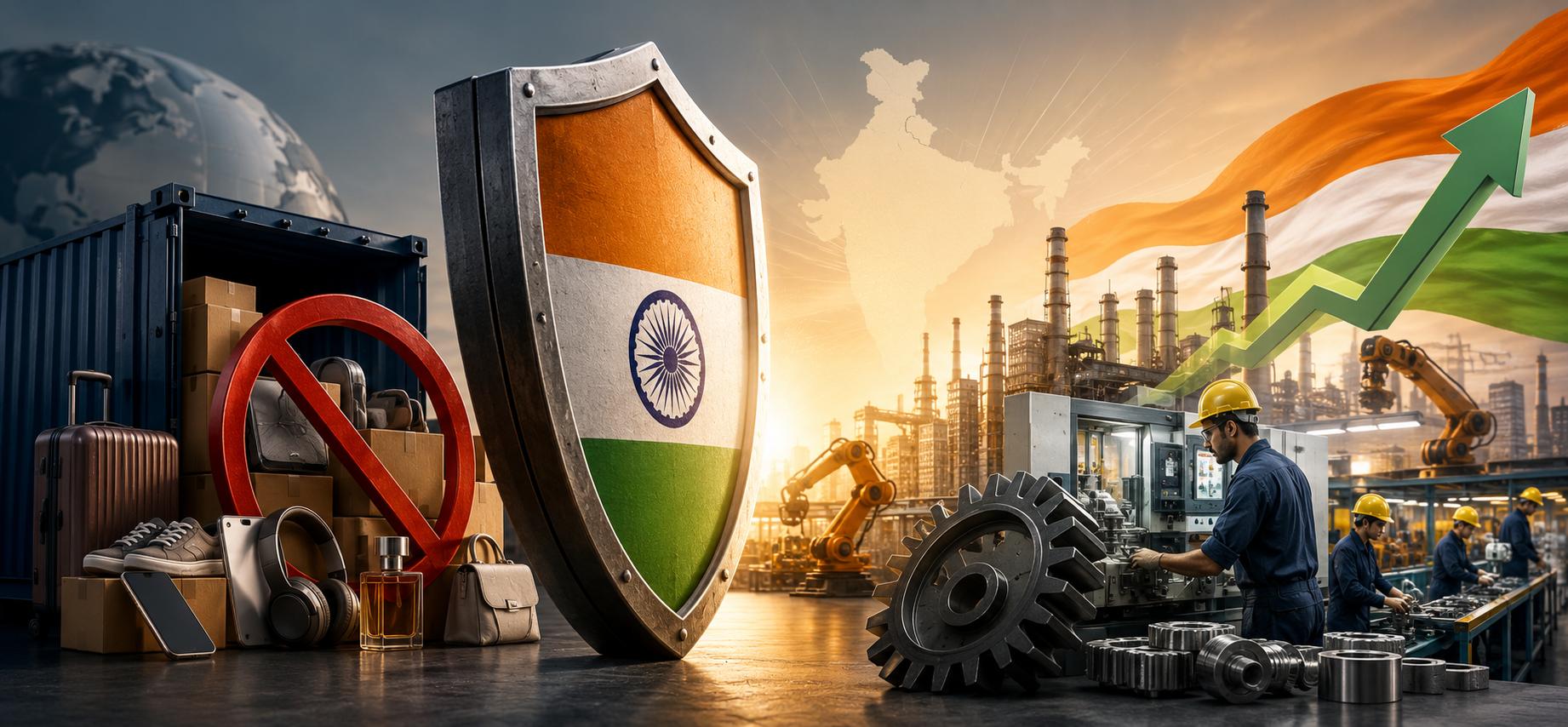
The Centre is also considering the imposition of selective restrictions on imports and a possible increase in duties on non-essential economic goods, reports said. The plan is expected to not only help in cutting the import bill, but also save foreign exchange reserves and promote the “Make in India” initiative for local manufacturing of the goods.
This development has got the Indian business community talking, particularly manufacturers, exporters and traders, who are waiting to see what comes next in the government’s policy.
India is mulling on import bans because of the following reasons:
The current account deficit (CAD) stood at a high level in recent months, as India’s merchandise trade deficit grew sharply. Meanwhile, the Indian Rupee has been trading at the lowest point in the last 15 years against the U.S dollar amid surging oil import expenses and volatility in global markets.
The government is now taking steps to cut its reliance on imported luxury and non-essential items. Policymakers are thought to aim at areas where India has an existing manufacturing base or can easily establish a local manufacturing capability.
The Union Budget is also in line with India’s economic approach of ‘Aatman Nirbhar Bharat’, promoting national industries and generating employment opportunities by increasing manufacturing in the country.
Key drivers for the review of the policy
The government’s consideration of its decision is being affected by several economic and geopolitical factors:
- As crude oil prices rise, so do import costs.
- A downward trend in the value of the Indian rupee against the USD.
- Growing merchandise trade deficit
- Need to preserve foreign exchange reserves
- To promote the “Make in India” and self-reliance schemes:
- Tensions with West Asia have disrupted global food supply chains.The tensions in West Asia have created an impact on the global food chain.
- Support for MSMEs and domestic manufacturing with incentives
This has compelled the policy makers to consider measures to make the Indian economy more resilient and reduce their unnecessary imports.
Government’s focus on domestic manufacturing
Recently, Commerce and Industry Minister Piyush Goyal has appealed to industries to look for items which can be produced in the country rather than imported. He stressed on the need to analyze the import market and find alternatives to it to save from outside dependence by Indian firms.
Experts are anticipating increased localization in the sectors of electronics, consumer goods, precious metals and textiles, among other industries, in the coming months. The government has already imposed duty increases on gold and silver imports to check excesses on import spending and stabilize the rupee.
India’s long-term focus is on improving the competitiveness of its manufacturing sector, encouraging industrial investment, and expanding export-driven industries for global markets. Such measures may also benefit India’s efforts to become a global manufacturing hub in the wake of the changing global supply chain, economists say.
Impact on Consumers and Industries
In case of reimposition of new import ban, some imported commodities may incur higher costs in the Indian market.In the event a fresh import ban is imposed, it is likely that some imported commodities will be costlier in the Indian market. Luxury imports, such as electronics, precious metals and even luxury goods, could end up costing consumers more. The government, however, expects local manufacturers to take up the slack with locally made products.
The policy may bring new opportunities to the Indian MSMEs and manufacturing companies, industry experts say. Businesses that invest in local manufacturing can enjoy higher demand, government incentives and a decrease in foreign competition.
Meanwhile, analysts warn that too many restrictions on imports could affect supply chains or inflation if domestic supply falls short in meeting demand in a timely fashion.
What Happens Next?
The government is expected to discuss the matter at upcoming interministerial discussions as the authorities evaluate the economic situation and the market situation in the world. There is a need to be cautious about what products can be considered non-essential imports and only restrict products that can be confidently named.
The policy review is indicative of the Indian government’s attention on the economic sovereignty, monetary stability, and local industrial growth. The government seems to be keen to balance the import management process with long-term growth in manufacturing and trade stability despite the uncertainties of the world.
Meanwhile, the businesses, investors, and consumers are waiting for more news that can change India’s import policy and manufacturing in the coming months.
Also Read: Petrol & Diesel Prices Hiked in India: Reasons Explained
Related News

Jan Dhan Yojana Crosses 58 Crore Accounts, Boosting Financial Inclusion in India
Business News Today: India has had the occasion to observe history being made as the Pradhan Mant...

SEBI Bans Rajesh Exports CMD Over Alleged Financial Irregularities
Business News Today: SEBI hit the Chairman and Managing Director of Rajesh Exports with hefty fin...

Byju’s Tragedy: How Absolute Success Ruined a $22B Empire
Business News Today: Byju’s is a modern-day corporate tragedy, the rise of the Indian ed-te...