
India’s Crude Oil Output Hits 11-Year Low: Impact on Energy Security
Business News Today: The energy security of the nation is at risk due to the consistent drop in the production of crude oil for the last eleven years in which the amount of production dropped below zero during the period March 2025-26. According to the data provided by the Ministry of Petroleum and Natural Gas, there have been consistent drops in the production of crude oil. This poses risks to the economy of the nation because of its high dependence on imports. The inconsistency in the energy industry and the increasing demand in other industries can be seen through this mismatch. For the aim of attaining multi-trillion-dollar business status, there is a threat to the economic state of the nation.

 Share
Share
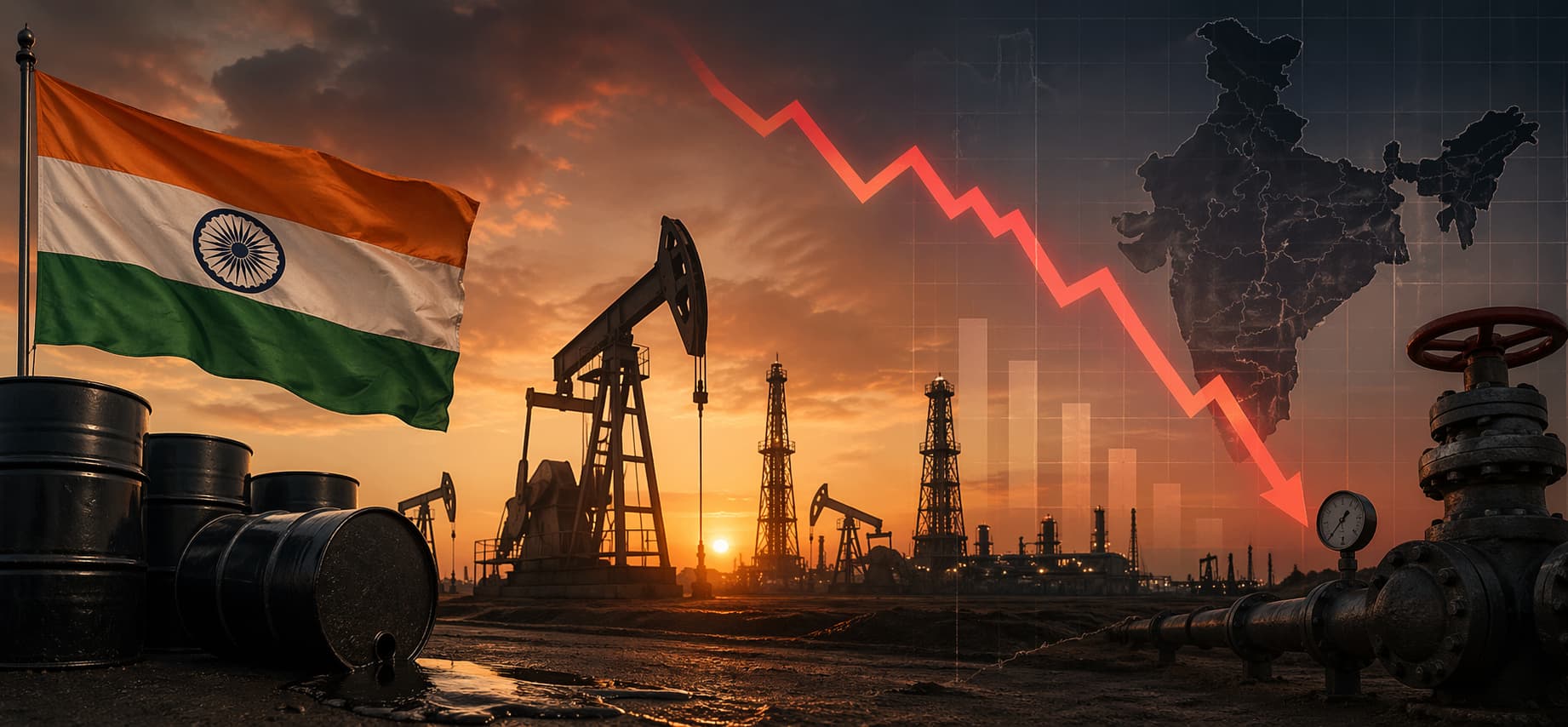
As per the interim results for the year ending March 2026, there has been a reduction in the production of crude oil by around 2.5-2.8%, and the level of production of 28 MMT has been reached. The reductions in some cases have been really alarming, amounting to a staggering 22% from the time when the reduction commenced, i.e., since 2014/2015. There has been a reduction in the production of natural gas by 3%, with the level of production being 34,776 mm scm. It is quite alarming to note that even though there have been discoveries of deep-water gas reserves, the production of natural gas has been on the rise.
The Core Challenges: Aging Fields and Lack of Discoveries
The steady erosion of India’s domestic energy production is not a sudden occurrence but the result of structural issues within the upstream sector. Industry experts point to several recurring themes that have hindered growth:
- Declining Reserves from Old Oil Wells: There are certain old oil wells where there is no way of applying enhanced oil recovery technology as natural decline from such wells has been observed.
- Unavailability of Oil and Gas Elephants: No significant discoveries have been made so far concerning oil and gas wells. While the success that some companies have had in exploring oil in the KG basin in deep water can provide temporary respite, now is the time for them to end as well.
- Lack of Presence of International Firms with Advanced Technology: Many initiatives have been taken by the Indian government for foreign participation, but not a single company having advanced technology has shown any interest in the bidding process.
- Geopolitical Challenges: Due to geopolitical tensions in West Asia and blocking of vital waterways like the Strait of Hormuz, India has found difficulty in obtaining drilling rigs.
Skyrocketing Import Dependence
As the production from the local sources could not cope with the growing demand because of the growth of the country’s economy, now India depends on imports of its petroleum products, which is really scary. The extent of dependence on crude oil imports has reached an alarming stage by reaching nearly 89%, while the same in relation to natural gas stands above 51%. Both of these pose a “double whammy effect” on the Indian economy. While the former adds up to the pressure on the country’s CAD, the latter has made Indian fuels very sensitive to the rise in Brent crude prices globally. The high cost of freight and the shortage of oil in the month of March 2026 was due to the conflict between Iran and the US.
Policy Interventions and the Road Ahead
Nevertheless, there have been several attempts by the government of India to alter this situation, including HELP, whose purpose is to lessen red tape, provide the freedom of marketing and pricing, and also give favorable financial conditions to the explorer. In addition to that, India has shown an assertive attitude to transition policies for ethanol blending, green hydrogen, and electric mobility, aiming at becoming less reliant on fossil fuel sources. But, based on the figures up to 2026, one cannot see any significant attempts being made in order to reverse the trend in question. The only thing that India should do now is try and monetize its discoveries and look for new areas of exploration.
That is because, otherwise, the country is doomed to experience fluctuations in the international energy market due to its dependence on the import of crude oil for sustaining its economy. Consequently, there is a problem that India must solve in order to cope with its requirements and live up to its promises regarding net zero emissions.
Also Read: Permanent Alimony Doesn’t End Maintenance: Orissa High Court Clarifies Law
Related News

Jan Dhan Yojana Crosses 58 Crore Accounts, Boosting Financial Inclusion in India
Business News Today: India has had the occasion to observe history being made as the Pradhan Mant...

SEBI Bans Rajesh Exports CMD Over Alleged Financial Irregularities
Business News Today: SEBI hit the Chairman and Managing Director of Rajesh Exports with hefty fin...

Byju’s Tragedy: How Absolute Success Ruined a $22B Empire
Business News Today: Byju’s is a modern-day corporate tragedy, the rise of the Indian ed-te...