
Maruti Suzuki Introduces WFH Policy, Restricts Non-Essential Foreign Travel
Business News Today: Maruti Suzuki is rumored to have taken yet another step toward optimizing cost in the workplace, including Work From Home (WFH) and prohibition of non-essential foreign trips. This latest decision was made apparently in conjunction with other decisions regarding austerity measures issued by the government, such as the appeal by Prime Minister Narendra Modi for being economical and utilizing the resources effectively at their disposal.

 Share
Share
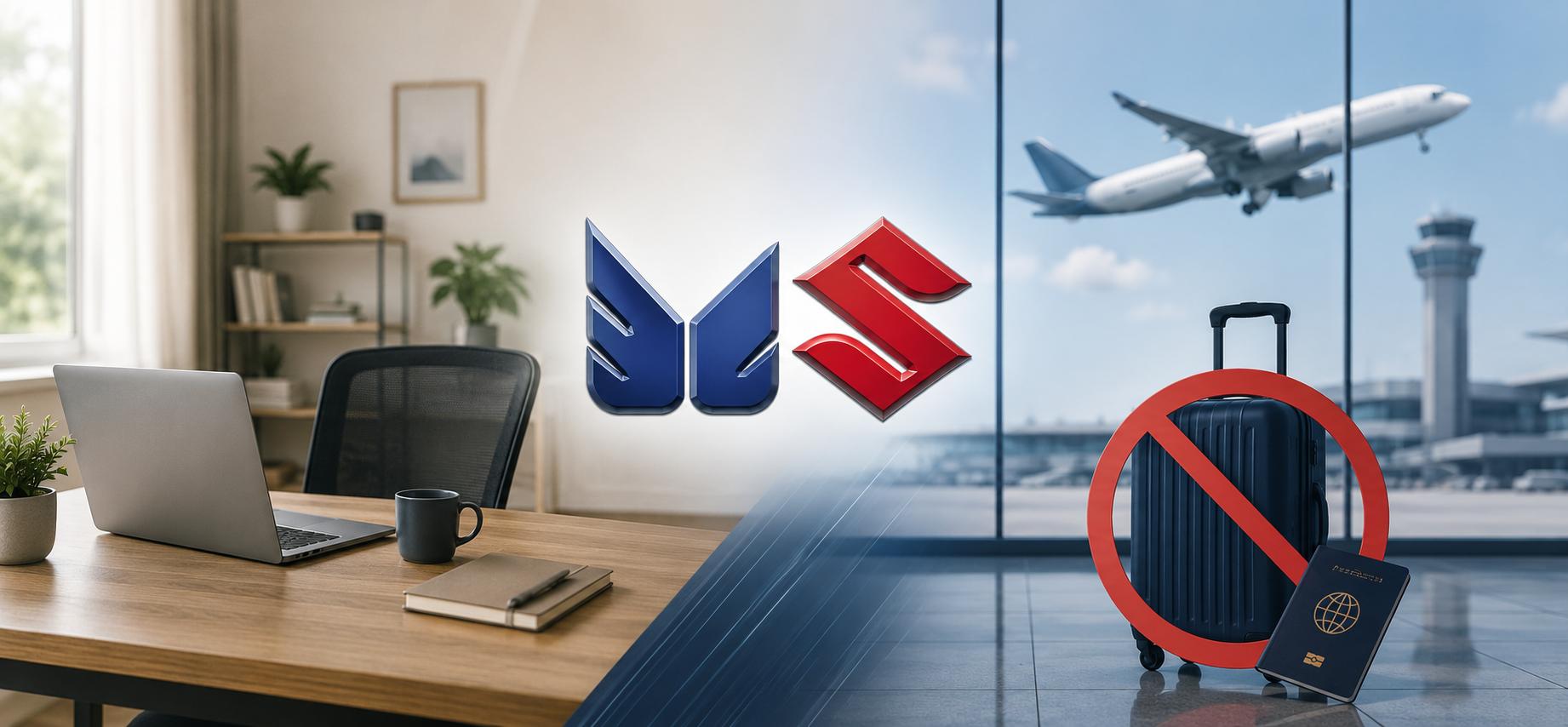
The above development has attracted a great deal of attention from the business community, especially within the Indian automotive and manufacturing sectors, which indicates that it is becoming a common practice for big corporations to optimize costs, increase productivity, and reduce international exposure in a changing economy.
What changes has Maruti Suzuki introduced?
Internal guidelines, as per Maruti Suzuki, and industry analysis, reveal that the new guidelines have been drawn out to balance efficiency with cost savings. The organization is reportedly encouraging hybrid work options and minimal liberty to travel.
Key policy highlights:
- The introduction of the Work From Home (WFH) scheme for eligible employees.
- Non-essential foreign travel should not be approved.
- Prioritize trips abroad which have some compelling reasons.
- A network of cost control mechanisms through administrative and operational offices
- Use digital collaboration tools to decrease the need for in-person traveling.
The steps are viewed as a part of a business efficiency initiative, not a total move to online operations.
Alignment with austerity and economic signals
The policy shift is being tied to broader austerity communications in governance and corporate practices. Today, businesses in all industries are trying to spend less, use fewer resources, and adopt a “digital-first” approach to their workflows.
Remarkably, there are parallels in industry discussion too, to the themes of leadership and technology-enabled transformation, such as that of Claire Mazumdar whom industry commentators have linked to digital innovation and organizational transformation frameworks in general scope discussions.
Stress on staff and business processes
WFH flexibility and travel restrictions are likely to have mixed impacts on employees. This may be great for those who can work remotely, but for those who are involved in international coordination or client-facing jobs, they might find it harder to be approved.
Potential impacts include:
- Better work/life balance for qualified remote workers.
- Decreased mileage for cost-driven departments.
- More virtual meetings and digital collaboration tools used.
- Coordination of international projects may be delayed due to travel restrictions.
- Improved concentration on home operations and improvement of efficiency.
Industry response and broader trends
Since the restructuring after the pandemic, the automotive sector has become more and more hybrid. The move by Maruti Suzuki is believed to be consistent with the practice of global companies which balance productivity with cost control.
Simultaneously, innovation and mobility are rapidly changing. The introduction of Uber to Launch Electric Air Taxis reflects the evolution of transportation and mobility systems towards futuristic, tech-based solutions. Although these are still in their infancy in many countries around the world, they would seem to be the general trend for mobility and corporate travel ecosystems to follow.
Significance of the policy and outlook for the future
This updated workplace strategy by Maruti Suzuki might prompt other big companies in India to rethink their travel and work from home policies. Impacts of the need for efficiency from the austerity measure may relate to HR policies, operational planning and corporate governance across industries.
Key expected outcomes moving forward:
- The increasing use of hybrid working models.
- Increased cost control policies at large businesses
- Better internal workflow digitization, resulting in faster results.Better digitization of internal workflows with faster results.
- Minimized reliance on overseas travel for everyday business.
- More emphasis on sustainability and efficiency metrics
Conclusion
The adoption of WFH and non-essential travel policy of Maruti Suzuki is a clear pointer towards cost and operational optimization. This reflects the overall message of austerity, but at the same time, it indicates a paradigm shift in the nature of workplaces within India’s corporate culture. In an age where technological innovations such as digital transformation, hybrid work, and Uber for Air (electric air taxis), among others, are gaining prominence, the corporate ecosystem appears to be undergoing another round of efficiency-based transformation.
Also Read: Rupee Falls to 95.43 vs US Dollar as Middle East FadeUp
Related News
Jan Dhan Yojana Crosses 58 Crore Accounts, Boosting Financial Inclusion in India
Business News Today: India has had the occasion to observe history being made as the Pradhan Mant...

SEBI Bans Rajesh Exports CMD Over Alleged Financial Irregularities
Business News Today: SEBI hit the Chairman and Managing Director of Rajesh Exports with hefty fin...

Byju’s Tragedy: How Absolute Success Ruined a $22B Empire
Business News Today: Byju’s is a modern-day corporate tragedy, the rise of the Indian ed-te...