
ONGC Highlights Risks of India’s Heavy Reliance on Middle East Oil
Latest Business News: The increasing reliance on West Asian oil imports has been questioned once again by India where Oil and Natural Gas Corporation (ONGC) has warned of over-reliance on the region due to the rising geopolitical tensions. As instability in major oil producing countries continues, analysts are advising India to diversify its energy sources so that it has a stable flow of energy that will keep it economically stable in the long term.

 Share
Share
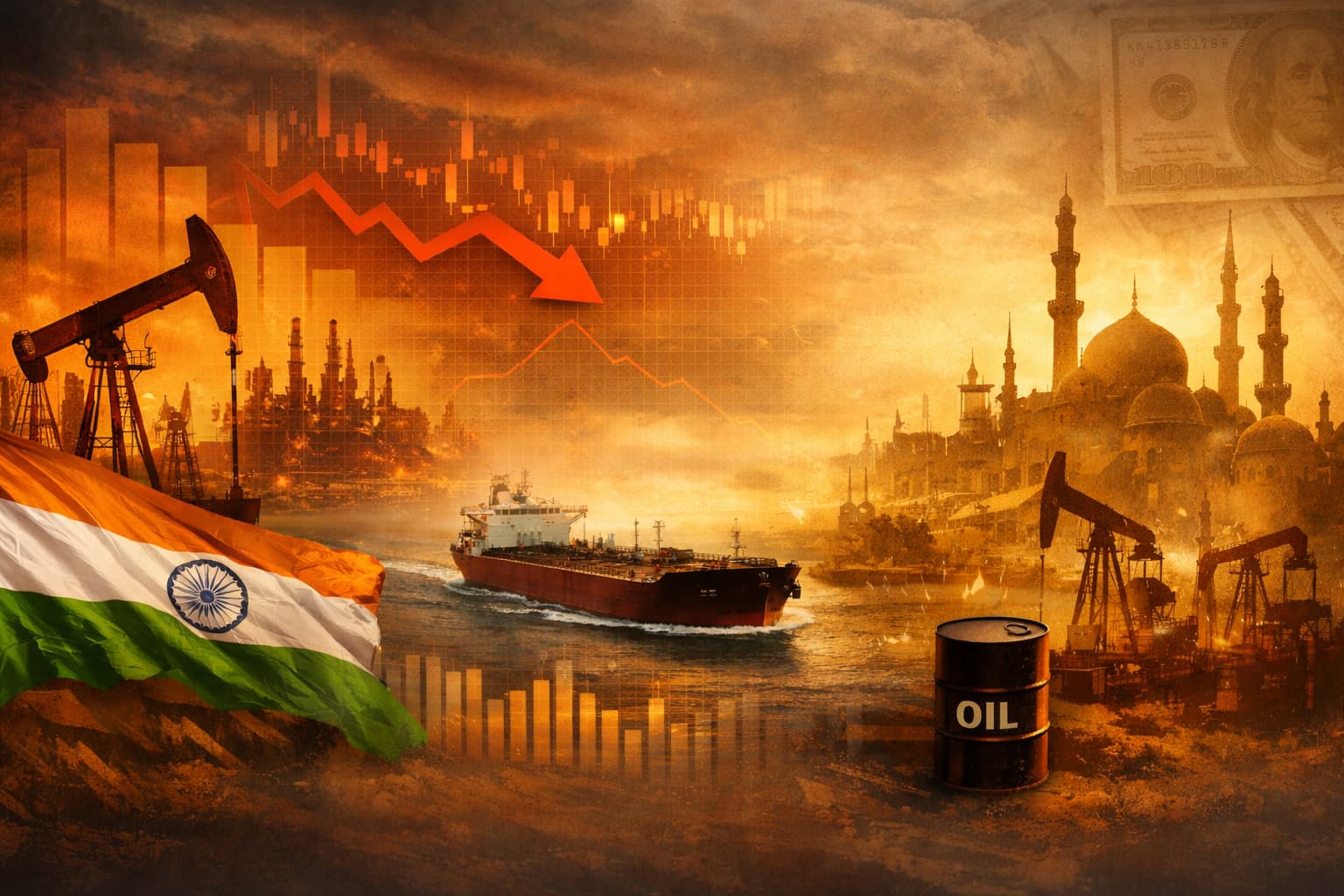
Almost 85 percent of its crude oil needs are imported, with a large part of it being imported by West Asian nations like Saudi Arabia, Iraq, and United Arab Emirates. Although these countries have traditionally been trusted suppliers, the current geopolitical tensions, such as conflicts and sanctions have caused concerns of supply disruptions and price volatility.
ONGC Highlights Strategy of Diversification
The representatives of ONGC stressed that India should implement a more moderate attitude towards the import of energy. The company has called upon the government to consider alternative sourcing measures and invest in local production of energy to minimize its exposure.
Industry observers argue that India is over-dependent on West Asia and as such it is vulnerable to various risks, such as the disruption of shipping routes, unexpected price rises and geopolitical instability. These dangers are quite crucial considering the role of crude oil in fueling the industrial development and transportation industry in India.
Major issues of energy reliance in India
The on-notice of ONGC brings to light some of the most crucial issues that India needs to take care of:
- Geopolitical Instability: The current disputes in West Asia have the potential to disrupt the supply chain and production of oil.
- Strait of Hormuz Risks: This is a narrow passageway that hosts a significant number of oil shipments in the world and thus it is a strategic chokepoint.
- Price Volatility: The changes in the price of crude oil have a direct effect on the inflation and fiscal dominance balance of India.
- The vulnerability of the supply chain: Concentrating the whole chain of activities within a single location will expose the country to the risk of unforeseen shortages.
The above example shows the current need for the formulation of an energy policy that is multifaceted and strong.
Demand Alternative Energy and International Collaborations
India is also paying more attention to diversifying its energy portfolio in order to alleviate these risks. This involves increasing imports with other non-West Asian countries, including the United States, Russia, as well as African countries.
Government moves to enhance domestic exploration and production are also on the rise. Even ONGC is making significant contributions towards offshore and onshore exploration to boost local production.
Switching to other sources of energy must be done both for environment and security consideration. As international energy markets change, India’s ability to change will greatly contribute to its protection against outside disruptions.
Impact on Economy and Business Sector
Energy dependence is not only dependent on national security but also on the economy at a greater scale. Increasing prices of oil may increase transportation and manufacturing expenses and impact various industries. In the case of the Business community, this means increased operation costs and corresponding decreased profitability.
Economists have opined that a stable and diversified energy supply is the key to the continuation of economic growth. Any disruption in oil imports could have a cascading effect on inflation, currency stability, and trade balance.
The Road Ahead
In the face of the current world tensions that have been affecting the energy markets; India is at a very crucial crossroads in determining the energy policy. The warning issued by ONGC is a good reminder of the necessity of proactive approach and strategy.
Going forward, analysts propose a multi-pronged strategy which involves the reinforcement of global collaborations, investment in renewable energy and increasing the domestic production capacity. Through diversification, India can protect its future energy supply and ensure economic well-being.
Also Read: Green Asha Reaches India With 15,000 Tonnes of LPG
Related News

Jan Dhan Yojana Crosses 58 Crore Accounts, Boosting Financial Inclusion in India
Business News Today: India has had the occasion to observe history being made as the Pradhan Mant...

SEBI Bans Rajesh Exports CMD Over Alleged Financial Irregularities
Business News Today: SEBI hit the Chairman and Managing Director of Rajesh Exports with hefty fin...

Byju’s Tragedy: How Absolute Success Ruined a $22B Empire
Business News Today: Byju’s is a modern-day corporate tragedy, the rise of the Indian ed-te...