
Stock Market in India Struggles to Keep Pace
Despite the fact that the economy has strong GDP numbers and an active industrial sector, the Indian equity market is still limited by the issue of valuation and the unceasing exodus of foreign capital.
MUMBAI: The story on India has been that of unshakable optimism over the last ten years. Being the fastest-growing major economy in the world, the South Asian country has always been ahead of others with yearly GDP growth rates of between seven and eight per cent. In the crowded streets of New Delhi, the authorities are citing the record tax revenues and a factory renaissance as evidence of a structural transformation. But at the Mumbai trading pits, the air is perhaps wary.

 Share
Share
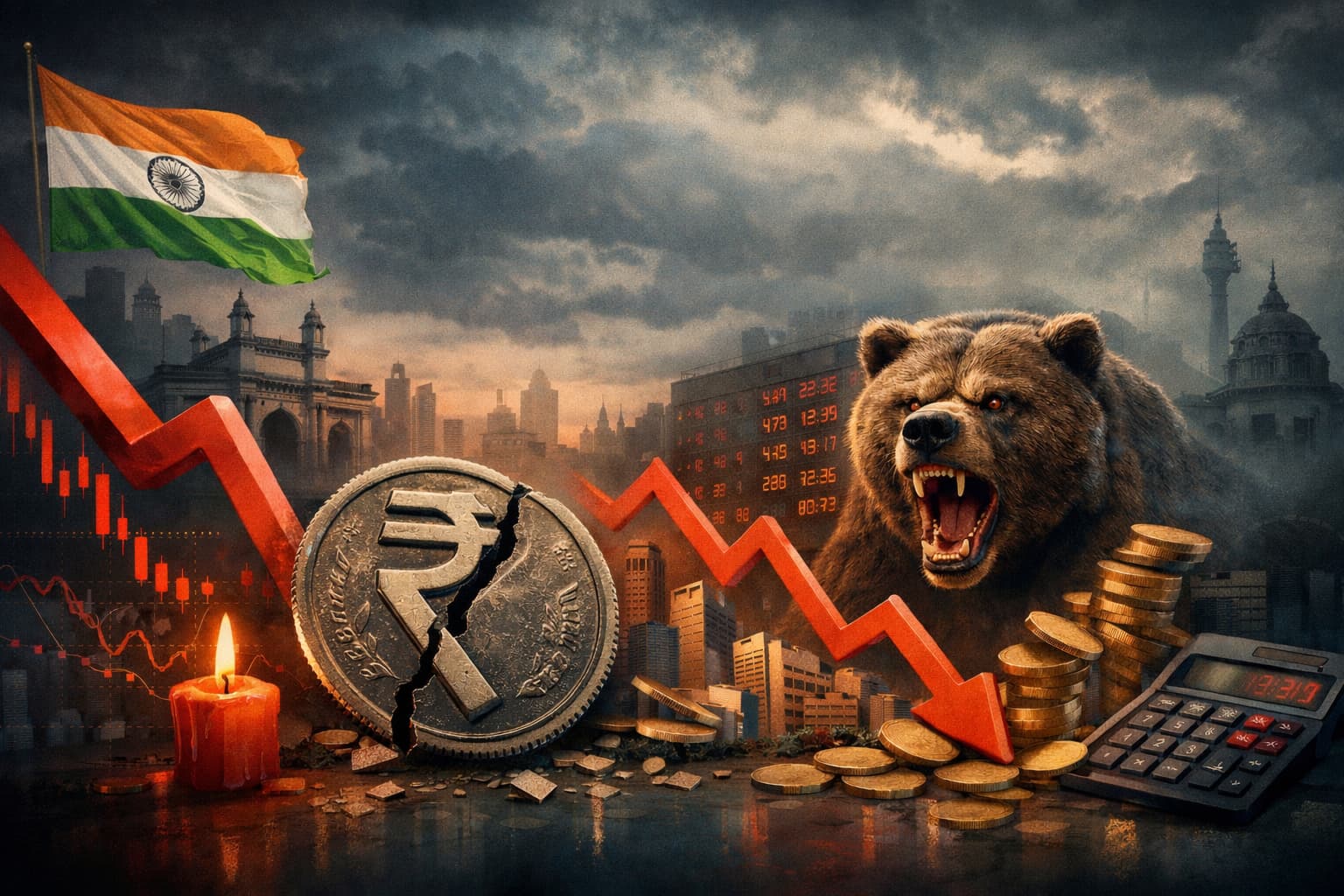
Even the stock market in India today, which was a popular target of emerging-market investors, is becoming less and less capable of keeping with the momentum of the underlying economy. Although the national performance is performing in an unprecedented pace, the main indices, the BSE Sensex and the Nifty 50, have been plunged into a relative stasis and increased volatility. This growing rift between the Main Street and the Dalal Street begs some serious questions on whether the Indian equity story has hit the limit at last.
The Great Decoupling
The disassociation is stark. Generally, the equity market of a nation acts as a futuristic indicator of the economic wellbeing of an economy. But in the year 2025 and the initial months of 2026, this association has broken. As the industrial production and credit growth have skyrocketed in India, the Nifty 50 has spent a significant part of the previous year in range trading not achieving the 10-digit returns that the investors got used to during the post-pandemic boom.
According to market analysts, we are going through a digestive phase. After a giant rally, 2021-24, the stocks of Indians reached their highest valuations and many of the global fund managers had considered it to be priced to perfection. Although the firms were recording good profits, the stocks of these companies did not increase as the profits had already been reflected in the high Price-to-Earnings ratios of earlier years. In a word, the economy is struggling with an aim of justifying current stock prices, not of driving them upwards.
Valuation Trap and The FII Exodus
A major cause of this sickness of the stock market in India is the continued selling by Foreign Institutional Investors (FIIs). In late 2025, the international funds were net sellers in the Indian cash market and sold billions of dollars worth of equities.
There are two causes of this retreat. To start with, the lure of longer interest rates in the United States and a rejuvenated Japanese market have been able to draw capital off the emerging markets. Second, there has been a general agreement that the Indian equities are merely too costly as opposed to regional competitors like China or Vietnam.
It is an excellent story but at these prices, it is a hard trade according to a Singapore-based portfolio manager. You are paying a huge premium to grow that already has a wide recognition. As soon as world liquidity narrows down, the best markets are likely to get cold first.’
Sectoral Shocks: IT vs. Banking
The competition is not the same in all industries and this means that there is a disjointed corporate world. What the analysts are terming the Anthropic shock has hit the Indian market in the Information Technology industry, which has been the staple of the Indian market. With the maturity of generative AI, old models of outsourcing that companies like Infosys and TCS were built on, are being threatened out of existence. The investors fear that these giants might not be quick enough to pivot leading to drag of other indices.
On the other hand, the financial services and banking industry is bright. With an enhanced credit growth and balance sheet clean up, the Indian banks are literally the powerhouse of the present GDP growth. However, their high performance has not been enough to counter the headwinds that the technology and consumer-Goods industries are facing.
Trade Deals and Temporary Relief
It does show, however, some indications of resilience. Only this week, the markets witnessed a sharp revival after a landmark India-US trade deal had been announced. The Sensex flew more than five hundred points and the Nifty crossed the 25,800 mark with traders rejoicing in the fact that punitive tariffs were removed and that both countries were now committed to bilateral trade.
Though these wins on headlines bring short term relief, they cannot address the root cause of the problem, which is the inability of the stock market to maintain a rally that can match the 7.5 per cent growth path of the country. The absence of a capital appreciation is something that a large portion of the retail investors, who have got into the market via systematic investment plans (SIPs), are experiencing as something new and not desirable.
Related News

Jan Dhan Yojana Crosses 58 Crore Accounts, Boosting Financial Inclusion in India
Business News Today: India has had the occasion to observe history being made as the Pradhan Mant...

SEBI Bans Rajesh Exports CMD Over Alleged Financial Irregularities
Business News Today: SEBI hit the Chairman and Managing Director of Rajesh Exports with hefty fin...

Byju’s Tragedy: How Absolute Success Ruined a $22B Empire
Business News Today: Byju’s is a modern-day corporate tragedy, the rise of the Indian ed-te...