
Mamdani Education Reform Faces GOP Backlash Over “Lack of Merit” Concerns
Latest Education News: Mamdani’s education proposal has been the subject of heated political debate, with a high-profile Republican citing its “lack of merit-based structure” as likely to undermine what student achievement should actually mean. Its critique has also sparked a broader discussion regarding standards of public education, academic fairness, and future policy goals for America.

 Share
Share
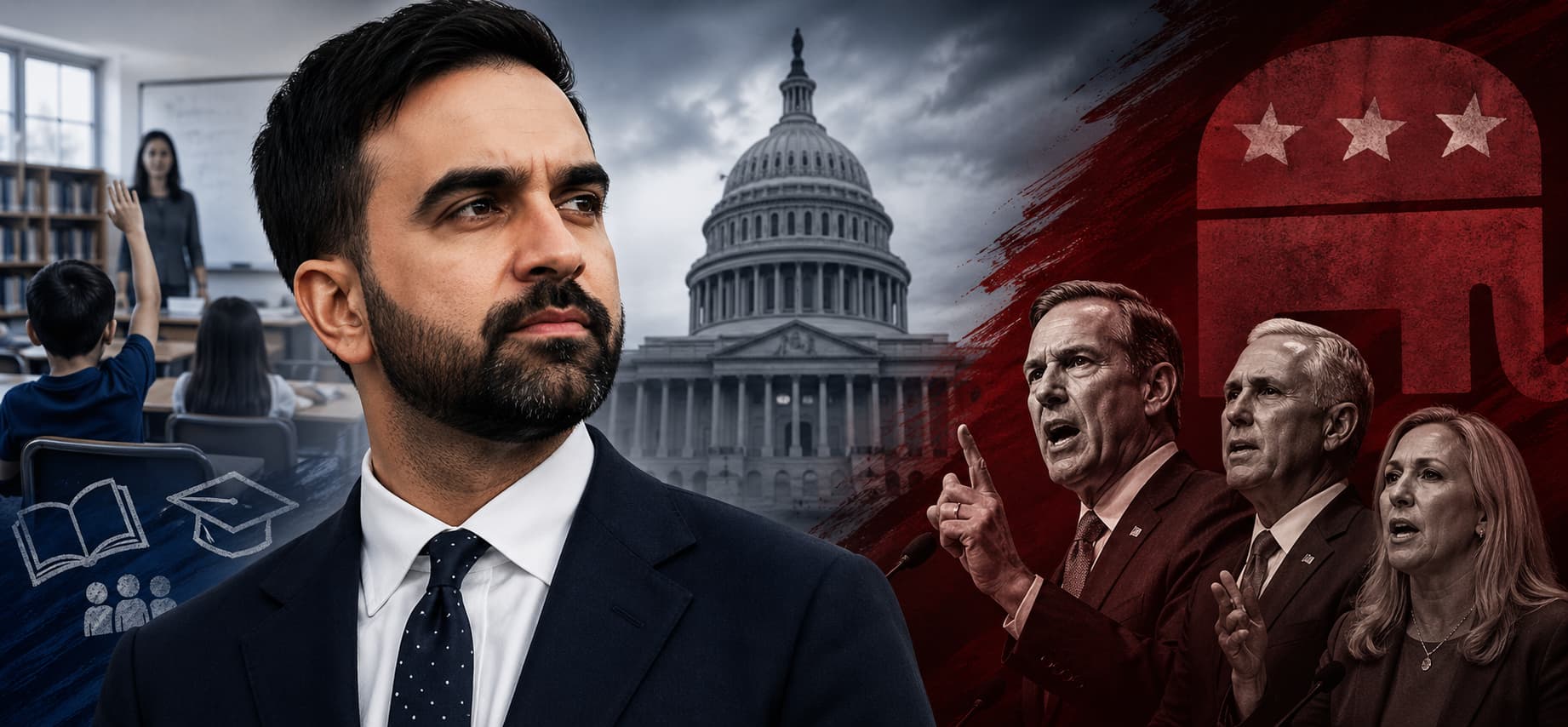
The Republican Party members argue that the reform will lead to the collapse of evaluation processes that revolve around test scores, excellent grades, and selectivity. According to the critics, a system that does not incorporate such elements will be bound to have repercussions as far as the motivation of the learners and academic success is concerned.
Issues Relating to Policy Orientation and Learners’ Academic Achievement
Policy orientation issues: The suggestions put forward by Mamdani have been criticized by teachers and political figures worried that the reform may divert attention from a result-oriented school system. They fear that the policy is likely to encourage an approach that prioritizes inclusivity and wider grading systems over the results orientation approach.
This raises larger political and policy questions regarding the role of the new education system in achieving equity without sacrificing academic standards.
Highlights of the GOP opposition:
Several GOP points raised by the Republican leader as to why he opposes the proposal:
- Loss of emphasis on academic success: Concerns that the best students will no longer be rewarded sufficiently.
- Weakened readiness to college/career: Concerns that students will not be competitive enough upon graduation.
- Loss of benchmarks: Concerns over the phasing out of the benchmarks from the standardized testing.
- Loss of teacher performance evaluations: Concerns that performance will no longer be measurable.
- Long-term student achievement: Concerns that students will achieve at lower levels.
These points form the heart of the debate about whether the policy bolsters or undermines the systems upon which fundamental learning rests.
Supporters Defend the Proposed Reform
Supporters of Mamdani’s plan claim that the current merit-based system unfairly excludes students from oppressed communities and that it could make education a more equitable and less competitive experience. “These exams and grade-oriented systems put the student under more pressure than is really needed in education,” says one proponent of the plan.
“The learning environment of the present times should emphasize the importance of creativity and emotional intelligence rather than an exam oriented system,” argue advocates of Mamdani’s plan.
Political and social impact
The argument is becoming politicized, and analysts say it will become a focal point in policy debates to come. The argument represents the widening gap between liberal reform advocates and conservative elements pushing for the traditional standards.
Topics of discussion and disagreement:
- Fairness versus performance based merit
- The importance of standardized tests
- The intensity of the race for college admission
- Equity vs. The grading system
- Preparing students for future employment
According to experts, the resolution of this debate can affect not only the educational policies at the institutional level but also university admission and statewide curriculum standards.
Wider Implications for Students and Educational Institutions
The educational proposal developed by Mamdani would transform student evaluation methods after its implementation. The opponents of this system claim it will create grading discrepancies between different districts meanwhile its supporters believe it will reduce student performance pressure while solving equal access issues.
Current educational policy experts track this development because it will create major changes in educational institutions and job hiring practices and international research capacity.
The educational system faces dual challenges because educational policy makers must create necessary educational reforms while they need to maintain student achievement standards and educational system accountability.
Also Read: MIT Study Warns: Is AI Productivity Causing Delusion?
Related News

NMC Vacancies Delay Medical Admissions, Amicus Flags Transparency Issues
Latest Education News: The continuous shortfall of staff and late recruitment at the NMC has pose...

CM Mann Scraps PSEB Age Ranking After Amritsar Girl’s Brave Plea
Latest Education News: CM Punjab has taken a landmark decision and change in the administrative s...

CBSE & NTA Exam Portals Under Cybersecurity Scrutiny After Data Exposure Claims
Latest Education News: Once again, the digital examination framework in India is once again being...