
Supreme Court Puts a Stop to UGC’s New Equity Rules
Latest Education News: The Supreme Court of India recently made a significant move by putting the University Grants Commission’s (UGC) new “Promotion of Equity in Higher Educational Institutions” Regulations for 2026. This decision has sparked a new debate over how much control the central government should have over colleges and universities across the country. For now, the rules regarding discrimination and inclusivity in campus and univesitities are on hold.

 Share
Share
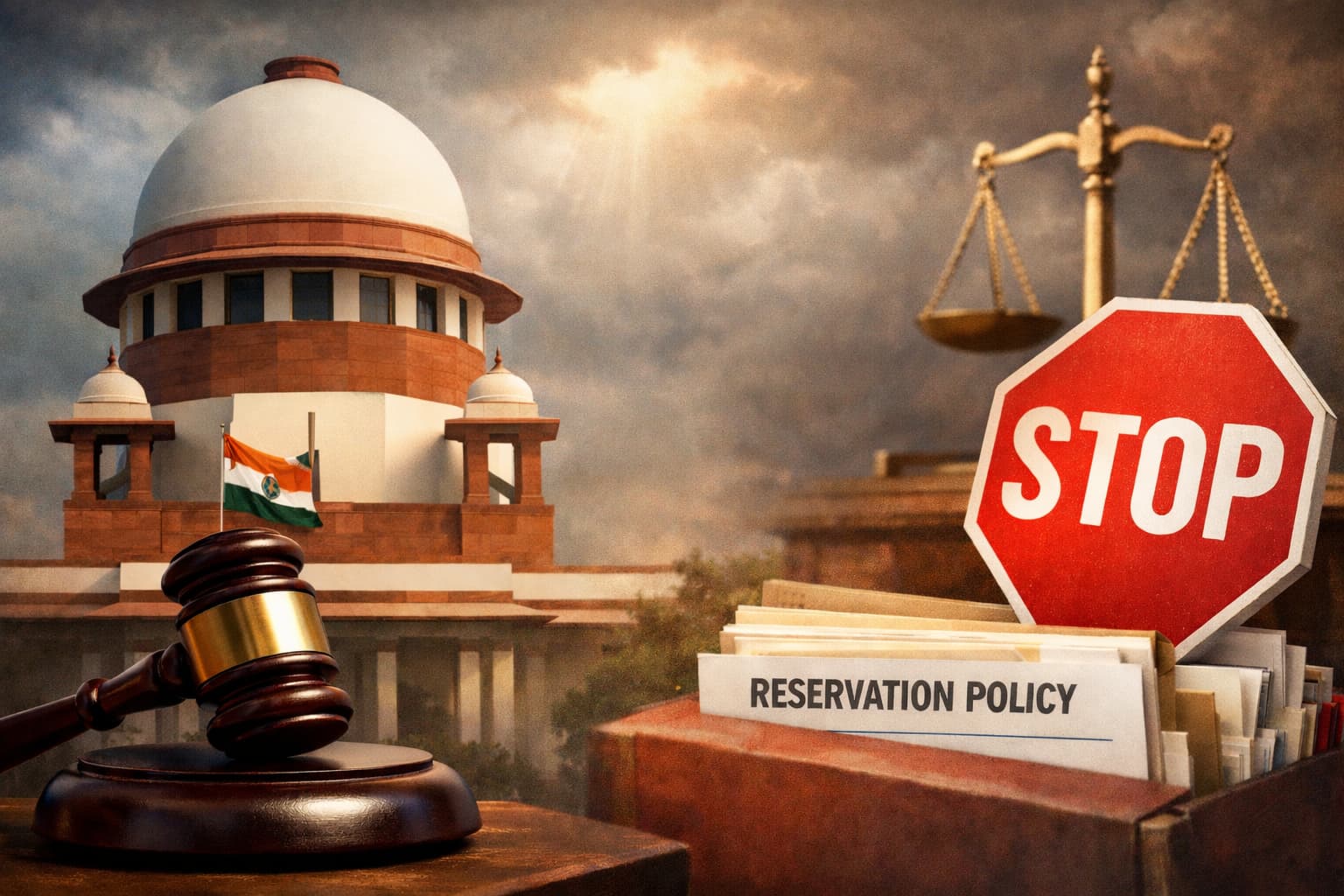
The stay comes after several legal challenges stood against the UGC’s authority. While the UGC argued that the rules were necessary to protect students from marginalized backgrounds, the court’s intervention suggests that there are deeper constitutional and administrative questions that need answering first.
The Court’s “Unity of India” Remark
During the proceedings, the bench, led by Justice B.R. Gavai and Justice K.V. Viswanathan, made some striking observations. One of the most talked-about points was the court’s emphasis on the “unity of India.” The judges noted that while education is a tool for progress, the regulations governing it must reflect the unified nature of the country rather than creating fragmented or over-regulated systems that might clash with state-run institutions.
The court seemed concerned about whether these new rules would interfere with the autonomy of states. In India, education is a “concurrent list” subject, meaning both the central government and state governments have a say. The Supreme Court hinted that the UGC might be overstepping its boundaries, potentially infringing on the rights of states to manage their own educational standards. The judges suggested that any regulation aimed at the entire nation must be balanced carefully to ensure it doesn’t disrupt the federal structure.
What Were the New Regulations About?
To understand why this is a big deal, we have to look at what the UGC was trying to do. The 2026 Equity Regulations were designed to replace older guidelines from 2012. The goal was to make higher education more inclusive for students from Scheduled Castes (SC), Scheduled Tribes (ST), Other Backward Classes (OBC), and minority communities, as well as students with disabilities.
Under these new rules, every university and college was required to set up an “Equity Cell.” This cell would be responsible for handling complaints of discrimination and ensuring that students from disadvantaged backgrounds felt safe and supported. The rules also mandated the appointment of an “Ombudsperson” to act as an independent authority to resolve disputes.
The UGC wanted to move away from a purely punitive approach and focus more on creating a welcoming environment. However, critics argued that the paperwork and administrative requirements were becoming too heavy for smaller colleges to handle. Others felt that the UGC was trying to micromanage the internal affairs of universities that already have their own grievance redressal systems.
A Look at the Timeline
The journey of these regulations has been a long one. It didn’t just happen overnight. The process started back in 2023 when the UGC first released a draft version of these equity rules. They invited the public and various stakeholders to give their feedback. After months of discussions and revisions, the final version was officially notified in early 2024.
Almost immediately after the notification, legal red flags were raised. Petitions began reaching the courts, claiming that the UGC didn’t have the power to enforce such specific administrative changes on state-funded universities. By the time the matter reached the Supreme Court, the tension between central regulation and state autonomy had reached a boiling point. The court’s decision to stay the regulations is a direct response to these concerns, effectively hitting the “pause” button until a more detailed hearing can take place.
Why This Matters for Students and Colleges
For the average student, this legal tug-of-war might seem like a lot of technical jargon, but it has real-world consequences. If the regulations had gone through, students would have seen new offices, new complaint procedures, and perhaps more diversity-focused programs on campus.
On the other hand, university administrators are worried about the “red tape.” Implementing these rules requires funding and staff—something many state colleges struggle with. There is also the fear that having too many central mandates makes it harder for universities to cater to the specific cultural or regional needs of their local student populations.
The Supreme Court’s focus on the “unity of India” suggests that they want a system that works for everyone without being overly rigid. The judges are looking for a middle ground where standards are high across the country, but local institutions still have the freedom to breathe.
Related News

Pythagoras’ Wisdom on ‘Yes’ and ‘No’ Resonates Today
Latest Education News: The Quote of the Day is often a rather compact information source that she...

Carl Sagan’s Vision of Science as a Spiritual Path
“Science is not only compatible with spirituality; it is a profound source of spirituality....

Lucknow Teenager Kills Father Over Academic Pressure
Latest Education News, LUCKNOW – There is an ugly instance of a patricide that shook the Vikas Na...