
India Heatwave Alert: Essential Safety Guide for Red Alert Regions
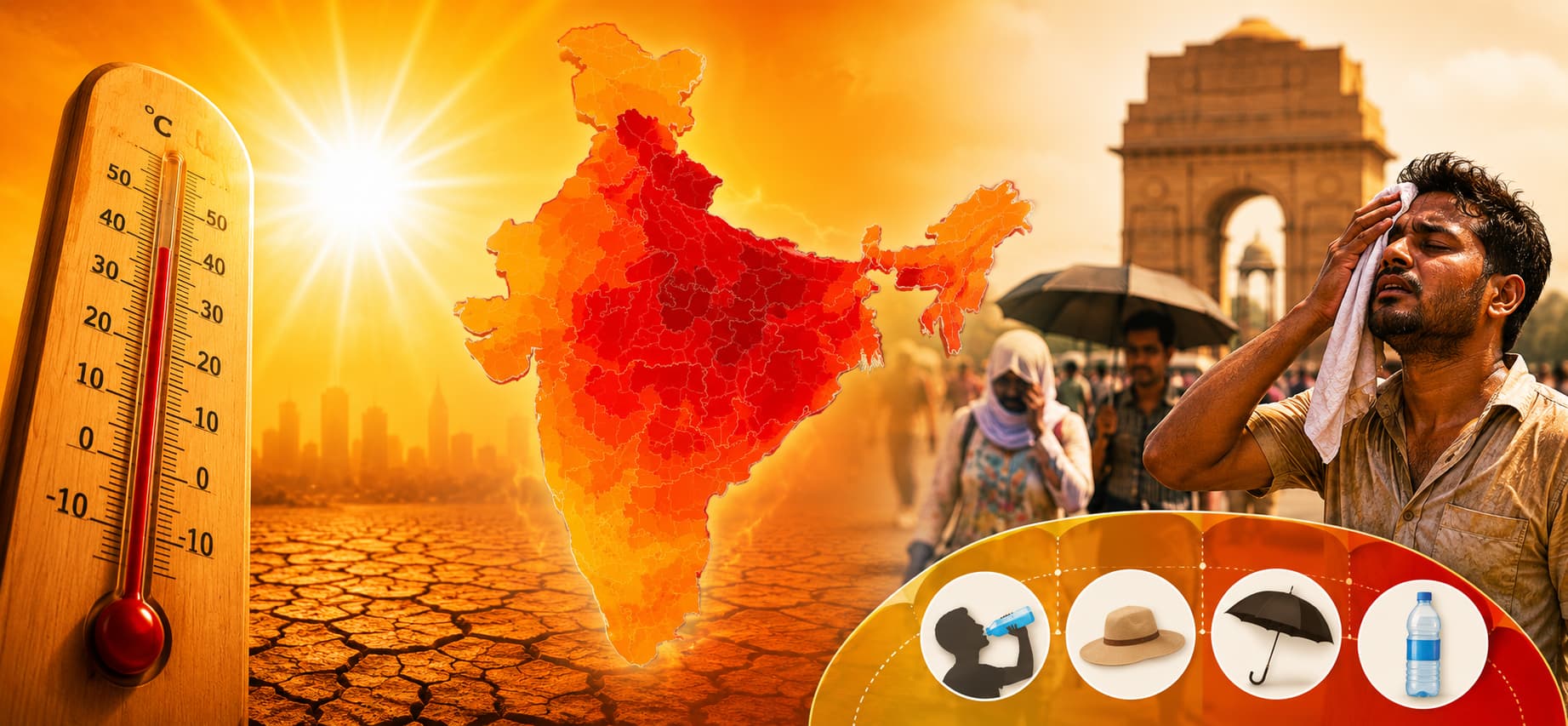
Latest News Today: The heatwave continues to batter large swathes of India with temperatures above 45C in many areas of the north and central part of India as of May 26, 2026. IMD has issued multiple warnings sending states with Red, Orange and Yellow alerts as India continues to witness one of the hottest summers this year with the heatwave already very active. People living in affected areas have complained of discomfort and public health officials urge people to take maximum caution, as Tamil Nadu Shock-a spurt in number of heat stroke incidents and stress to environment seen earlier-has brought their needs back into focus in this kind of heatwave crisis.

 Share
Share
Understanding the Alert System and Regional Impact
The IMD has a colour coded warning system to convey the intensity of the heatwave situation and the readiness of the local administration and the public to meet the situation. A red alert is the most severe alert, signifying that “severe” to “very severe” heatwave conditions are likely to persist and could lead to a significant risk to public health, particularly for the vulnerable—the elderly, children and those with underlying health conditions.
- Red alert: Restricted to a few regions in Punjab, Haryana, Chandigarh, Delhi, UP, West Rajasthan, East MP and Vidarbha. This time over most parts of the above mentioned states and Vidarbha have seen record breaking heat where maximum temperature crossed 45-47C at most places.
- Orange Alert: for some areas in Odisha, Jharkhand, Chhattisgarh and coastal Andhra Pradesh. This means that people who are in the sun for long periods are at a higher risk of developing a heat-related illness.
- Yellow Alert: When temperatures are warmer than normal, but not severe and life-threatening. The residents are requested to keep themselves alert and take simple precautions to remain safe in India.
Mitigation Strategies and Public Safety
State administrations have been frantically trying to make a difference in dealing with the effects of this extreme weather in this latest news update. High alert states have Chief Ministers and local health departments urging hospitals to have supplies of intravenous fluids, ORS, and cooling devices on hand to treat heatstroke patients. Authorities have also urged against going out from 11:00 AM till 4:00 PM all over India.
In addition to the immediate public health threat this time, there has also been increased civic scrutiny about response times of administration. The citizens are demanding transparency in the water scarcity management and power grid stability, similar to the “Twisha Sharma Death Investigation” when they raised questions about the accountability of the system. Their absence of active weather systems and dry westerly winds are some of the key factors that contribute to this intensity over India, which is likely to continue over the next several days, experts note.
Long-term Forecast and Monsoon Anticipation
The forecast is grim for the next 3-4 days but the good news is that there is a glimmer of hope. The IMD expects a gradual drop in the maximum temperature from May 29. Another Western Disturbance is likely to hit Northwest India by the end of the month, causing a fall in temperature by 6 to 8°C in the region. Moreover, the landfall of Southwest monsoon, which is expected over Kerala around this time, is expected to provide much needed relief to the southern peninsular region and will proceed to the rest of the country.
Environmental and Behavioral Impacts
It is not only the human health that is being impacted by the heat; but also regional ecosystems are under strain. Heat-related wildlife deaths and agricultural stresses are reported in Karnataka (interior regions) and Chhattisgarh. The ‘survival crisis’ mentioned in the bulletins that have been issued recently, as the water tables continue to fall, is a call for sustainable water management. Here are some expert recommendations for safety across India:
- Taking in lots of water even when you don’t think you need it.
- Wearing light coloured loose fitting cotton clothing.
- Refraining from overexposure to the sun in the middle of the day.
- Keeping a close watch on vulnerable family members and pets in India.
The twin combination of extreme heat and humidity continues to be a huge challenge to climate adaptation in India. As India awaits the relief that monsoon cooling will bring to this inferno, the only defense remains in observing safety measures and proactive state administration. Taking care of our work force and our elderly during these cycles,is a shared responsibility, and it forms part of India’s Resilience.
Also Read: What Is a Cockroach Janata Party? Viral Movement Adds 40,000 Members in 48 Hours
Related News

CJP Issues Defiant 7-Day Ultimatum Over National Education Crisis
Latest News Today: The political scenario in New Delhi has gone through an unprecedented change, ...
Manipur Village Attack: 3 Dead in Early Morning Firing Incident
Latest News Today: The latest horrific incident in Manipur where three were killed and others pa...

Delhi Hotel Fire Tragedy: 21 Dead in Devastating Single-Exit Trap
Latest News Today: A vicious fire broke out in the popular bed and breakfasts at a multi-story bu...