
Indian Army’s Bold Warning to Pakistan: Operation Sindoor Legacy Lives On
Latest News Today: The Indian Army recently celebrated the occasion of Operation Sindoor (OPS), a historical event in the field of counter-insurgency, through an act of solidarity and commitment to peace and stability, not just appearances. The Army in a clear and pointed message to Pakistan said “Sirf hungama khada karna mera maqsad nahi, meri koshish hai ki ye surat badalni chahiye” (My aim is not just to create a ruckus; my effort is to ensure that this situation must change). This is a clear warning to the terrorists and a strong reminder to India of their strategic patience and unflinching resolve to eliminate the infrastructure of terror across the border.

 Share
Share
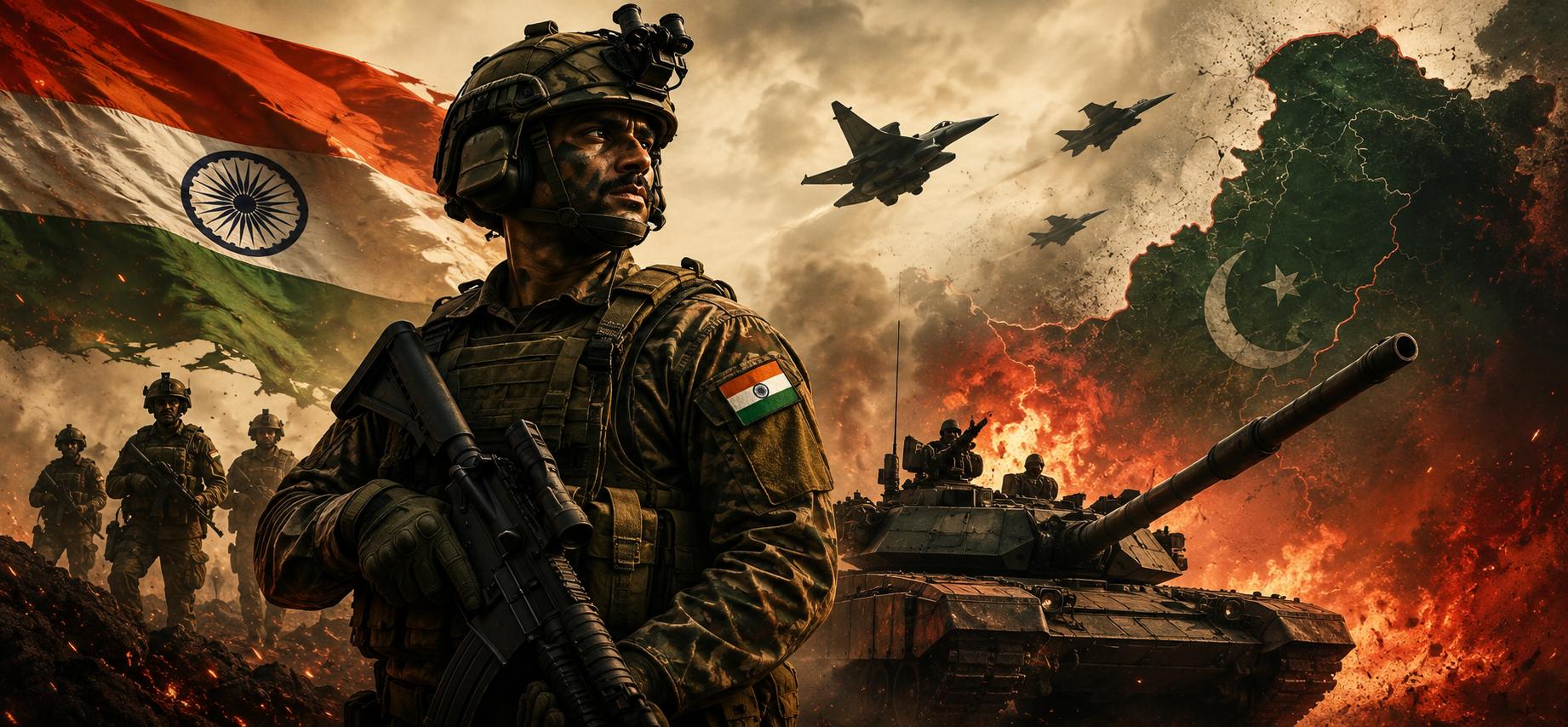
The Latest News from the border regions indicates a change in the way the Indian defense forces have been conducting asymmetric warfare in the past.While the nation is thinking about the tactical successes of asymmetric warfare in the past, it is proposed that there has been a paradigm shift in the Indian defense forces approach to asymmetric warfare in recent times as indicated by the Latest News from the border regions. It is no longer a reactive approach to conflict, but a proactive, holistic approach with precision strikes and grassroots development in conflict areas. The anniversary was not only to pay homage to the martyrs but also to reaffirm the “zero tolerance” policy with regards to state sponsored militancy.
Strategic Implications of the Army’s Stance
The deliberate use of poetry to convey a military message highlights the sophistication of India’s psychological operations. By stating that the goal is not “hungama” (commotion), the Army leadership is signaling to Islamabad that Indian military actions are governed by long-term objectives rather than populist rhetoric. Operation Sindoor remains a benchmark for such surgical precision, having successfully neutralized high-value targets while minimizing collateral damage.
In the current geopolitical climate, the message carries significant weight. It addresses the ongoing attempts to revive infiltration routes and the use of drones for smuggling arms and narcotics. The Army’s “pointed message” suggests that while India seeks a peaceful neighborhood, it will not hesitate to alter the “surat” (situation) through decisive action if provoked. This strategic clarity is essential for maintaining the sanctity of the Line of Control (LoC) and ensuring the safety of civilians residing in the border belts of Jammu and Kashmir.
Key Pillars of Modern Counter-Terrorism Operations
The evolution of Indian military tactics since the days of Operation Sindoor can be categorized into several critical areas of focus. These pillars define the current operational readiness of the Northern Command:
- Intelligence-Led Precision: Moving away from broad-spectrum sweeps, the Army now relies heavily on human intelligence (HUMINT) and technical intelligence (TECHINT) to conduct pinpoint raids.
- Technological Superiority: The integration of AI-driven surveillance, thermal imaging, and anti-drone systems has created a multi-layered security grid that makes infiltration increasingly difficult.
- Winning Hearts and Minds: Under ‘Operation Sadbhavana’, the Army continues to invest in education, healthcare, and infrastructure, effectively isolating militants from the local population.
- Proactive Border Management: The transition from a defensive posture to a “proactive” one ensures that threats are neutralized at the launch pads before they can cross the fence.
- International Diplomatic Synergy: Military successes are backed by strong diplomatic efforts to highlight the role of “non-state actors” and terror sanctuaries on global platforms like the FATF.
The anniversary of Operation Sindoor also serves as a moment of introspection for regional security analysts. The “pointed message” is a testament to the fact that the Indian Army’s operational capabilities have grown exponentially. Today, the force is equipped with advanced weaponry and a robust logistics chain that allows for sustained high-altitude operations. This readiness acts as a deterrent against any misadventures by the neighboring country’s deep state.
Furthermore, the Army’s emphasis on changing the “situation” refers to the broader goal of de-radicalization and the restoration of normalcy. The decline in stone-pelting incidents and the rise in local recruitment for the police and armed forces are clear indicators that the strategy is working. The message to Pakistan is unambiguous: the old playbook of “thousand cuts” is no longer viable against a modern, digitally-integrated, and highly motivated Indian Army.
As the commemorative events concluded, the sentiment remained clear. The Indian Army does not seek escalation for the sake of headlines. Every bullet fired and every operation launched is a calculated step toward a larger vision of a terror-free India. The legacy of Operation Sindoor lives on, not just in the annals of military history, but in the quiet confidence of the soldiers standing guard at the world’s highest battlefields. The “surat” is indeed changing, and the Indian Army is the primary architect of this new reality, ensuring that the shadows of the past do not darken the future of the region.
Also Read: Election Results 2026: BJP Defies Anti-Incumbency with State-Wise Winning Strategy
Related News

CJP Issues Defiant 7-Day Ultimatum Over National Education Crisis
Latest News Today: The political scenario in New Delhi has gone through an unprecedented change, ...
Manipur Village Attack: 3 Dead in Early Morning Firing Incident
Latest News Today: The latest horrific incident in Manipur where three were killed and others pa...

Delhi Hotel Fire Tragedy: 21 Dead in Devastating Single-Exit Trap
Latest News Today: A vicious fire broke out in the popular bed and breakfasts at a multi-story bu...