
5 Life Lessons That Kids Will Only Learn in School
Latest Lifestyle News: Although academic success often takes centre stage in the discourse of education, the classroom role can do much more than teach mathematics or literature. The school environment is a microcosm of society to a child and offers experiences that are not possible in the home setting. According to the recent discoveries in child development, the modern school system remains an essential training ground in life.

 Share
Share
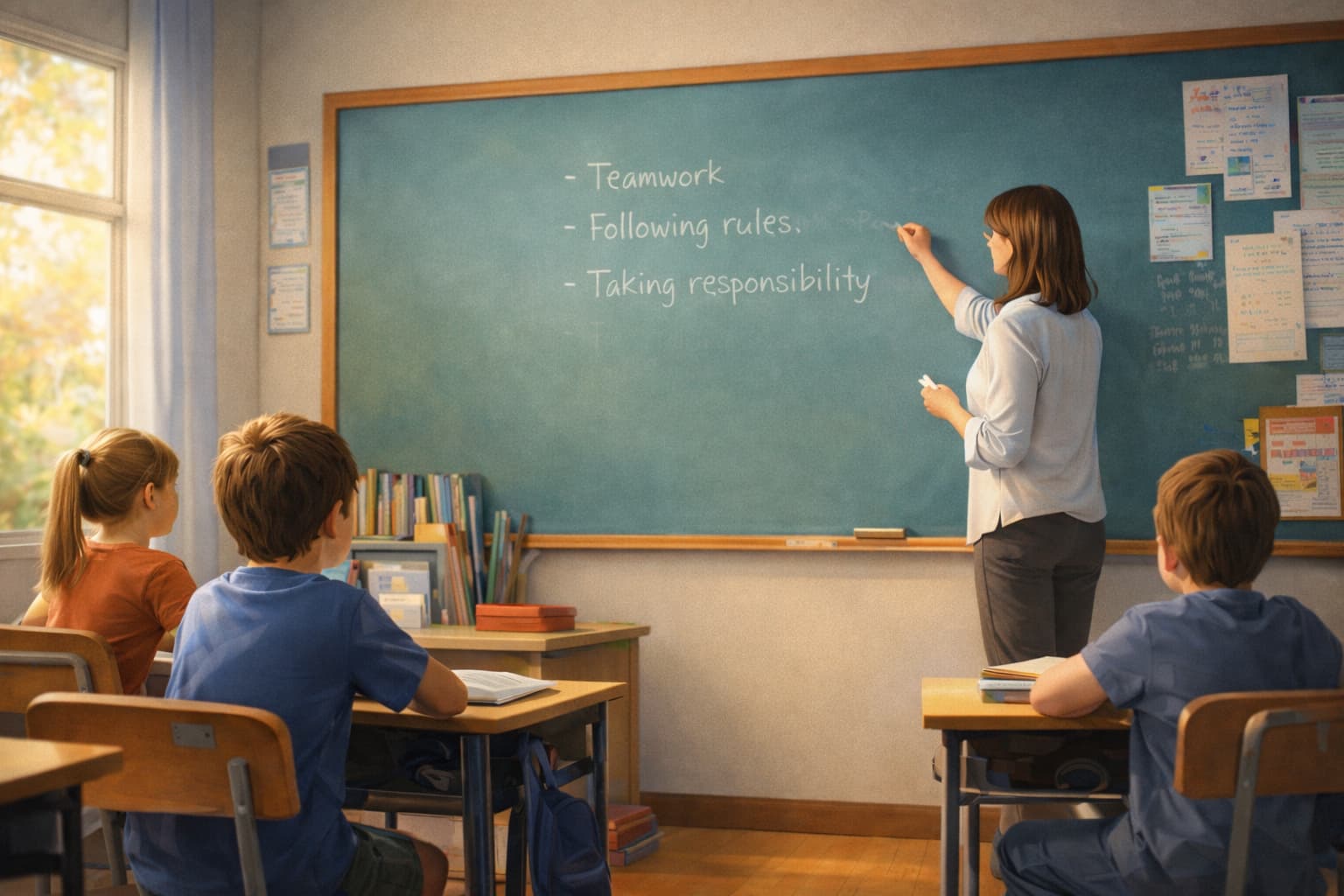
Teachers insist that, beyond the textbook knowledge, the daily experiences in a school building impart the much-needed wisdom.
The five basic lessons in life that outline the school experience are as follows.
1. Mastering Social Skills and Collaboration
Among the most direct benefits of a school environment, there is the necessity of associating with peers. Schooling not only forces children to interact with a wide variety of personalities, unlike the limited environment of home. Group projects and playground activities will provide students with the art of negotiation and comprehension of the importance.
Such communication fosters sympathy and reconciliation. In the case of a conflict, whether in a game or a joint task, children have to find a way out without the involvement of their parents. This is how a platform for professional communication is built; it teaches them how to work with people they themselves may not necessarily like, but have to admire, towards a common goal.
2. Establishing Discipline and Time Management
The organized character of the school day provides a child with the first experience in a professional schedule. The whole situation of switching to another topic with the sound of a bell gives the feeling of routine. Conducting several tasks, studying to pass exams, and getting to school on time are the pillars of self-discipline.
With a strict schedule, children get to know how to prioritize things. They start knowing that there are specific hours that are allocated to certain work that is termed as focused, and the recreation times. This balance is an essential skill in adult life, where one may be judged by their ability to work toward a deadline and handle a great workload to be successful at work.
3. Learning Resilience Through Success and Failure
The first place where children are exposed to formal evaluation is in school. Good grades provide an illusion of achievement, and bad performance provides a different lesson, which, arguably, is more important: that of perseverance. When a child experiences academic or athletic failure in a supportive environment, he or she will be able to value the fact that a failure is not the end of the road.
Children learn to lose a race or fail to achieve a set target grade, and this teaches them the growth mindset. They are taught to think about what went wrong and work again. It is an emotional strength that cannot be done away with in facing the difficulties of adult life, where there may not be positive results all the time. Through defeat and victory at a tender age, children are taught how to handle both of them calmly.
4. Understanding Authority and Boundaries
In a school, there is an introduction of a formal hierarchy to children. Communicating with teachers, principals, and support staff will help the students learn how to handle professional relationships. They get to know that varied environments require different degrees of formality.
Submissiveness to authority is not a combination of blind obedience, but it is an understanding of the social arrangements. Dressing code and safety measures are all examples of school rules that help children to get accustomed to legal and professional restrictions that they will experience in adulthood. It helps in developing a sense of understanding that community involvement must be based on principles that are beneficial to everyone.
5. Exposure to Diversity and Inclusion
Depending on the classroom, a child is usually introduced to a diversity of cultures, religions, and socioeconomic origins. This is the kind of exposure that is needed to break the biases and foster an inclusive worldview. The school provides an objective space where children get to hear about the lives of others, hence tolerance and understanding are championed.
This diversity enlarges the mindset of a child, teaching him that his/her life is not the only one. At graduation, students who have been exposed to a diverse school environment will have a greater ability to function in a globalised world where cultural competence is a much sought-after quality.
Also Read: How Parents Gaslight Their Children
Related News

Hidden Town Built Under Massive Cliffs Attracts Global Tourists
Latest Lifestyle News: However, there is another small town located under giant cliffs, which is ...

Aamir Khan on Breaking Industry Rules: 4 Personality Traits Behind His Perfectionist Journey
Latest Lifestyle News: Aamir Khan is well known as “Mr Perfectionist” for his disciplined approac...

Anushka Sharma’s RCB Victory Look Highlights Subtle Luxury with Cartier Watch
Latest Lifestyle News: When Anushka Sharma was seen during the RCB win celebrations, it seemed li...