
Why Some People Love Animals
Whoever spoke loving words to a dog or felt a strange sense of calmness when looking at a cat sleeping is not a coincidence. Most people experience a strong and nearly inexplicable desire towards animals. This is what we callour informally as fur babies and consider them part of the family, where we will most times spend time with them rather than other human beings.

 Share
Share
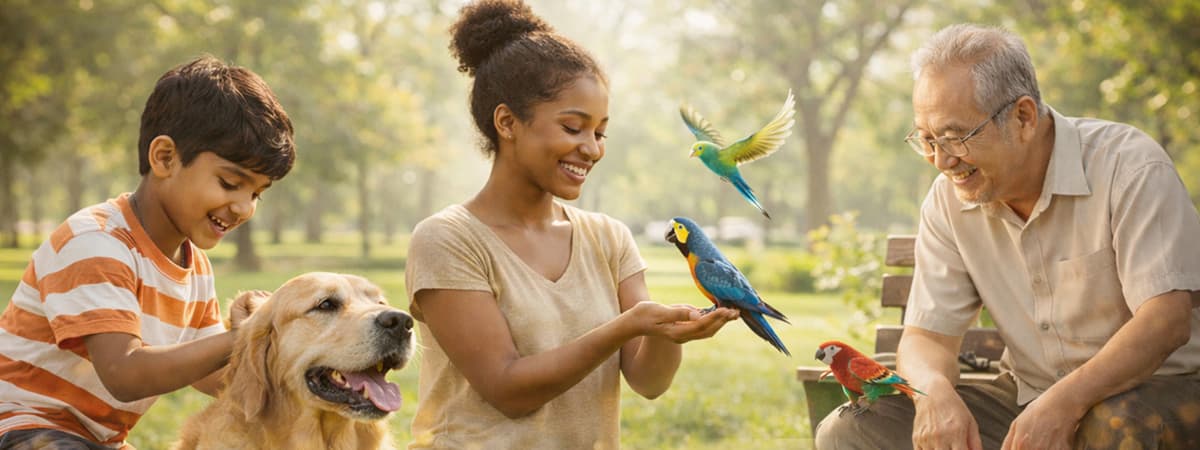
For a long time, we have attributed this phenomenon to pure friendship. In recent times, however, scientific investigation has been pursued to find out the causal factors. It seems that we are not just fond of animals through mere personality; it seems to be deeply rooted in our biology, our thought processes, and our past.
#1 The “Love Hormone” Connection
The main reason that can be traced as to why humans have a strong connection with animals is due to a chemical that is referred to as oxytocin. Oxytocin is often known as the love hormone; this hormone helps a human mother bind with her child, provoking the development of feelings of trust, safety, and deep affection.
It has been found that when people look directly at a dog, their brain produces a large amount of oxytocin. Interestingly enough, the dog’s brain is similar to this reaction, creating a feedback mechanism simulating the father-child connection. This chemical reaction lowers blood pressure and takes away stress, and this is the reason why owning an animal will give someone an immediate feeling of freshness after a bad day.
#2 The Power of “Cuteness”
The feeling of specific objects as cute is scientifically known as neoteny. This label can be used in reference to physical features that are reminiscent of human babies, such as big eyes, high foreheads, and round faces.
The human evolutionary mechanisms have trained human beings to have the urge to provide nurturing treatment to objects that are similar to infants. When we are faced with a puppy or a kitten exhibiting such exaggerated, vulnerable things, the maternal instinct of care goes on. These characteristics are detected by the human brain and force protective and giving behavior.
Millennia after millennia, this process has been strengthened by humans through selective breeding. Having carried these cute features into adulthood, humans have ensured that the species of animals are always cute.
#3 A Relationship Without the Drama
The human interpersonal relationship is a complex one, and it requires judgment, expectations, and sometimes conflict. Living things, on the contrary, provide a much easier dynamic. A dog is not bothered about whether the owner has taken a shower or is having career troubles; it simply shows that he or she is happy to see the owner.
Scientists define unconditional acceptance as one of the major aspects of this connection. Animals do not have ulterior motives; they do not use manipulative methods and do not keep grudges about such trifling omissions like a missed call. To most people, especially those who have been traumatized or face social phobia, animals provide a form of safe relationship to them.
They offer the emotional reward of having a very close and intimate friend without necessarily having to lose social life in the process.
#4 Survival of the Friendliest
According to evolution, the fact that humans felt affection for animals helped them survive; all this is summed up in the biophilia hypothesis. Our foremothers and forefathers were sensitive to the behavior of animals and had better hunting abilities as well as higher levels of detecting predators.
This synergy would develop into a partnership in the long run. The first humans who associated with semi-tame wolves enjoyed greater security and support in the hunt. The survival and transmission of their genes as such animal lovers was more likely. We are, therefore, in effect the same people whose ancestors found it easier to have animals around to make life easier and safer.
#5 More Than Just a Feeling
These benefits of this bond are not limited to psychological impacts. Empirical research indicates that pet owners tend to have better cardiovascular health and a reduced level of cortisol, which is the hormone related to stress. A group of adolescents with diabetes improved their health when offered to take care of a fish in one study.
The other living being also encouraged greater discipline and stability since the responsibility was to take care of it. Be it an oxytocin-motivated feeling or an old-fashioned survival drive, scientific data is quite unequivocal when it comes to the fact that we, as human beings, like animals, are a part and parcel of humanity.
Animals do not just sit in our houses; they are useful in keeping our brains and bodies healthy. Therefore, the next time you feel extremely loving towards your pet, it is good to know that it is the way your biology is supposed to work.
Related News

Short Movements in the day Vs. 1 Hour Morning Walk
Latest Lifestyle News: To most health-conscious people, the day starts with a vigorous sixty-minu...
The Tragedy of Punch: Why Mother Animals Abandon Their Offspring
Latest Lifestyle News: The Japanese macaque Punch is a seven-month-old baby whose life has attrac...

The Friendship Spreadsheet: A Bengaluru Man’s Six-Year Data Experiment
Latest Lifestyle News: In a city that is known to have a high number of technological startups an...