
‘You Are What You Believe’ Says Bhagavad Gita
Belief does not originate as a simple idea in the human mind. Your entire inner world runs on this software. In spiritual literature, one of the most psychologically accurate statements comes from the Bhagavad Gita 17.3. It says shraddha is what makes a person a person. Sharddha does not mean blind faith. Sharaddha means a deep conviction that builds your identity, your choices, and your thoughts. The colours that paint your life and the canvas you see emerge from the set of beliefs you hold.

 Share
Share
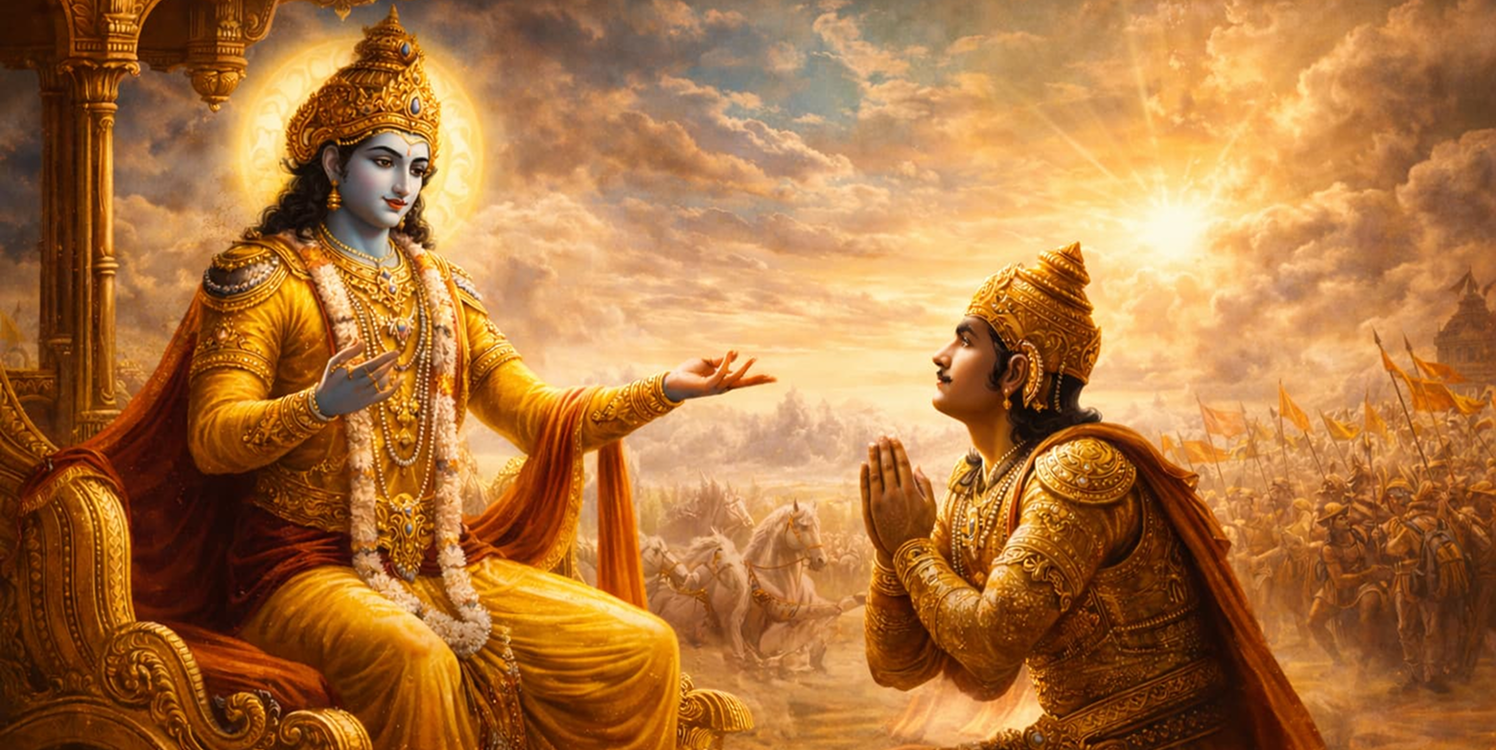
Krishna says that the external world is not the first to trigger reactions from humans. The real fuel is their internal world. A person behaves according to their shraddha, not according to circumstances. The set of beliefs you hold within is what shapes your routines, your decisions, your emotional patterns, and your relationships.
1. Your Inner World Controls Your Outer World
The beliefs you hold about the world and yourself have a direct impact on every decision you take. People might think their decisions follow their logic, but the deeper narratives in their mind are the true operators behind the scenes. If you think you can do it, you will attempt more. If your belief says you are limited, you put restrictions on yourself even when opportunities knock at your doorstep.
2. Your Beliefs are Shaped by the Guna
Krishna further describes Sharadha with three gunas consisting of rajas, sattva, and tamas. These gunas shape the tone and decide the direction of your belief system. People with sattvic guna hold beliefs rooted in truth, clarity, and stability. People with rajasic guna carry beliefs dominated by achievement, desire, and restlessness. People with tamasic guna have beliefs rooted in fear, inertia, and confusion. To understand your thinking behaviour, you need to get familiar with your dominant guna first.
3. Your Emotional Behaviors Follow Your Beliefs
Emotions do come from vacuum. They come from beliefs. Anxiety arises when the world seems unpredictable in your beliefs. When the belief is you must have control on the outcome, it gives birth to anger. And when the belief is you have control only on your actions, you have peace. Indirectly, Gita tells us that a change in beliefs means a change in emotional patterns. This forms a solid base for emotional intelligence. Stable Shraddha gives rise to stable emotions.
4. Values Reveal The Quality of Beliefs
Since everyone has a different set of belief systems, everyone values different things. People with sattvic shraddha value growth, truth, and discipline. People with rajasic shraddha value achievement, recognition, and status. People with tamasic shraddha value escape, comfort, and passivity. Here, Krishna basically says you prioritize things based on the shraddha you possess. So, it means your values describe your inner world.
5. Your Belief System Decides How You Handle Challenges
When two people encounter the same problem but respond differently, it is because they have different beliefs. To one person, difficulty is a threat. To another person, it is a stepping stone. One gets collapsed due to pressure. Another sets his focus strong. In this case, the external challenge is the same but the way of interpretation is different inside. According to Gita, resilience is the result of clear and strong shraddha, not personality or luck.
6. Routine Choices Show Shape of Beliefs
Belief is not just an idea. It reveals itself in the tiniest decisions you take. The way you spend your time. Stuff you consume in your mind. The way you react to irritation. The way you treat others when you feel tired. These decisions are not random, they depend on shraddha.
Keep visiting Daily Info for accurate, relevant, and the latest lifestyle news.
Related News

Short Movements in the day Vs. 1 Hour Morning Walk
Latest Lifestyle News: To most health-conscious people, the day starts with a vigorous sixty-minu...

The Tragedy of Punch: Why Mother Animals Abandon Their Offspring
Latest Lifestyle News: The Japanese macaque Punch is a seven-month-old baby whose life has attrac...

The Friendship Spreadsheet: A Bengaluru Man’s Six-Year Data Experiment
Latest Lifestyle News: In a city that is known to have a high number of technological startups an...