
OpenAI Wins Landmark Court Battle: Elon Musk’s Lawsuit Dismissed
Latest Tech News: It’s finally over, though it was a very procedural battle, between billionaire Elon Musk and OpenAI CEO Sam Altman. A jury in an Oakland, California federal court unanimously dismissed Musk’s lawsuit in a nine-member jury, effectively dismissing his case. The billionaire, who co-founded the artificial intelligence firm in 2015, had said the present-day leadership had overstepped their mandate and shifted away from the original mission-driven, non-profit foundation to making money.

 Share
Share
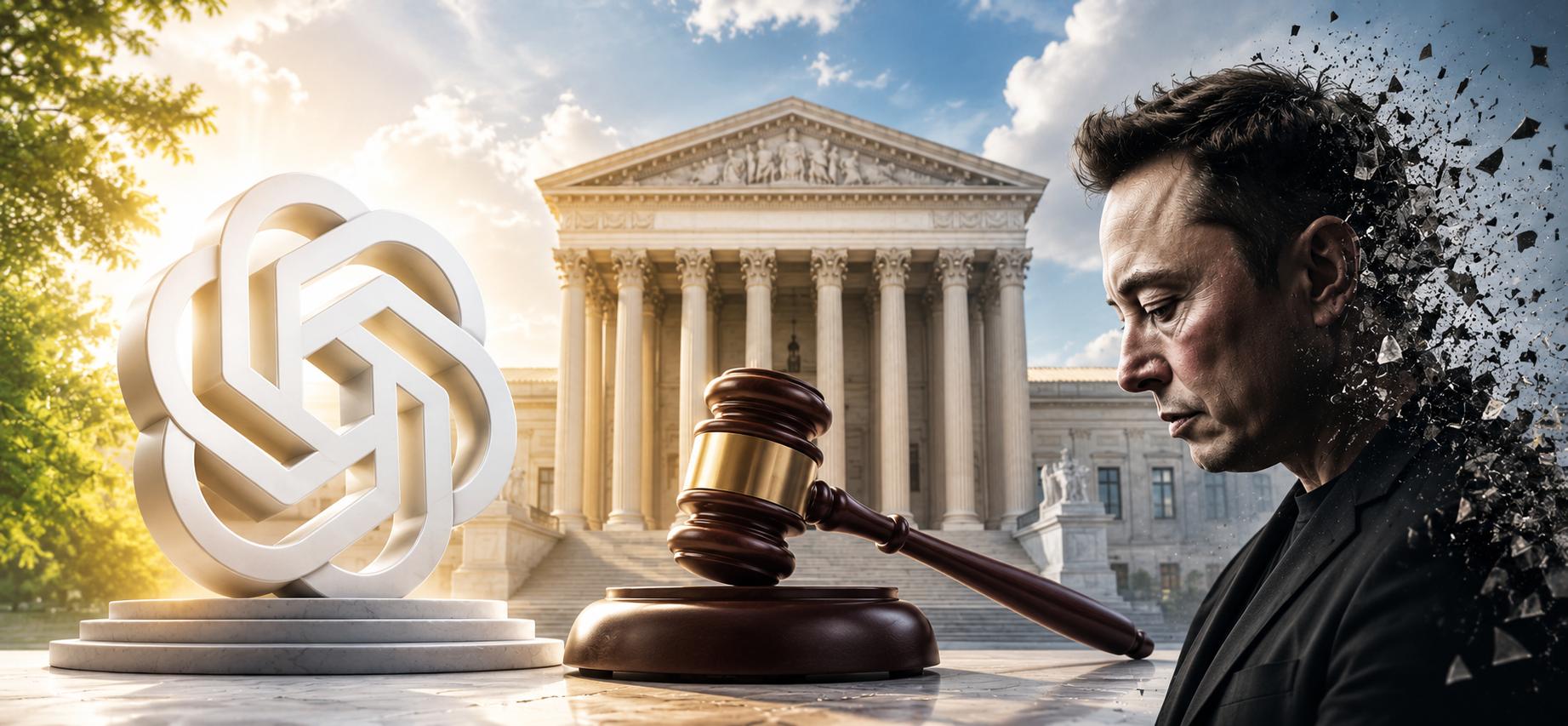
The crux of the case was a claim by Musk that the transformative change to a for-profit entity was a violation of the charitable trust and an “unjust enrichment. Musk, who by the early days of the company had invested around $38 million, wanted to liquidate the $5 Billion AI Cloud Venture business, and asked for Altman and president Greg Brockman’s resignation. The jury however did not look at the philosophical issue of corporate structure but rather the sequence of events.
The Factors Behind the Verdict
The statute of limitations, which determines the time period a lawsuit can be filed after a harm has been allegedly caused, was the basis of the jury’s findings. OpenAI has made a strong case that the decision to commercialize was something that Musk knew about as early as 2017 and 2018. The jury determined that his claims were untimely since he waited until 2024 to file his lawsuit.
- Priority to the calendar: By circumventing an analysis of the merits of the internal discussion and thus deferring to the calendar of events, the court avoided a potentially ten-year inquiry into the labyrinthine issues of IP and governance in the development of OpenAI.
- Knowledge of intent: Musk was aware of and privy to corporate planning through the testimony he provided. This contradicted his assertion that he was “tricked” or kept in the dark about the organization.
- Diversionary Tactic: The defendants described the lawsuit as “a hypocritical effort to destroy a rival” based on Musk’s development of his own competing artificial intelligence company, xAI.
- Prioritization of calendar: In sidestepping the analysis of the substance of the internal debate and, instead, deferring to the calendar of the events, the court spared itself the potentially decade-long probe into the complexities of intellectual property and governance in the development of artificial intelligence.
A Strained Relationship and the Path Forward
So far, the OpenAI vs Elon Musk Trial has given the public a window into the splintering partnership between the two, as it’s been unfiltered. The courtroom scenes were ones of confrontation, with cross-examinations done in a manner that showed how much animosity there was towards one another for years. Musk sees the feud as a battle for the “soul of A.I.”, while some see it as an “ego” war between two of the most important figures in the modern Tech industry.
Upon the verdict, Musk posted a tweet immediately questioning the ruling’s validity and implying that the ruling was “technicality” because it never reached the main point of whether a charity was misappropriated by OpenAI. Preventing organizations from changing their missions from charitable to non-charitable is a bad thing for philanthropy in the United States, he says. On the other hand, OpenAI has presented the verdict as a blow to ChatGPT, offering clarity about its future.
Implications for the Artificial Intelligence Market
The company is in a stronger position to proceed with its plans for a giant initial public offering, analysts say, which could put it on track for a valuation of more than $1 trillion. This particular legal battle has been settled, but the larger question about the ethics and safety of AI, and the role of non-profit ideals in a capitalist marketplace continues to be a source of disagreement. The burden now falls on Musk to tackle both the competitive battle within his company as well as his failure to regain control of OpenAI from the other players.
Final Reflections on the Judicial Outcome
Ultimately, the outcome is a good example of how effectively procedural law can work, even in massive corporate disputes of interest. This is a precedent the industry will keep an eye on as it seeks to determine if Musk’s appeal will ever catch on, or if this is truly the end of the road. The litigation has ended, but whether OpenAI is still a non-profit for humanity, or a profit-making company for its shareholders is a question which will loom in the background.
Also Read: Google and Blackstone Launch $5 Billion AI Cloud Venture
Related News

Apple Foldable iPhone Leak Reveals Early Dummy Unit Design
Tech News: The rumored foldable iPhone is making a comeback to the spotlight again after new dumm...

Build 2026: Microsoft Launches Project Solara for Next-Generation AI Devices
Tech News: A big step into the future of AI has been announced by Microsoft at their developer co...

Portronics Launches Kinetics 8K Mini UPS for Wi-Fi Routers at Rs. 1699
Tech News: Portronics has added yet another power backup product to the Kinetics lineup—the Kinet...