
US-Israel-Iran War Iran Launches Fresh volley of missiles at Israel.
Latest World News: The current dispute between Israel and Iran with the involvement of the United States has reached a very volatile stage. The military escalation on various fronts in the Middle East is spreading, prompting the global community to fear the wider effects on security, energy markets, and humanitarian status. The mixed messages of Washington and Tehran have increased confusion, and allies in the region are in a fine line between diplomacy and military preparedness.

 Share
Share
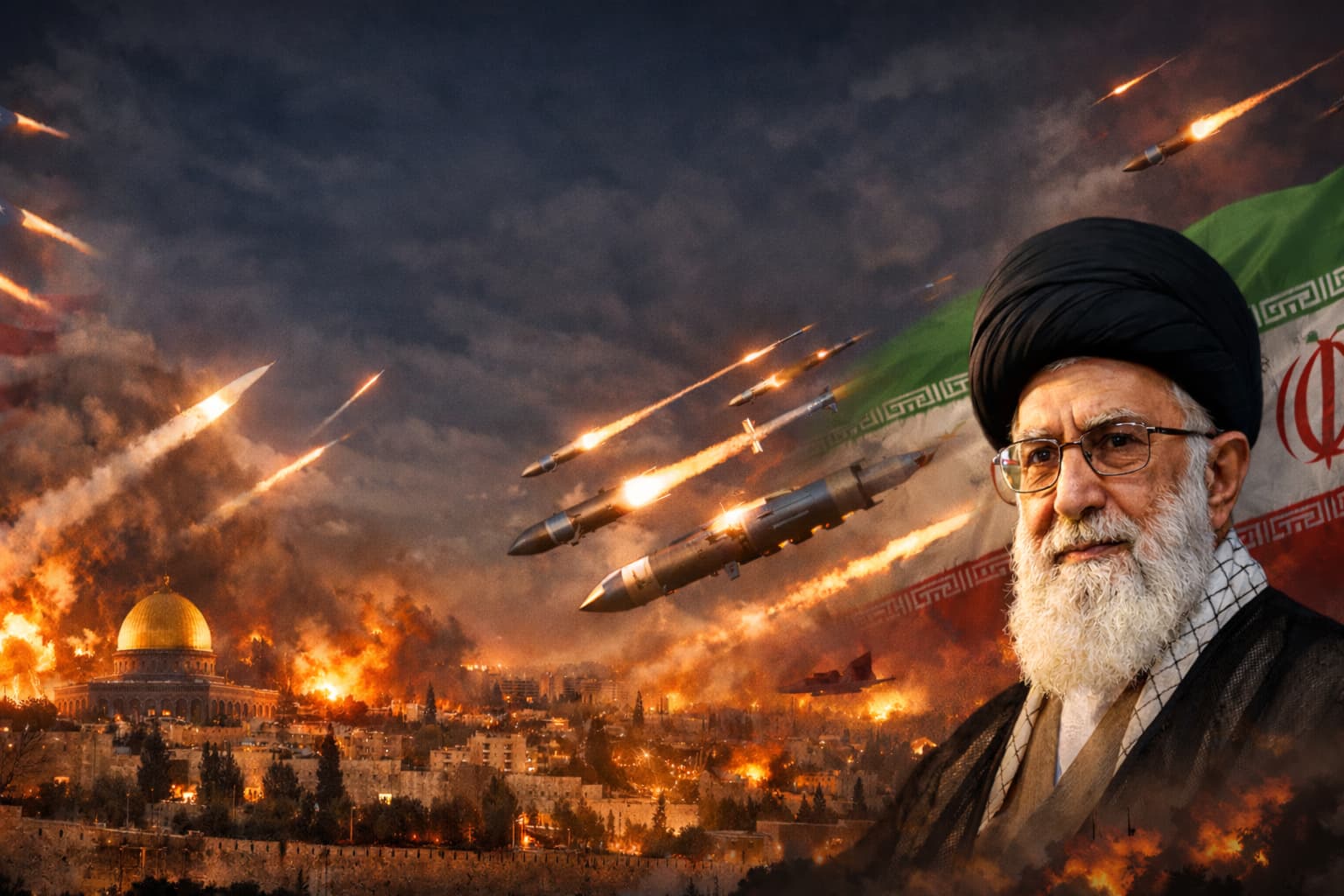
Iran Launches new missiles on Israel
Iran is said to have unleashed a new wave of missiles to various Israeli destinations. Iranian sources reported that these strikes were the 78th phase of Operation True Promise 4, the retaliatory measures against Israel and the targets of US connection. Iranian officials termed these operations as impact-based strikes, and it was clear that they had a strategic aim of sending a message and not engaging in negotiations at this point.
The major aspects of the missile strike are:
- Major cities like Tel Aviv, Eilat, and Dimona were also targets.
- This was also reported to affect several US military installations in the region.
- Iran still denies that the negotiations with the United States are going on.
- Increased Deaths and Humanitarian Issues.
The war has had serious impacts on civilians and physical structures. The most recent reports show that the death toll in Iran is over 1500, and Israel has reported 15 casualties in Iranian attacks. Also, US soldiers within the area have not been spared, and more than a dozen soldiers have been killed.
Humanitarian issues are going up:
- This has displaced thousands of residents in southern Lebanon and in some areas of Iran.
- Urban infrastructure and energy plants have been attacked, which has halted the provision of electricity and water.
- The international agencies are expressing their concern on the possibility of food and medical shortages in the affected regions.
- Regional and Global Economic Impact.
The war that is still going on is also affecting the world’s energy markets greatly. The oil prices have started varying sharply due to fear of any disruption of supply, particularly through the Strait of Hormuz, which is a major choke point in transporting oil globally.
- The fuel-saving measures and price caps have been declared in such countries as South Korea.
- A number of Asian countries are falling back on coal-generated power production because of the uncertainty of supplies.
- Iranian sanctions have also contributed to the pressure, not only to the regionally based economies but also to the world’s general energy supply chain.
- Dynamics of Diplomacy and Alliances.
As much as military operations take the center stage in the news, there are diplomatic signals that are ambivalent. The United States has hinted at a possible compromise to negotiate, but Iran has rejected the statements, thus making the mistrust even more intense.
- The US allies, such as Saudi Arabia and the UAE, are also said to be drawing nearer to the idea of military action against Iran, even though nothing has been verified as its actual deployment.
- The backchannel negotiations are apparently being held with countries like Egypt, Turkey, Oman, and Pakistan, trying to avert further escalation.
- Mohammad Bagher Ghalibaf, the Speaker of the Iranian Parliament, has been cited as a potential negotiator in the future discussions, even though he has publicly condemned the US intentions.
- The Growth of Military Tension in the Region.
The war has escalated in several fronts, which include drones, attacks with missiles, and air defense:
- Israel has made airstrikes against southern Lebanon, and in Bahrain and Kuwait, sirens have been audible.
- There is more air defense preparedness in the Gulf countries, such as drone interceptions.
- Iran has been renewing attacks on energy infrastructure in such cities as Isfahan or Khorramshahr, casting doubts on the sustainability of the ceasefire.
- Civilian Safety and Foreign Advisories.
International governments are advising its citizens to be cautious as the situation is getting worse:
- China has urged its citizens in Israel to evacuate the country through the border of Taba with Egypt.
- The Iraq travel advisory issued by the US State Department was a Level 4, Do Not Travel, because of the attacks of Iran-related militias.
Conclusion
The US-Israel-Iran tension does not have any clear indication of de-escalation, as the military operations, humanitarian issues, and economic pressure on the world are still piling up. With the situation being observed by countries all around the world, there is a high threat of the possibility of a long and multi-front war. Continuous strikes, displacement of the population, and a volatile energy market indicate the interdependence of the conflict, and the effects of the conflict go way beyond the Middle East.
Also Read: Escalating US-Israel-Iran Conflict Intensifies Across the Middle East
Related News
Ancient Ruins Revealed: The 1967 Search for a Haunting Bronze Age City
Latest World News: In 1967, a truly groundbreaking find emerged that revolutionized our knowledge...

Nepal Border Shock: PM Balen Shah’s Controversial Claim Rocks Ties
Latest World News: A major political storm has broken over Kathmandu, the capital of the Himalaya...
Netanyahu vs Trump: The Explosive Lebanon Clash That Changed the War
Latest World News: A serious diplomatic rift has now opened up between Washington and Jerusalem f...