
Ghaziabad Tragedy Sparks Global Debate on Youth Social Media Access
Latest News Today: The recent case of the loss of three minor sisters in Ghaziabad has echoed all over the local community, highlighting a crisis that cuts across national borders. Reports show that the brothers committed suicide by throwing themselves from the ninth floor of their apartment house as a result of a family quarrel about their spending too much time gaming and using social media. This event is not a single tragedy but an eloquent example of the growing gap between the online world and the psychological health of the youth.

 Share
Share
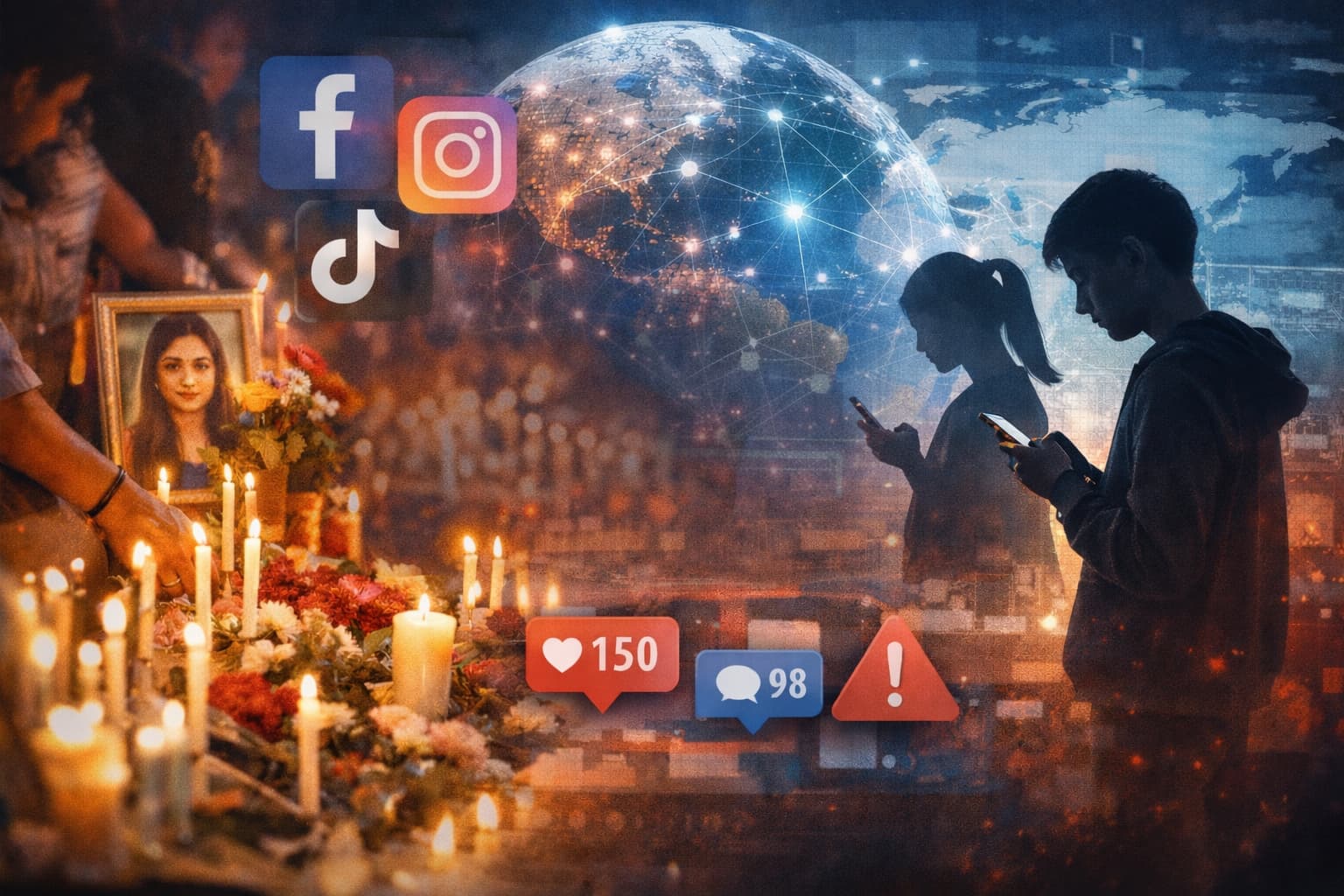
As families around India grapple with the aftermath of this incident, discourse has shifted towards the way governments can come in and prevent such tragedies. Although others consider digital addiction an intimate parenting problem, others argue that it is a societal health emergency that requires intervention by legislative means.
The Tragedy in Ghaziabad
The latest news update of Ghaziabad is particularly chilling because of its details. Local reports, as well as a recent analysis by the Indian Express, claim that the conflict arose due to a typical family conflict, with parents trying to limit the amount of screen time their children have. Such conflicts in many modern families have turned into confrontations of high stakes. In the case of these three sisters, the burden of digital dependency seemed to take a toll that has resulted in a disastrous move that has caused their family, as well as their neighbours, to mourn.
It is observed that the nature of modern online games and social sites is not similar to the media of the previous generations. Often, these platforms are underpinned by algorithmic functionality to drive engagement by providing intermittent rewards and social confirmation. In the case of adolescent brains, a state of hyper-dependence can be created by such features, making any effort to break the connection seem like a personal crisis.
The Australian Landmark Legislation
Australia is considered a possible role model by many as India goes in search of solutions. The Australian government, in a ground-breaking step, has recently passed the Online Safety Amendment (Social Media Minimum Age) Act. This law is successful in barring children under the age of 16 years from having accounts with the prominent social media sites, such as Instagram, Facebook, TikTok, X, and YouTube.
It is also impressive how the Australian legislation enforces strict enforcement mechanisms. The law does not punish the parents or the children, but it puts the blame purely on the technology companies. Those platforms that do not take reasonable measures to eliminate minors from their platforms are fined heavily up to A$49.5 million.
Prime Minister Anthony Albanese described the action as a way to allow children to be children, saying that the psychological well-being of a whole generation is at risk. The government claims that the social media plague causes verifiable damage, including body-image issues and internet bullying, and extreme anxiety and suicidal tendencies.
Science of the Vulnerabilities
These bans are driven by the growing literature of psychology. Scholars note that the brain of a person is significantly remodeled during adolescence. This is the stage of development where higher levels of sensitivity to social feedback and the yet immature impulse control proficiency are exhibited. These biological vulnerabilities are exploited by social media sites, which put their interests in addictive engagement over safety.
The internal reports of the leading technology companies, which are often referred to by regulators, show that the companies are perfectly aware of the capabilities of their algorithms to amplify harmful content. In the case of numerous preteens and young teens, high usage of social media has statistically been linked to increased vulnerability to depression and self-injury. When most parents realise the level of the addiction, the social and emotional life of the child is well-integrated with the virtual world, and it is hard to establish boundaries without raising their temper.
A Divided Global Response
The Australian ban has not gone without criticism despite the pressure towards regulation. The BBC states that an outright ban has been feared by some advocacy groups and mental health professionals because they believe it would create unintended effects. They claim that social media could be a life-saving tool for marginalised or lonely teenagers who find community and support on the internet.
Also Read: Three Minor Sisters Suicide in Ghaziabad | Korean Gaming Addiction Blamed
Related News

CJP Issues Defiant 7-Day Ultimatum Over National Education Crisis
Latest News Today: The political scenario in New Delhi has gone through an unprecedented change, ...

Manipur Village Attack: 3 Dead in Early Morning Firing Incident
Latest News Today: The latest horrific incident in Manipur where three were killed and others pa...

Delhi Hotel Fire Tragedy: 21 Dead in Devastating Single-Exit Trap
Latest News Today: A vicious fire broke out in the popular bed and breakfasts at a multi-story bu...