
The Tragedy of Punch: Why Mother Animals Abandon Their Offspring
Latest Lifestyle News: The Japanese macaque Punch is a seven-month-old baby whose life has attracted worldwide debate about the animal welfare issue and evolutionary biology. Living in the Ichikawa City Zoo in Chiba Prefecture, the young primate has recently garnered attention across the globe through viral videos where the young primate mastered a difficult social setting without its mother. Punch is instead seen holding on to a plush IKEA orangutan, which has been brought in as a replacement by zookeepers after he was rejected at birth.

 Share
Share
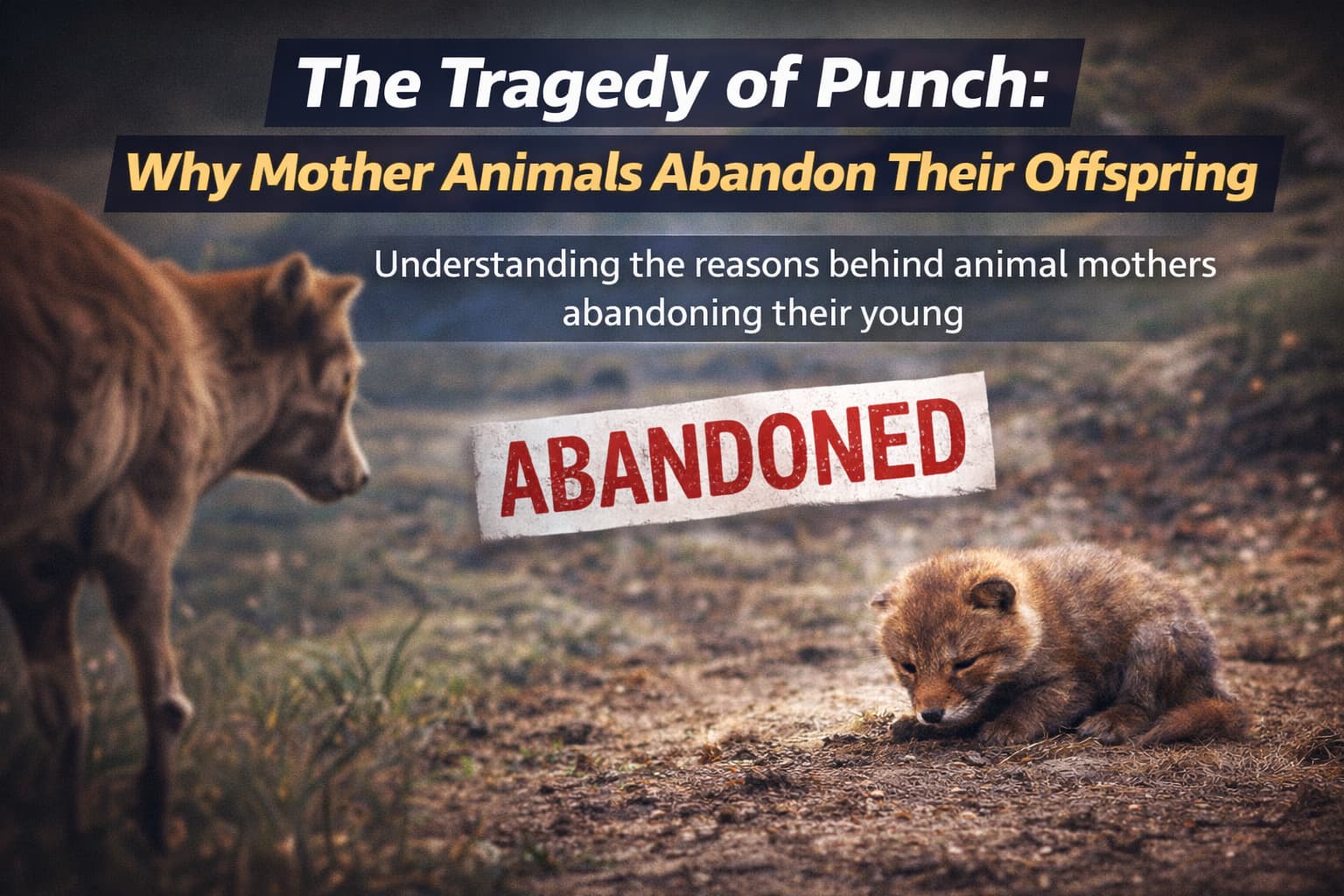
Despite the visceral responses that the footage has generated on the internet, experts have argued that the story told by Punch gives one an opportunity to understand the complicated and sometimes cruel reality of nature.
A Substitute for Survival
Punch was born in July, 2025, but his fledgling existence was shattered at once by a serious blow to his life. His mother deserted him very soon after he was born, and she was not willing to provide the care and physical contact a newborn macaque needs. In nature, such an outcast is usually a death sentence.
In Ichikawa City Zoo, the keepers interfered and hand-reared the baby to ensure its life was saved. In order to enable its development, the personnel proposed a stuffed toy. In the case of Japanese macaques, clinging is not just a consoling behavior, but it is an essential physical necessity and helps infants gain muscle strength. Baby Japanese macaques will cling instantly to the body of their mother so that they can gain strength as well as have a feeling of security, as explained by zookeeper Kosuke Shikano. Without a maternal hold, Punch took up the toy as his major source of attachment.
The Science of Maternal Rejection
When a mother animal abandons her offspring, it is painful to the human eye, but biologists have seen that this is a documented phenomenon, though it is rare. There are quite a few factors that probably initiated the rejection in the case of Punch.
Mother inexperience is a key factor, according to Dr. Alison Behie, a primatology specialist at the Australian National University. The mother of Punch was a first-time parent, which is a group that is more likely to abandon the child in a continuum of species.
Further, Punch was conceived during a great heatwave in Japan; stressful surroundings may force a mother into an evolutionary trade-off.
In cases where there is a scarcity of resources or the environmental conditions are extreme, a mother can place more emphasis on her health and future reproduction potential than on the infant, which may end up in the present harsh climatic conditions. Biologically, this is a survival mechanism that is meant to see the mother survive to have future children in better conditions.
Navigating a Strict Social Ladder
The zoo has tried to get Punch back into the troop as he has grown up. But the video recording of this procedure has led to allegations of bullying. The videos show old, bigger macaques pulling Punch through the enclosure or kicking him out.
According to experts, this behaviour, though appearing cruel, is not so uncommon in the normal social interaction of a macaque hierarchy. The Japanese macaques live in strict matrilineal groups where any incidental young monkey inherits the position of the mother. Without a maternal guardian to look after him and to teach him the subtleties of the cues of submission, Punch is an outcast of a lower degree.
Dr. Behie observed that Punch might fail to form the right responses to show that he is submissive to dominance. This lack of social education might have long-term implications for his ability to become a complete member of the group as an adult.
Looking Toward the Future
The Punch epidemic has raised concerns about the welfare of the zoo and the impact social media has on the perception of wildlife in the spotlight. In her role as a conservation psychologist, Carla Litchfield noted that although the story is making people relate to animals, it also highlights the stress that climate change and habitat loss place on the species.
The latest news from the zoo presents a light at the end of the tunnel. Onsing is a monkey that is occasionally groomed by Punch, according to some observers who have taken photos of the adult. Through these encounters, we can have the suggestion that the young macaque might someday be accepted into the troop, although his experience is a sorrowful tale about the frailty of the maternal bond in the animal kingdom.
Also Read: The Friendship Spreadsheet: A Bengaluru Man’s Six-Year Data Experiment
Related News

Hidden Town Built Under Massive Cliffs Attracts Global Tourists
Latest Lifestyle News: However, there is another small town located under giant cliffs, which is ...

Aamir Khan on Breaking Industry Rules: 4 Personality Traits Behind His Perfectionist Journey
Latest Lifestyle News: Aamir Khan is well known as “Mr Perfectionist” for his disciplined approac...

Anushka Sharma’s RCB Victory Look Highlights Subtle Luxury with Cartier Watch
Latest Lifestyle News: When Anushka Sharma was seen during the RCB win celebrations, it seemed li...