
Green Asha Reaches India: 15,000 Tonnes of LPG Secure After Hormuz Transit
Business News Today: MUMBAI -Indian flag fuel tanker Green Asha has docked successfully at the Jawaharlal Nehru Port Authority (JNPA) with an important cargo of more than 15,400 metric tonnes of Liquefied Petroleum Gas (LPG). The arrival is a decisive step forward in the attempts of the country to ensure a stable fuel supply chain in the light of the unstable security situation in West Asia.

 Share
Share
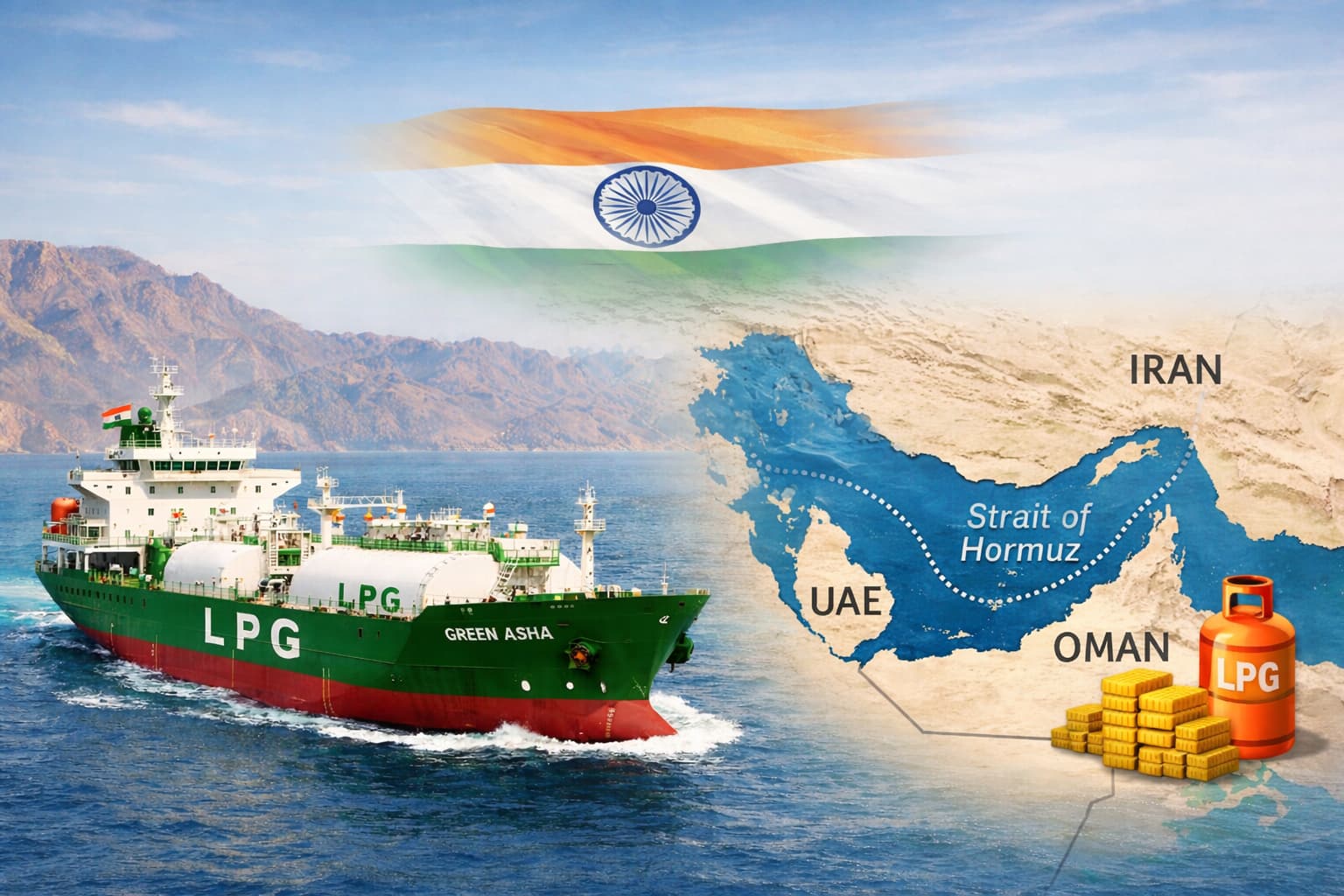
The ship was sailing along the Strait of Hormuz, which is a sea shipping constriction where close to half of all the oil and gas in the globe pass through, and which was being closely tracked by maritime authorities and defense experts. The mid-sized gas carrier Green Asha managed to sail the risky routes of the Persian Gulf and the Gulf of Oman, which indicated that it was a non-hostile ship with an all-Indian crew to guarantee safe passage through controlled areas.
Navigating the Chokepoint: A Strategic Success
The passage of the Green Asha is not just an ordinary logistical exercise; but a critical example of an Indian flagged LPG tanker sailing through the Strait at a time when geopolitical tension was at its peak. The ship tracking information showed that the tanker took a wary path as it went round major landmarks in the sea that are being more and more utilized by merchant vessels in order to meet the security measures in an area.
The government officials assured that the ship, its crew and the multi-million dollar cargo is safe and sound. The discharge process started at once in the liquid terminal where the ship was berthed to replenish domestic stocks. This particular cargo is projected to supply distribution channels in Western and Central India, which guarantees the supply of cooking gas will not be interrupted by millions of households.
The Business of Energy Security
In the wider Business sense, the shipment of this consignment gives a much needed stability to the Indian energy market. India is dependent on imported products to supply about 60 percent of the total LPG demand with much of these products being supplied by West Asian manufacturers. Any long term interference in the Strait of Hormuz has a direct impact on the cost of living to the household and the day to day overheads of the businesses that use clean fuel.
The safe arrival of the Green Asha, according to industry observers, will assist in overcoming the safe arrival of the “war risk premium,” which frequently drives insurance and freight rates high in crisis periods in geopolitical crises. The ministry of ports, shipping, and waterways is showing that India has a sufficient maritime logistic system to absorb external shocks and continue to have an economic momentum by continuing the transit of Indian-flag vessels.
Key Highlights of India’s Maritime Response
In order to overcome the current crisis and to keep the “LPG lifeline intact, the Indian government and maritime agencies have taken a number of strategic steps:
- Naval Co-ordination: Indian Navy is on stand-by in the region, which offers a security umbrella and real-time information to the merchant ships.
- Diplomatic Engagement: Proactive back-channel diplomacy with regional authorities has played a central role in ensuring the safe passage of Indian tankers through the territorial waters.
- Supply Chain Diversification: West Asia will continue to be the main source but increasingly, the Oil Marketing Companies are considering spot market purchases in the US and West Africa to decrease single-route reliance.
- Domestic Buffer Management: The government has instructed the state authorities to focus on the allocation of gas to those sectors at risk, so that the temporary halt of the sea would not result in the lack of gas on the ground.
- Seafarer Welfare: Seafarers In the wider Gulf region, there are thousands of Indian seafarers, the government has opened special monitoring cells to be concerned about the safety and well-being of the crew members.
Future Outlook and Regional Stability
Although, with the arrival of the Green Asha the Mumbai and Maharashtra regions are relieved at the moment, the geopolitical situation is still complicated. The Persian Gulf still has a number of Indian-flagged ships, awaiting their turn to pass through the Hormuz checkpoint. These are crude oil tankers, container ships and chemical carriers which are all essential to the industrial machinery in India.
These vessels are of paramount importance to the GDP growth of the country and avoiding spikes of inflationary fuel prices. The Green Asha is a representation of maritime perseverance as it starts discharging its cargo at JNPA. There will be continued emphasis on building the home merchant fleet and broadening strategic LPG storage facilities so that the energy future of India will never be at the mercy of geographic bottlenecks.
Also Read: US Slaps 100% Tariff on Patented Drugs: Is India’s Pharma Business in Danger?
Related News

Jan Dhan Yojana Crosses 58 Crore Accounts, Boosting Financial Inclusion in India
Business News Today: India has had the occasion to observe history being made as the Pradhan Mant...

SEBI Bans Rajesh Exports CMD Over Alleged Financial Irregularities
Business News Today: SEBI hit the Chairman and Managing Director of Rajesh Exports with hefty fin...

Byju’s Tragedy: How Absolute Success Ruined a $22B Empire
Business News Today: Byju’s is a modern-day corporate tragedy, the rise of the Indian ed-te...