
New Inflation Series in India, January CPI at 2.75%
Business News Today, New Delhi – A new series on Consumer Price Index (CPI) was introduced in India this week, which has brought a major structural change in the retail inflation picture of that country. The National Statistics Office (NSO) published its first inflation statistics using 2024 as the base year, replacing the 10-year series using 2012 as the base. Central Tendencies Revised under this new system, CPI inflation rate in January 2026 was 2.75 percent.

 Share
Share
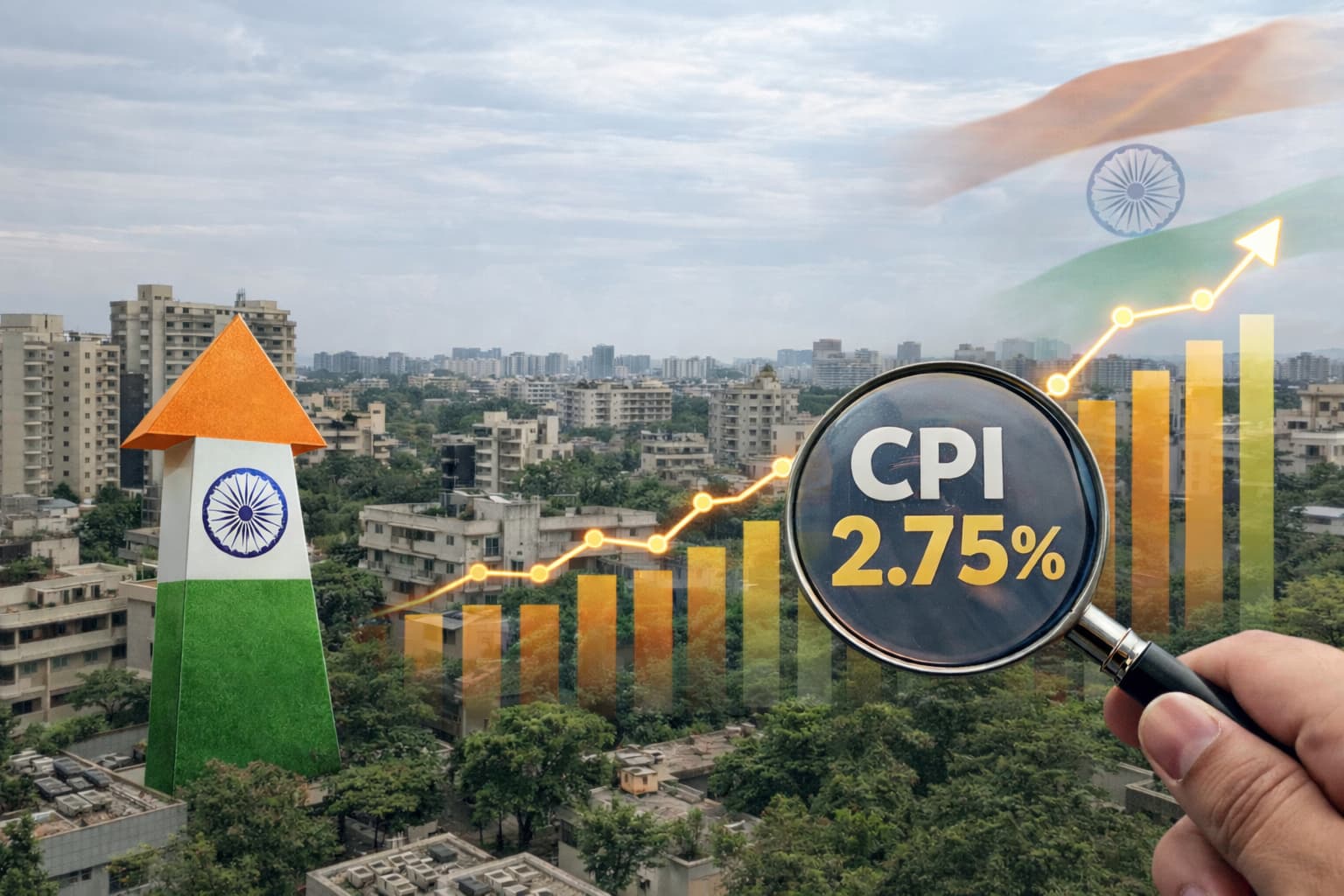
This recent reading has put the headline inflation well within the tolerance range of the Reserve Bank of India (RBI) of 2-6 percent. However, it is still a rise compared with the last print of the previous series. To put it into perspective, retail inflation in December 2025 of the year 2012 was registered at a rather modest 1.33. This increase to 2.75 percent in January indicates a series of consecutive tightening of prices, even though authorities and economists emphasize that the two series should not be directly compared as a result of the methodological and weight alterations.
Structural Overhaul: Food Weight Reduced
The recalculation of the weights of the items to more accurately reflect the modern-day spending patterns is the most salient characteristic of the new 2024 base series. Over the years, there has been an argument among economists that the 2012 series placed unreasonable weight on food, which usually leads to a volatile increase in inflation due to inconsistency in the monsoon rains or supply shocks.
The NSO, in turn, has decreased the weight of food and beverages. It has declined to 36.75 percent, which is very low compared to the 45.86 percent applied in the past series. This change is based on the facts of the Household Consumption Expenditure Survey (HCES), which was conducted in 202324 and showed that Indian households are spending less of their income on food as prosperity continues to increase.
On the other hand, there are other categories whose representation has been empowered. The total portfolio of goods followed has increased significantly. The CPI basket has gone up by 308 goods and 50 items in the services category, as compared to 259 items in the CPI basket. This growth is meant to embrace the dynamic nature of the economy, which is characterised by fast urbanisation and digitalisation.
For the latest business news daily, keep visiting daily info.
Modern Inclusions: From OTT to Rural Housing
The revised basket is an eloquent example of how the lifestyle of an average Indian is also evolving. Other newproducts thath have been used to calculate the inflation include online media and streaming services (OTT subscriptions, which highlight the digital nature of consumption in entertainment.
Rural housing charges are other prominent additions, which are considered a very crucial component omitted before, value-added dairy products, barley, exercise equipment, and electrical storage equipment like pen drives. The utilization of fuels like CNG and PNG is an indication of moving towards cleaner sources of energy in homes.
The government also seeks to minimize the noise caused by the fluctuating prices of vegetables by expanding the index to give a better indication of the underlying pressure in the economy.
Sectoral Trends: Precious Metals Surge, Veggies Cool
An in-depth analysis of the January data provides varied trends in the various sectors. Even though the headline figure is moderate, there are certain sectors of the economy that are undergoing sharp price pressures.
There was high inflation in the category of personal care and effects, which was mainly due to an international surge in precious metals. Statistics report that the inflation of silver jewellery increased by almost 160 percent, whereas gold, diamond, and platinum jewellery also registered high inflation levels. Coconut oil and tomatoes were the same, and they were placed on the high side.
On the other hand,d the kitchen budget was relieved. The NSO statistics pointed out that some of the basic food items registered the least inflation in the month. These consisted of garlic, onion, potato, arhar dal, tur dal, and peas. As a result, the general food inflation was pegged at a low 2.13 percent in January, and housing inflation was also tamed at 2.05 percent.
Also Read: Adani Enterprises Confirms Cooperation with U.S. Authorities
Related News

Jan Dhan Yojana Crosses 58 Crore Accounts, Boosting Financial Inclusion in India
Business News Today: India has had the occasion to observe history being made as the Pradhan Mant...

SEBI Bans Rajesh Exports CMD Over Alleged Financial Irregularities
Business News Today: SEBI hit the Chairman and Managing Director of Rajesh Exports with hefty fin...

Byju’s Tragedy: How Absolute Success Ruined a $22B Empire
Business News Today: Byju’s is a modern-day corporate tragedy, the rise of the Indian ed-te...