
Pfizer CEO Explains Why US Universities Are Losing Their Edge to China
Latest Education News: The global innovation system is in the middle of a fundamental paradigm shift. There has never been a more apparent danger to the perceived position of the U.S. Higher Education system on the highest rung of this ladder. Pfizer’s CEO Albert Bourla was the first to formally signal a race to the U.S. Could “lose” if we want to maintain our edge over China. The CEO’s comments come during the race between the U.S. And China for dominance in biotech, AI, and pharmaceuticals, and depict a gloomy picture of this global research shift, largely fueled by a concerted approach to combining strong academics, investment, and strategy.

 Share
Share
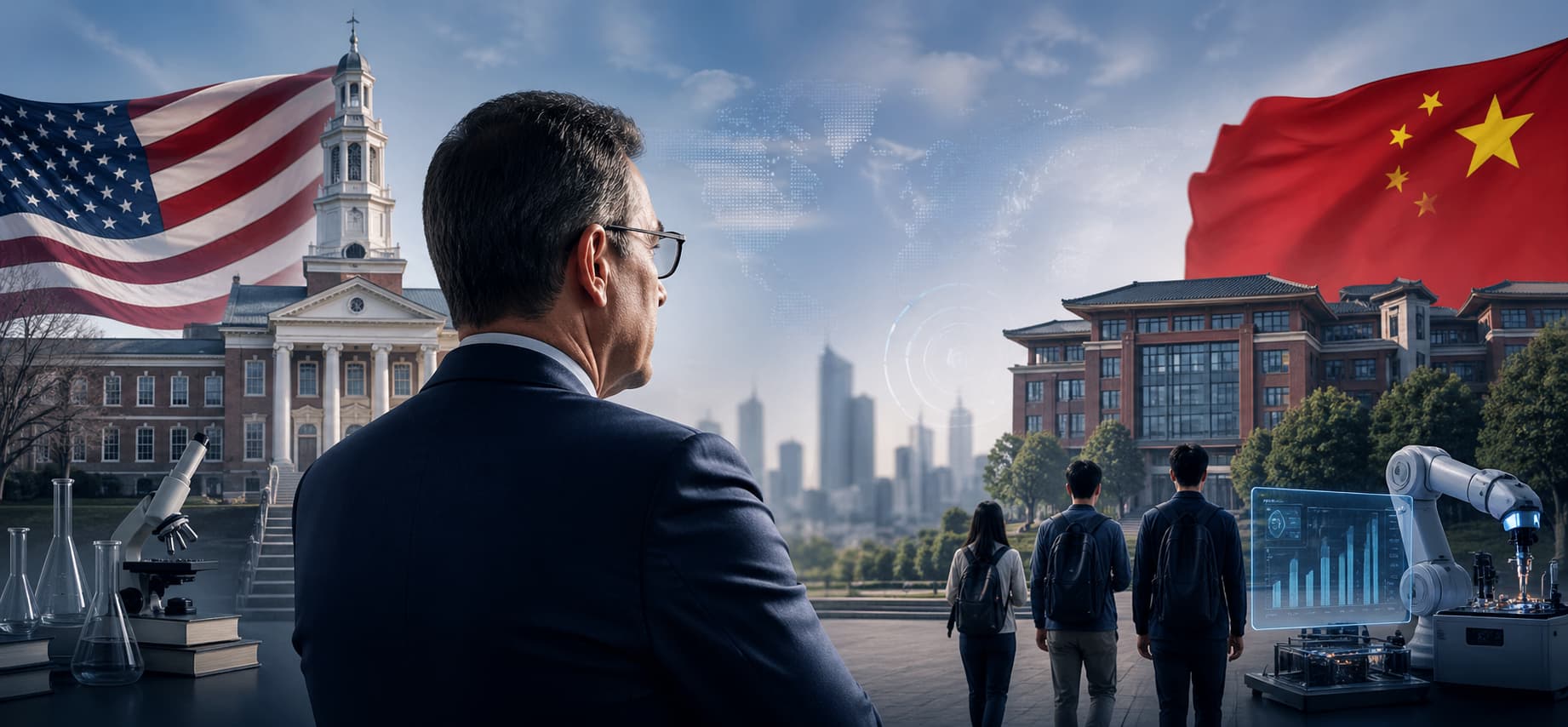
The Shrinking Gap in Research and Development
Over the course of the past century, the US has been the world’s leader in research and development. The country boasted a network of premier research institutions and the best minds in the field. But times are changing, says Bourla. China has evolved from a manufacturing economy to a high-tech society. Through multi-billion dollar investments in its higher education system and return of overseas scholars, China has developed a talent system that mirrors the Ivy League and major state research universities.
This is reflected in the numbers. The number of papers published in many top research journals from China has overtaken those from the U.S. It’s not always the case that more is better, but the “citation impact” of the Chinese research enterprise is climbing rapidly. Bourla stresses that China’s ability to quickly translate basic research into clinical practice is a challenge to the U.S. model, which is becoming increasingly encumbered by red tape and sporadic funding.
Key Factors Driving China’s Academic Ascent
Bourla points to particular factors where the Chinese model is starting to overtake the American model.These are a cultural shift in society’s priorities for scientific advancement.
- Multi-decades of research funding: unlike the US’s, China’s research funding, largely unhindered by the political cycle, allows for research that may be riskier but could have massive payoffs.
- STEM-focused education curriculum: STEM disciplines, from K-12 to the post-doctoral level are thoroughly intertwined, flooding science and biotech fields with scientists.
- Synergy of the academic, government, and industry sphere: The “triple helix” approach, combining all three above groups, is well established. Businesses have an easy and efficient way of commercializing research discoveries, and often receive government support.
- Incentives for returnees: The U.S. Has been struggling to compete with China to draw from the best minds. China’s “Thousand Talents Plan” is one program that has brought many US researchers back.
The Crisis of Domestic Talent and Infrastructure
One of the most telling points relates to its talent base. In the past, the U.S. was able to “brain drain” the world. But as the world becomes more politically volatile and immigration restrictions increase, that flow is diminishing. Unless U.S. universities can train local experts to meet this demand, the innovation pipeline will dry out.
Also, the escalating price of education in the United States creates a barrier to entry that Chinese universities don’t face. As graduates emerge from college with enormous debt, they are less likely to go into poorly paid pure research jobs, preferring instead to head straight into high-paying jobs in industry that may not be contributing to pure discovery. The move from “blue-sky” to immediate product development is a worry for Bourla. US education needs to evolve rapidly to match these changes or decline.
Geopolitical Implications for the Pharmaceutical Industry
For a CEO like Bourla, this is more than a theoretical discussion – it’s a strategic business challenge. The pharmaceutical industry needs a continuous flow of new molecular targets and genetic knowledge. If the heartland of these advances is moved to Beijing or Shanghai, then the U.S. will have less of a voice in setting global standards, ethics, and intellectual property.
If the U.S. doesn’t return to the core principles of academic freedom and generous public support, the “edge” that underpinned the American Century will be lost, warns the CEO of Pfizer. The race is no longer to the past, but to the future. As China renovates its laboratories, the U.S. must choose whether it will invest to stay ahead. To sustain excellence, the U.S. needs a deep and urgent national commitment to innovation.
Also Read: Mamdani Education Reform Faces GOP Backlash Over “Lack of Merit” Concerns
Related News

NMC Vacancies Delay Medical Admissions, Amicus Flags Transparency Issues
Latest Education News: The continuous shortfall of staff and late recruitment at the NMC has pose...

CM Mann Scraps PSEB Age Ranking After Amritsar Girl’s Brave Plea
Latest Education News: CM Punjab has taken a landmark decision and change in the administrative s...

CBSE & NTA Exam Portals Under Cybersecurity Scrutiny After Data Exposure Claims
Latest Education News: Once again, the digital examination framework in India is once again being...