
Bharat Bandh: Nationwide Strike Disrupts Life in Kerala.
Latest News Today: Trade Unions and Farmers Protest New Labour Codes and Policy Shifts; Banking and Transport Services Attacked in Pockets all over India.

 Share
Share
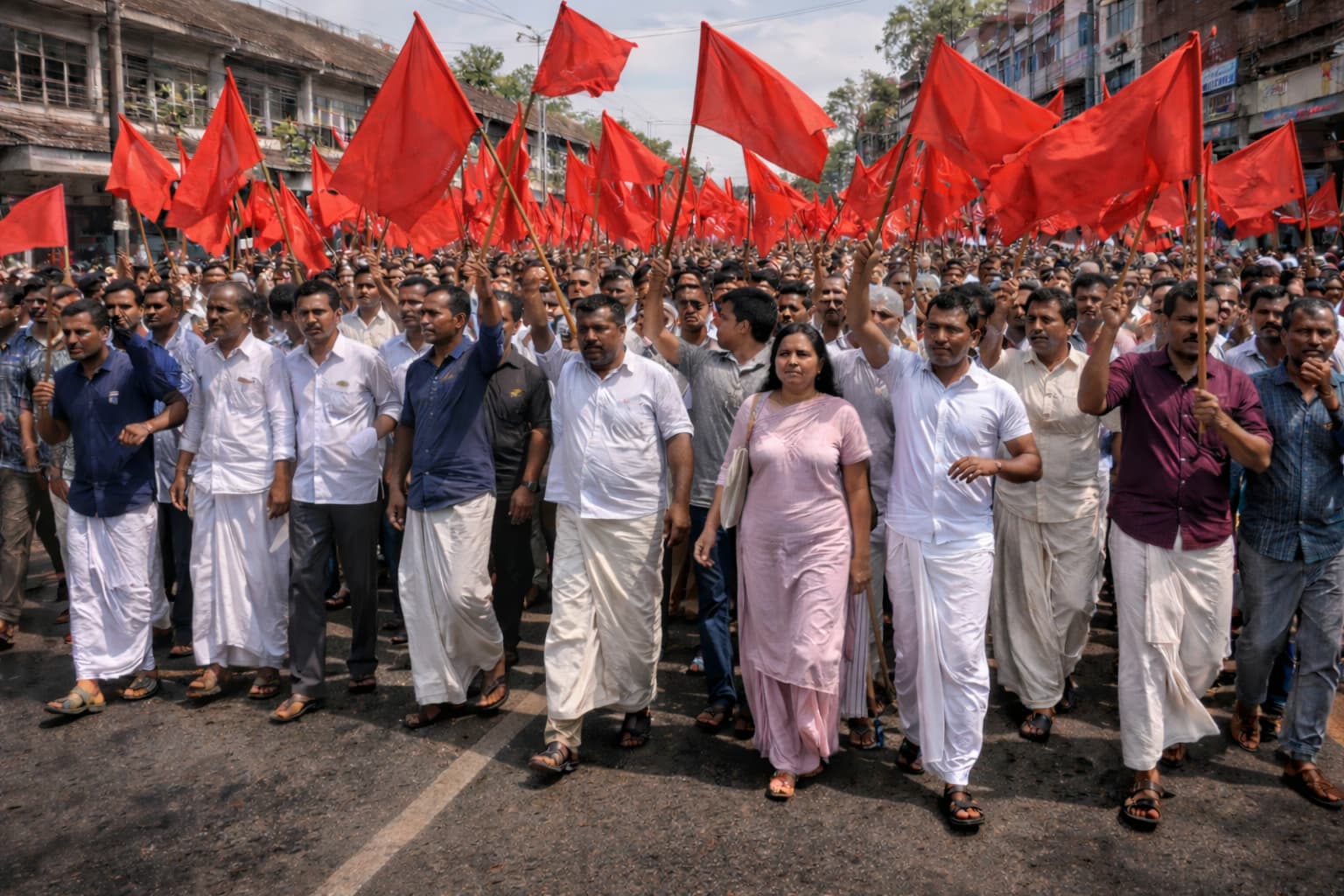
New Delhi/Thiruvananthapuram — A 24-hour nationwide strike, dubbed as Bharat Bandh, staged on Thursday, 12 February by a collective platform of ten central trade unions and farmers organisations, shook up normal life in various parts of the country. The effect was partial in the majority of the states, whereas in Kerala, the effect was almost complete. The strike was premeditated in response to four new labour codes, the Electricity Amendment Bill 2025, and other policies, described by union leaders as anti-worker and pro-corporate.
Kerala Grinds to a Halt
The Kerala state in the south suffered the most from the strike. Life came to a standstill with all the means of transport, such as the state-owned KSRTC bus system, privately operated buses, auto-rickshaws, and taxis, pulled off the roads. The early morning hours were marked by extreme problems experienced by commuters.
Large business centers, markets, and shops were shut down in areas like Thiruvananthapuram, Ernakulam, Kozhikode, and Kannur. Schools and colleges were closed down, and visits to the government offices were minimal. The dramatic unions did not subject the key services, such asthe distribution of milk and newspapers, hospitals, and Sabarimala pilgrims, to the coverage of the bandh. Nevertheless, there were a lot of personal cars on the streets, yet much less as compared to a usual working day.
Different locations within the state had passengers who were stuck in the railway stations without any means of transport. I have just come in this morning from Chennai, and I have been waiting two hours. No autos, said one of the passengers at Ernakulam South rail station. In certain locations, police vehicles would be used to come to the rescue of stranded travellers by getting to major transit points.
Mixed Impact in Southern States
The reaction in the neighbouring Tamil Nadu was divided. As usual, life continued in places like Chennai, but the trade union activists created road and rail blockades in certain districts. At Tiruchirappalli, labour unions and farmers’ organisations tried to block trains at the junction, which prompted the intervention of the police.
Other “road roko” demonstrations were also the latest news update in Thoothukudi and Coimbatore, where the demonstrators shouted slogans that demanded that the new labour codes should be repealed.
The reaction in Karnataka was moderate. The Joint Committee of Trade Unions asserted that some two lakh labourers took part in the strike. Various trade union members demonstrated in and around Bengaluru using industrial belts, and some were even detained by the police protesting outside the Town Hall. However, the Bengaluru transport system, Metro, and BMTC buses were functioning normally, which meant that none of the city’s IT corridors were affected.
The strike in Andhra Pradesh and Telangana was characterized by rallies. The Joint Action Committee of Labour and Farmers Unions organised a huge meeting at Hyderabad. The banking services were also not spared as the employees in the government sector banks participated in the strike, and this affected cash transactions and clearing services.
Minimal Disruption in East and West
A low trade union reaction was exhibited by West Bengal, a state that is usually linked with good trade unions. Ordinary attendance in government and private offices was registered, and the Kolkata transport was running normally. Schools and markets were defiant to the strike call.
Goa had a mixed picture in the west. In other states with industrial units closed and workers keeping away in their support, tourism and other key services went on as usual. In Gujarat, the effect was slight with business organizations running normally in Ahmedabad and Vadodara.
Central India and the Coal Belt
Jharkhand had a presence of the strike in its industrial and mining belts. Some areas were also said to have been affected in coal production, with workers registering to join the protest. Staffing levels in the banking and insurance sectors within the state were also reduced.
In the defence sector, the protest took a different dimension in Madhya Pradesh. More than 25,000 civilian workers in different defence plants, such as ordnance factories, claimed to report one hour late. A representative of the All-India Defence Employees Federation said the defence production is a very necessary service, and we could not witness a full-blown strike.
The Core Demands
The strike is based on the profound discontent with the new policy changes. Central trade unions are also pushing to have the four labour codes scrapped, which they are claiming water down the rights of workers as well as job security. They are protesting the Electricity Amendment Bill 2025 and the Draft Seed Bill as well.
Also Read: HDFC Bank Employee Issues Statement After Viral Clip
Related News

CJP Issues Defiant 7-Day Ultimatum Over National Education Crisis
Latest News Today: The political scenario in New Delhi has gone through an unprecedented change, ...
Manipur Village Attack: 3 Dead in Early Morning Firing Incident
Latest News Today: The latest horrific incident in Manipur where three were killed and others pa...

Delhi Hotel Fire Tragedy: 21 Dead in Devastating Single-Exit Trap
Latest News Today: A vicious fire broke out in the popular bed and breakfasts at a multi-story bu...