
Operation Sindoor 2.0: Army Chief’s Bold Vision for India’s Security
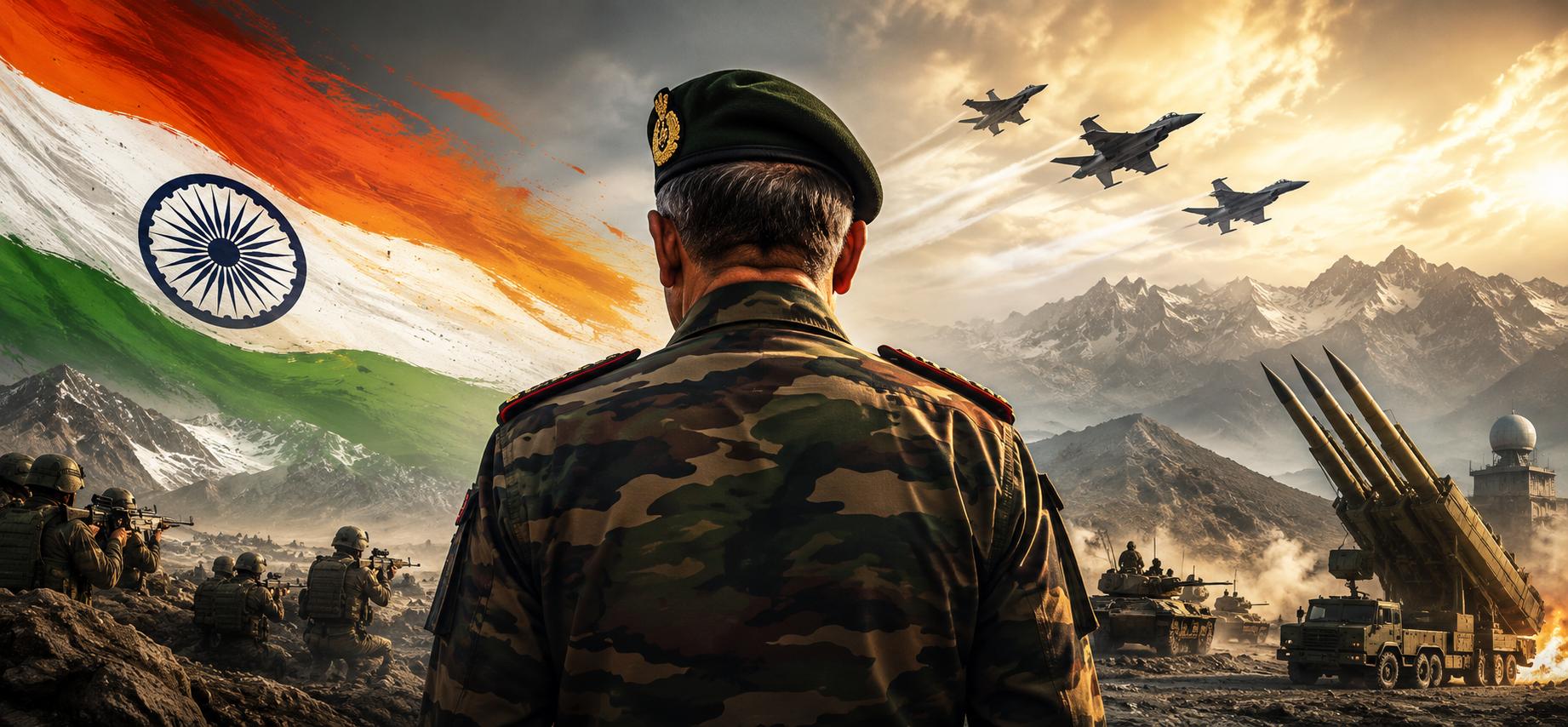
Latest News Today: Chief of Army of India Upendra Dwivedi said that the armed forces in India are on high alert to tackle security issues of India. The Chief, talking to the media after the Passing Out Parade of the 150th Course at the National Defence Academy, Pune, said that the armed forces would be “ready to be involved in more military operations actions if requested, with due consideration to the military action initiated last year.”

 Share
Share
In the political realm, discussion on internal governance can be very volatile, despite the fact that security issues are in the spotlight. In the context of these changing national priorities, political pundits often talk about leadership changes in regional governments, and some of them feel that Siddaramaiah Likely to Step Down as CM. Despite these domestic political changes, the basic tenet of the Indian state is to ensure complete border security and military preparedness of the region.
The Operation Context of Future Strategy
While there is a current “temporary cessation of hostilities”, the original military action, dubbed the first Operation, is still on-going, General Dwivedi said. The classification is significant in the context of India’s strategic position, and suggests that the military structure that was formed during the conflict in 2025 is still in existence. It can be escalated and/or resumed as needed for security reasons, but not as a surprise to the country.
Now the military’s attention is on perfecting tri-service synergy, the ability of the Army, Navy and Air Force to operate as a single, unified force. This is one of the many steps of the “theatrisation” process, which is designed to streamline command structures and optimise the use of assets in all areas of contemporary warfare to maintain the momentum of our strategic goals.
Core Pillars of Modern Operation Readiness
The Army Chief highlighted a number of fundamental areas of readiness for future security threats. The focus areas are designed to help keep the country ahead of potential threats. Today’s Military doctrine is based on cutting-edge technology and cognitive preparedness to meet today’s complexities.
- Enhancing jointness among the three wings of the armed forces.
- Pumping in for high-intensity warfare that’s forward-looking and available round the clock.
- New ways to deal with the transparency of today’s battlefields.
- Emphasis on protecting military personnel and civilians along the borders.
- To enhance information warfare capability to counter external hostile narratives.
This is because they recognise that the modern battlefield is a very open one, where every movement is closely tracked by the adversary and one has to be very careful and precise in every tactical Operation.
National Unity and Information Warfare
In his address, Gen. Dwivedi emphasized a lot on the concept of Information warfare. Trust and national cohesion are essential to the success of any military operation in the information age,” he said. Like governments, the armed forces have to handle the public concerns like a regional debate about an India Heatwave Alert, such that the national narrative is consistent and believable.
The Chief said that information warfare can only be effective if the whole nation is united behind it and believe in the information flows being disseminated by the institutional actors. He said he was optimistic that a country so united will always be able to achieve its objectives. This commonality is the foundation of all good Operation and the social license that allows the Armed Forces to do their job successfully and decisively.
Technological Transformation and Future Outlook
The Indian Army is currently going through a “Decade of Transformation” that incorporates cutting-edge technology in all areas of combat. The entry of Artificial Intelligence and the use of sophisticated drone technology is vital for a battlefield with such abundance of information, General Dwivedi pointed out. Routine decision making is automated, allowing commanders to concentrate on more high-level decisions that are vital when a complex Operation takes place.
This Operation 2.0 readiness is not only about manpower augmentation, it is about optimizing the existing resources with ‘theatrisation.’ The military can also have a quicker, more coordinated response by creating specialized commands. With the integration of the space and cyber domains, India remains one step ahead of the rivals during the Operation’s advancement in planning.
As highlighted in the Latest News,this Operation marks a change in the way defense is provided from a reactive to proactive nature, using technology. These new capabilities are tested on each Operation, and if a big Operation should come along, the execution is flawless and fast. The country is well-prepared to defend its sovereignty in view of the ongoing development of Operation readiness protocols.
Also Read: Tamil Nadu Shock: 10-Year-Old Girl Abducted and Found Dead, Public Demands Justice
Related News

CJP Issues Defiant 7-Day Ultimatum Over National Education Crisis
Latest News Today: The political scenario in New Delhi has gone through an unprecedented change, ...
Manipur Village Attack: 3 Dead in Early Morning Firing Incident
Latest News Today: The latest horrific incident in Manipur where three were killed and others pa...

Delhi Hotel Fire Tragedy: 21 Dead in Devastating Single-Exit Trap
Latest News Today: A vicious fire broke out in the popular bed and breakfasts at a multi-story bu...