
Sensex, Nifty Plummet as Iran-Israel Conflict Sends Oil Prices Towards $100
On Monday, March 9, 2026, the stock market in India commenced at a deep red because the country was immersed in a lot of geopolitical tension in the Middle East, which resulted in a great sell-off. The BSE Sensex benchmark and the NSE Nifty 50 were both hit harshly in the initial trading session. This volatility is after the weekend of the increased military action between Iran and Israel, which has seen investors across the board withdraw their riskier investments, like stocks.

 Share
Share
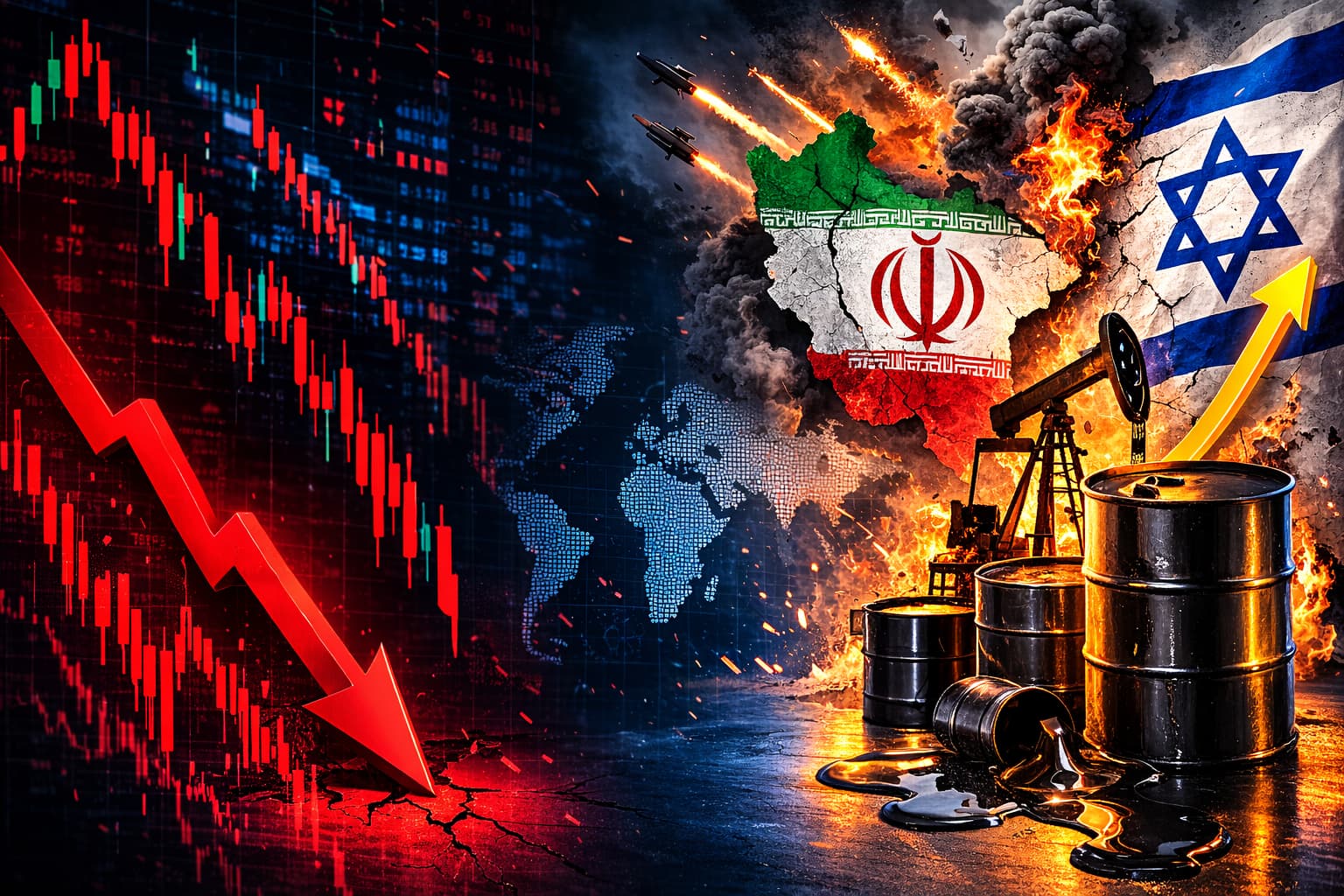
The sudden rise in global crude oil prices is a major concern for the domestic market. Brent crude is now being traded at approximately around 100 per barrel, something that has not been experienced in a couple of months. Since India consumes over 80 percent of all its oil needs as imports, such a price hike will jeopardize the fiscal balance of the country and will revive the inflationary pressures once again.
The Impact of Crude at $100
The Indian markets have traditionally been strongly discouraged by the threat of triple-digit oil prices. It is the increased cost of oil that directly increases the trade deficit and puts pressure on the Indian rupee. According to market analysts, the cost of transportation and manufacturing will increase if the conflict continues, and this may compel the Reserve Bank of India to continue with a hawkish approach towards interest rates.
The opening of more than 300 points showed up as early morning trends of the GIFT Nifty. With the onset of regular trading, the Sensex plummeted over 1,100 points in the first hour of trading. Nifty50 had a problem maintaining its psychological support levels, falling to below the 23200 region. Small-cap and mid-cap indexes were no exception to the impact of panic selling in the market, as they often are the most affected by sudden changes in the stock market in India today.
Sectoral Carnage Across the Board
The National Stock Exchange was trading in the negative on almost all the sectoral indices. Auto, Nifty Bank, and IT sectors were also the most deteriorating. Banking stocks were under pressure as they feared an increase in bond yields, and IT giants were under sale as investors were concerned that, as the world went through a wartime scenario, the world would be beige with regard to discretionary spending.
Aviation stocks and paint companies also took a huge blow. The nature of these industries is very much sensitive to the prices of crude oil, as the derivatives of oil are the main raw materials of paints, and aviation turbine fuel (ATF) is a significant part of the operating cost of an airline. On the other hand, the only stocks that gave some resistance were in the Oil and Natural Gas Corporation (ONGC) and other upstream oil explorers, which have the advantage of higher prices on their output.
Global Uncertainty and Investor Sentiment
There is a dynamic geopolitical environment. The market players are also keenly looking into any indication of further increase or the possibility of interference with the Strait of Hormuz, which is a major sea route in oil deliveries all over the world. A blockage at any of those would drive the prices far above the $100 level, and that will be a worst-case scenario in the emerging market.
This has seen an increase in the demand for safe-haven assets. The price of gold was increasing steadily as investors used it to ensure they were not affected by the fluctuations in the equity markets. The US dollar further appreciated against the key currencies, such as the rupee, as the world capital moved to the perceived safety of the greenback.
The Road Ahead for Investors
According to market experts, one should be cautious in the short run. Although the Indian economy is inherently sound, the external shocks of the regional war in the Middle East are one variable that cannot be well priced. Foreign portfolio investors (FPIs) and institutional investors have already started to sell their stakes in the Indian equities to take care of their risk.
The present situation is highly volatile, as far as the retail investors are concerned. Until there is clarity on the diplomatic front, analysts opine that the markets are likely to continue being under pressure. The next point of interest will be the next quarterly earnings and any government policy statement on the issue concerning the stabilization of fuel prices. The Dalal Street has been dominated by the sell-on-rally sentiment so far.
Also Read: Indian Markets Bleed as West Asia Conflict Escalates
Related News

Market Timing or Market Trap? Understanding the ‘Buy the Dip’ Strategy
Stock Market in India: There is no better phrase used with a lot of confidence in the field of in...

Indian Markets Set for Positive Start as Global Tech Rally Boosts Sentiment
The NIFTY 50 and the BSE Sensex are the stock market in India that are expected to start the day ...

Indian Markets Bleed as West Asia Conflict Escalates
Stock Market in India: On Monday morning, there was a strong sell-off in the Indian financial mar...