
Assessing Trump’s Strategy Toward Iran
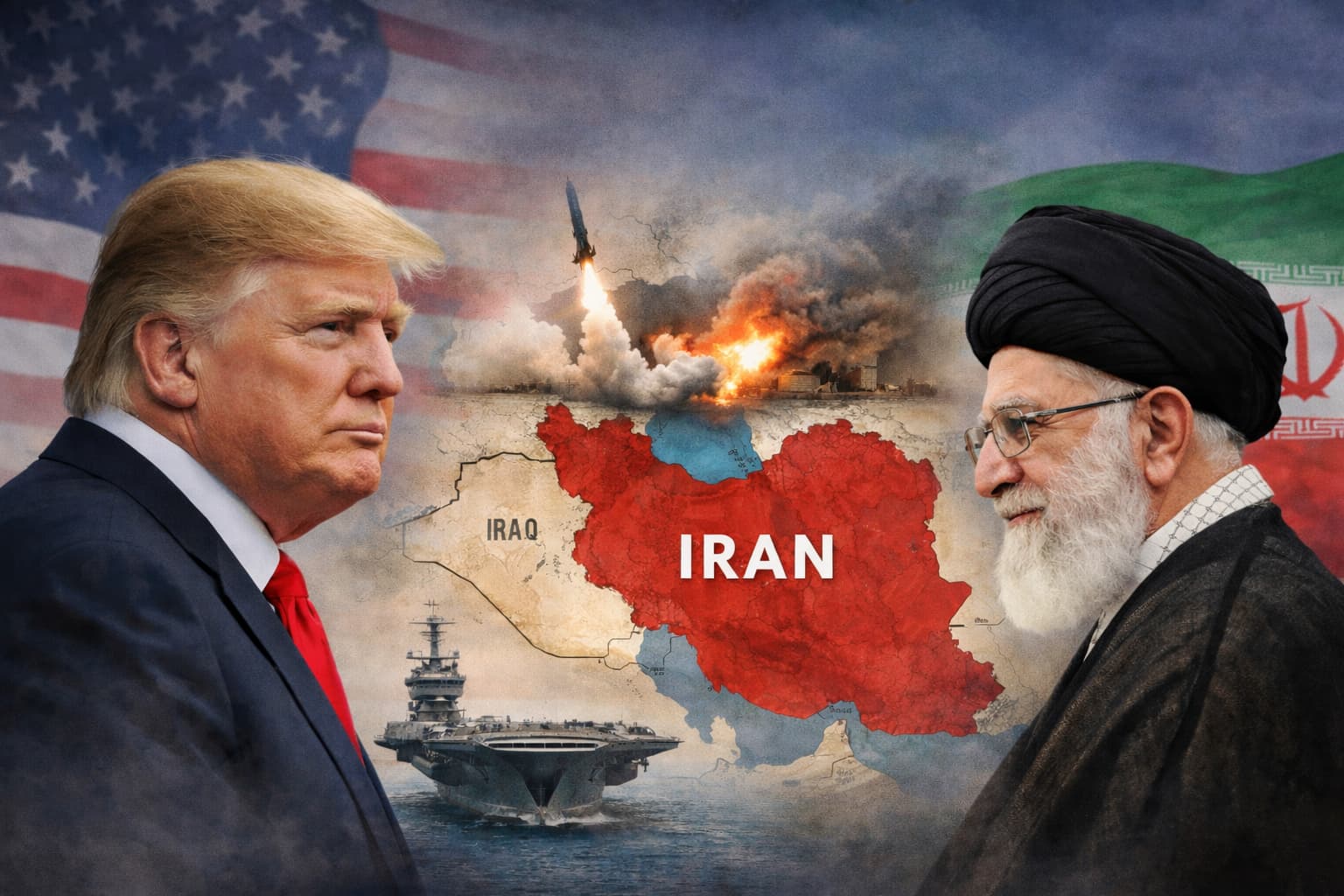
Latest World News: With the resumption of the White House by Donald Trump, the global community will be keen on how his administration will treat Tehran. The failure of the diplomatic process on the nuclear programme of Iran has increased concerns of a direct kinetic conflict. Although the president is expected to be back on his campaign of maximum pressure, the real question here is whether this campaign will end in a negotiated settlement or a full-blown military conflict.

 Share
Share
The Failure of Nuclear Diplomacy
The major cause of the tension is the deadlock regarding the Joint Comprehensive Plan of Action (JCPOA). Iran has gradually increased the level of uranium enrichment since the United States pulled out of the agreement several years back. According to the current intelligence, there has been a significant reduction in the number of days it takes to generate enough material to create a nuclear weapon, known as the breakout time.
The United States can only have a short period of time before there is no room to negotiate through diplomatic means. The advocates of a military option believe that having a nuclear-armed Iran would catalyze another arms race in the region, whereby countries like Saudi Arabia would have to acquire their deterrence mechanism. In the case of Trump, the possibility of Iran crossing its nuclear threshold is often depicted as the unacceptable consequence that diplomacy has not helped to prevent.
The Military Option: Strategic Rationales
Various factors may lead the Trump administration to a military attack. First, the global energy market protection is the priority. Iran is able to disrupt maritime Strait of Hormuz traffic, and this remains a critical key leverage point. Any related move of Tehran to seal this important water route would necessitate an American naval intervention in order to secure the uninterrupted flow of oil.
Second, there is the world news today of the participation of regional proxies. Organisations like Hezbollah and the Houthis remain a menace to the U.S interests and Israel’s security. In case such entities continue to escalate their attacks, the United States may find it necessary to attack the source of their funding and weaponry in the territory of Iran. Besides, the Trump administration has already demonstrated readiness to act decisively, which was the case with the strike on Qasem Soleimani in 2020. It is an indication of this precedent that surgical strikes are a weapon of which the administration is not afraid to use in order to put deterrence back in its place.
The Escalation Math
In spite of the hawkish rhetoric, some observers estimate that the escalation math is still not an all-out war. President Trump has, in the past, shown a dislike towards a perpetual war in the Middle East and would rather engage in economic warfare instead of the traditional use of troops. The present policy seems to focus on making the Iranian regime bankrupt by imposing sanctions, and thus, forcing it back to the table at a point of extreme weakness.
But the danger is in the error of calculation. In the event that the United States mounts pressure too fast, Iran will respond to show its strength. On the other hand, when the United States seems to be a weakling, Tehran can continue with its nuclear development. This is a fine line that requires a very fine nature that is not easy to maintain in a fluctuating geopolitical environment.
Regional Stability and the Path Forward
The allies of the Middle East are in an awkward situation. Although it makes many Gulf states feel threatened by the regional ambitions of Iran, they are also afraid of the consequences of the conflict that is sure to occur on their soil. Many of the actors are in support of a strategy of containment, used in combination with tough sanctions and a plausible threat of military action, but avoiding actual combat.
The emphasis will probably continue on limiting the oil exports of Iran and isolating its financial system as the administration will solidify its positions. However, as the enrichment levels increase and antagonisms among the regions grow, there is less room to error. The response of Tehran to the upcoming round of pressure will determine whether the new era of peace through strength can be achieved with the help of Trump or the new conflict will begin. Until then, the world awaits to know whether the wartime rhetoric will become reality in the form of a real strike.
Also Read: North Korea’s Next Leader? The Rising Profile of Kim Ju Ae
Related News
US and Israel Launch Joint Strikes on Tehran
Latest World News: The United States and Israel carried out a series of planned air attacks on Ir...

South Korea: Country with Lowest Birth Rate Sees Baby Boom
Latest World News, SEOUL – The number of children born in South Korea is surprisingly increasing,...

Denmark and Greenland Reject Trump’s Hospital Ship Offer
Latest World News: The Danish and Greenlandic governments have officially rejected an unexpected ...